
REPRESENTATIVE image of a log near a riverbank | Wikimedia Commons
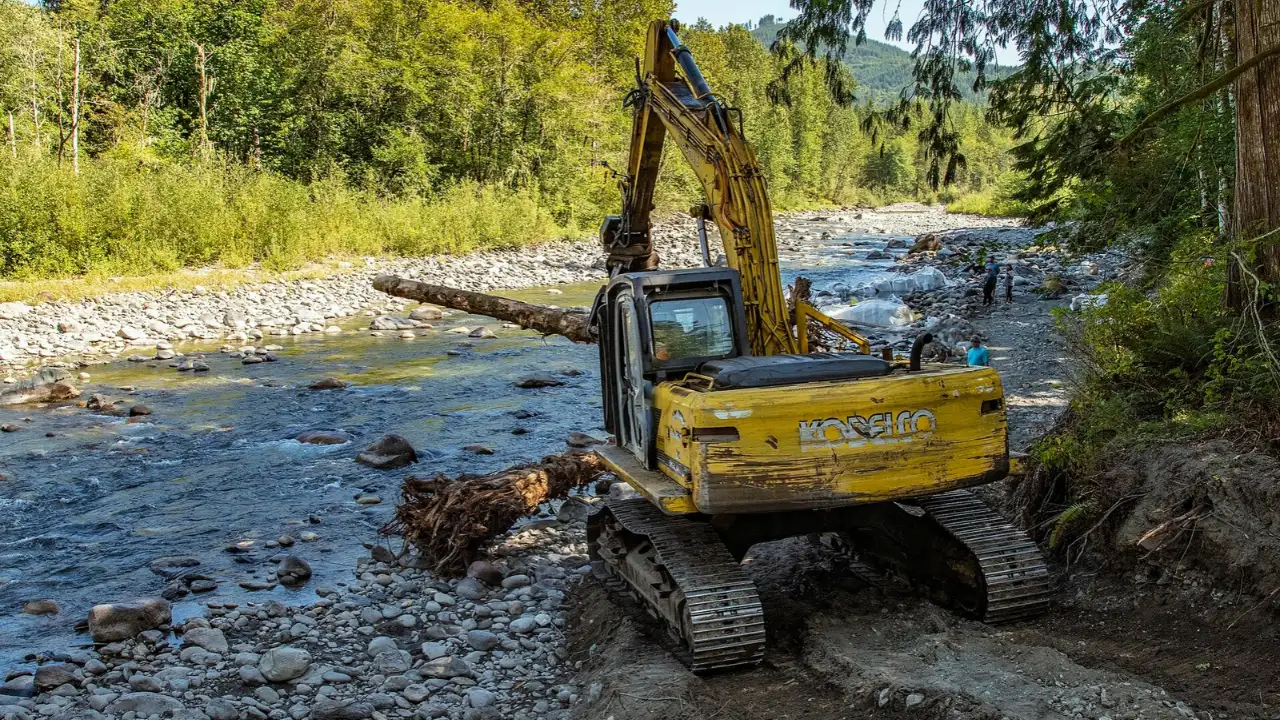
Washington tested a different way to deal with eroding riverbanks in 2022, where crews used timber structures, willow plantings and other native vegetation at two pilot sites in the Chehalis River Basin instead of having to rely only on conventional bank protection. One site was along the Satsop River near Brady, where erosion had been eating into riparian forest and farmland for years, while another was on the South Fork of the Newaukum River near State Route 508, where the river had moved toward a home. REPRESENTATIVE: An excavator places logs to construct an engineered log jam on Washington’s South Fork Nooksack River | Wikimedia Commons The Satsop River was losing land to erosion The Satsop River pilot covered a section where bank erosion had been progressing for decades, and Washington’s Office of Chehalis Basin said that erosion in the wider project reach had sometimes exceeded 100 feet per year. One landowner had lost about 30 acres of riparian forest and farmland since 1991. Crews put 350 six- to 10-foot cottonwood and willow poles into the ground in two rows that were parallel to the riverbank. By September, about 80% of the poles had survived, and some had produced nearly 10 feet of new growth during the first season. A December 2022 program memorandum described the work as an experimental, low-cost approach that was intended to establish roots quickly while the larger restoration project was being prepared. Logs and plants were used together on the Newaukum Officials said that the South Fork of the Newaukum River had moved 15 to 20 feet in the previous year and more than 100 feet in recent years near the property by March 2022. Construction took place in September and October, when engineers installed timber structures called cribwall jams and embedded tree trunks and timber piles eight to 11 feet into the bank. The planting followed in November, and the site received 25 potted willows, 25 red osier dogwoods, 10 western red cedars, 10 Douglas firs and 100 willow stakes.
The conservation district therefore installed an interim planting project in February 2022. The project then moved into monitoring, and during a subsequent high-water event, the conservation district reported that the log cribwall appeared to be functioning as designed. The projects were designed to slow erosion while also improving conditions for salmon and other wildlife. The two projects used different combinations of vegetation and engineered wood structures. The larger restoration plan for the area required engineered log jams and riparian planting, but design and permitting meant that construction would take longer. They drove the poles between three and eight feet deep, and the deeper plantings were intended to reach groundwater and survive summer drought. They also regraded the upper bank, added coir erosion-control fabric and installed live willow fascines. REPRESENTATIVE: An engineered log jam on Washington’s South Fork Nooksack River, where large wood structures were used to improve river habitat and stabilize stream conditions | Wikimedia Commons
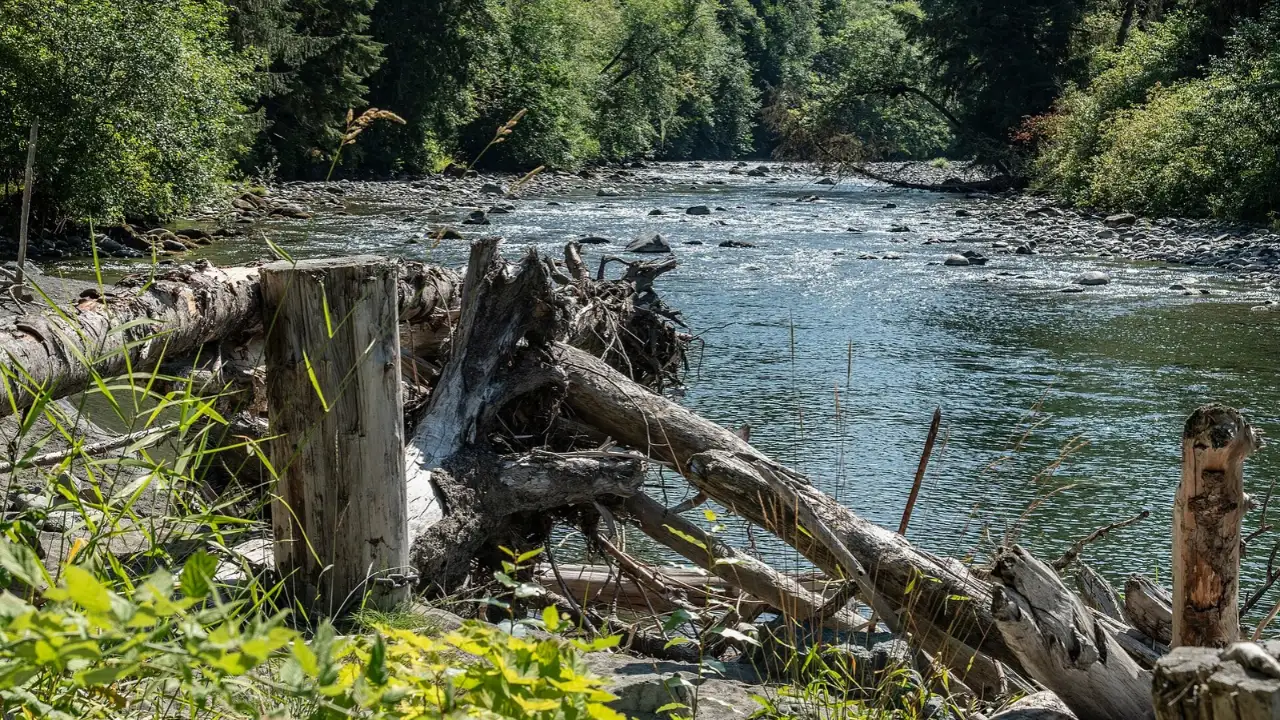
Because their roots can eventually reinforce the soil along the riverbank, five pilot projects were completed in the basin before the formal erosion-management program began, and the use of living trees was important. The engineered log structure had entered monitoring after construction at State Route 508, and the pilots were therefore being used to test whether native vegetation and engineered wood could provide bank protection while serving a broader habitat-restoration purpose.
At Satsop, officials said that more time was needed to determine whether the new root systems would significantly reduce erosion. The goal was erosion control and habitat The Chehalis Basin Strategy treats erosion management and aquatic habitat as connected problems, with its program objectives including the need to address urgent erosion threats while protecting or improving habitat conditions. Native vegetation also provides cover and shade, while woody structures can alter local flow and add physical complexity to a river. The larger Satsop restoration plan was intended to benefit four salmonid species, and Washington officials also expected increased habitat complexity to benefit amphibians, waterfowl and other native fish. You use AI every day. Now get your AI Quotient. Take the AIQ test.