
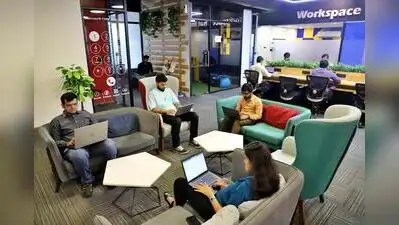
The demand for co-working spaces in the first half of 2026 has seen a 28% YoY rise
“We expect the flex footprint to grow to over 20 million sqft over the next year,” said Rohan Sharma, senior director of research and REIS of JLL India. “It is now so easy to just start operations from a co-working space rather than setting up a full-fledged office,” said Nidhi Sharma, who runs an apparel startup at a co-working facility in Kharadi. “The West zone, anchored strongly by Pune and Mumbai, accounts for 34% of our business,” said Amit Ramani, chairman and managing director of Awfis. The company plans to add 22,000-25,000 seats across its network, and “Pune will be a meaningful part of that”.
Pune: A strong demand for office space across sectors has galvanised Pune into one of the fastest-growing markets for co-working and flexible workspaces in the country. He started out with three seats at a similar space in the area. His team now has six members and they lease a slightly larger space. For co-working space provider Awfis, Pune has moved from being a supporting market to a core one.
India’s top 7 cities collectively have 90-95 million sqft of coworking spaces. The number could reach 100 million sqft by the year-end and even touch 125 million sqft by next March, according to a report by Anarock Research. Bengaluru, Delhi-NCR, Mumbai, Hyderabad and Pune are the strongest co-working markets currently, with Chennai and Noida witnessing healthy traction.