Image: Canva
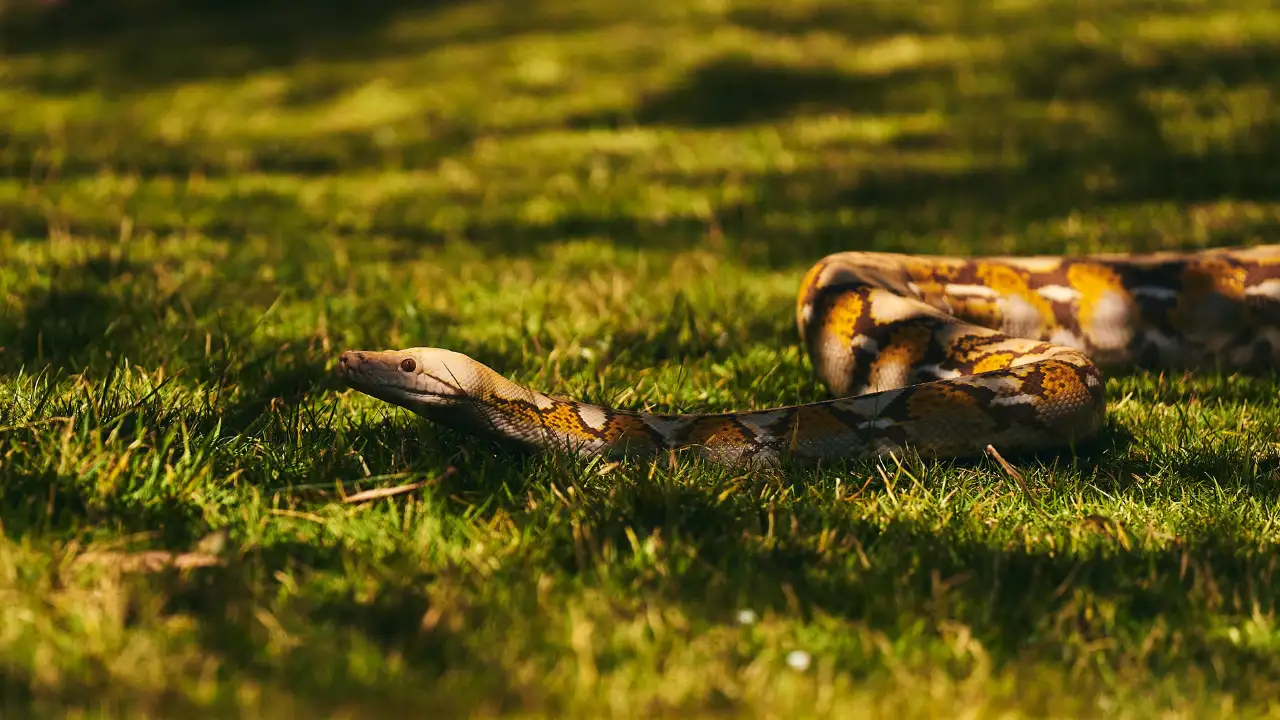
One female python released after tagging measured 16 feet and weighed 147.9 pounds. The work is described in the center’s September 2026 series, which highlights how its projects support sound decision-making. In the image, agency biologists operate a small uncrewed aircraft system while University of Florida interns release a newly radio-tagged female Burmese python, 16 feet long and weighing 147.9 pounds, back into the Greater Everglades Ecosystem. The snake can grow to more than 17 feet long and is believed to be a key factor in the sharp decline of mammal populations in the region. The 16-foot, 147.9-pound snake is a single example from a photograph, not an average, and the agency notes that pythons can grow even longer.
Because the agency’s own account calls it a novel use of technology that is more commonly applied to monitoring rivers and forests, the python project stands out. Deep in the Florida Everglades, a vast and difficult landscape, scientists are trying a new way to find invasive Burmese pythons; they are looking from above. Researchers are testing small drones fitted with radio tracking equipment or cameras to locate snakes more efficiently, follow their movements across difficult terrain, and cut the cost of searching from the ground. In this article, you will learn how the technology works, why pythons are so hard to track, what the scientists hope to gain, and what important questions remain unanswered. The United States Geological Survey, a federal science agency, is testing a different approach to a long-running wildlife problem. Scientists at its Fort Collins Science Centre are using uncrewed aircraft systems, commonly called drones, to track invasive Burmese pythons and to learn more about how the snakes move across a vast and difficult landscape. A photograph published by the USGS captures the technology at work. The scene shows how the pieces fit together: a snake carrying a radio tag, people on the ground handling it safely, and an aircraft overhead testing how well the tag can be followed from the sky. Why Burmese pythons threaten Everglades mammals and why tracking them across difficult terrain is hard (Image: Canva) The agency explains that the aircraft can carry either radio tracking equipment or a camera. The platform is being evaluated as a way to improve detection and tracking efficiency, collect better data, and reduce the labour and operating costs of traditional ground-based monitoring for pythons. In plain terms, a drone can cover wet, thick, hard-to-walk areas far faster than a person on foot, and it can pick up a tagged snake’s signal or spot the animal from overhead. If it works well, fewer people would need to spend long hours searching difficult ground. The reason for all this effort is the size of the problem. The United States Geological Survey leads federal research to control the Burmese python, which has become firmly established across the Greater Everglades Ecosystem and poses a serious threat to native wildlife. Finding such a well-camouflaged animal in a huge, wet landscape is slow and costly, which explains why scientists are eager to test aerial tools. The idea grew out of a training program. Those researchers are now using the technology to track Burmese pythons and are gaining new insight into their movement behaviour. Holmquist-Johnson’s main work involves rivers and forests in the western United States, including mapping changes in river channels and surveying thinned forest areas, so the Everglades project shows how skills built in one setting can be carried into another. It is important to read the project for what it is. The agency describes the aircraft as a tool still under evaluation, and the sources do not report measured results, such as how many more snakes are found or how much money is saved. As testing continues, the key questions will be how reliably the aircraft locate tagged and untagged snakes, and whether the savings in time and cost hold up across the seasons and the many kinds of habitat in the Everglades. You use AI every day. Now get your AI Quotient. Take the AIQ test.
Chris Holmquist-Johnson, a certified instructor in uncrewed aircraft systems for the Department of the Interior, trained a group of Fort Collins Science Centre scientists working in the Florida Everglades about a year before the article was published.