(Image credit: Canva AI)
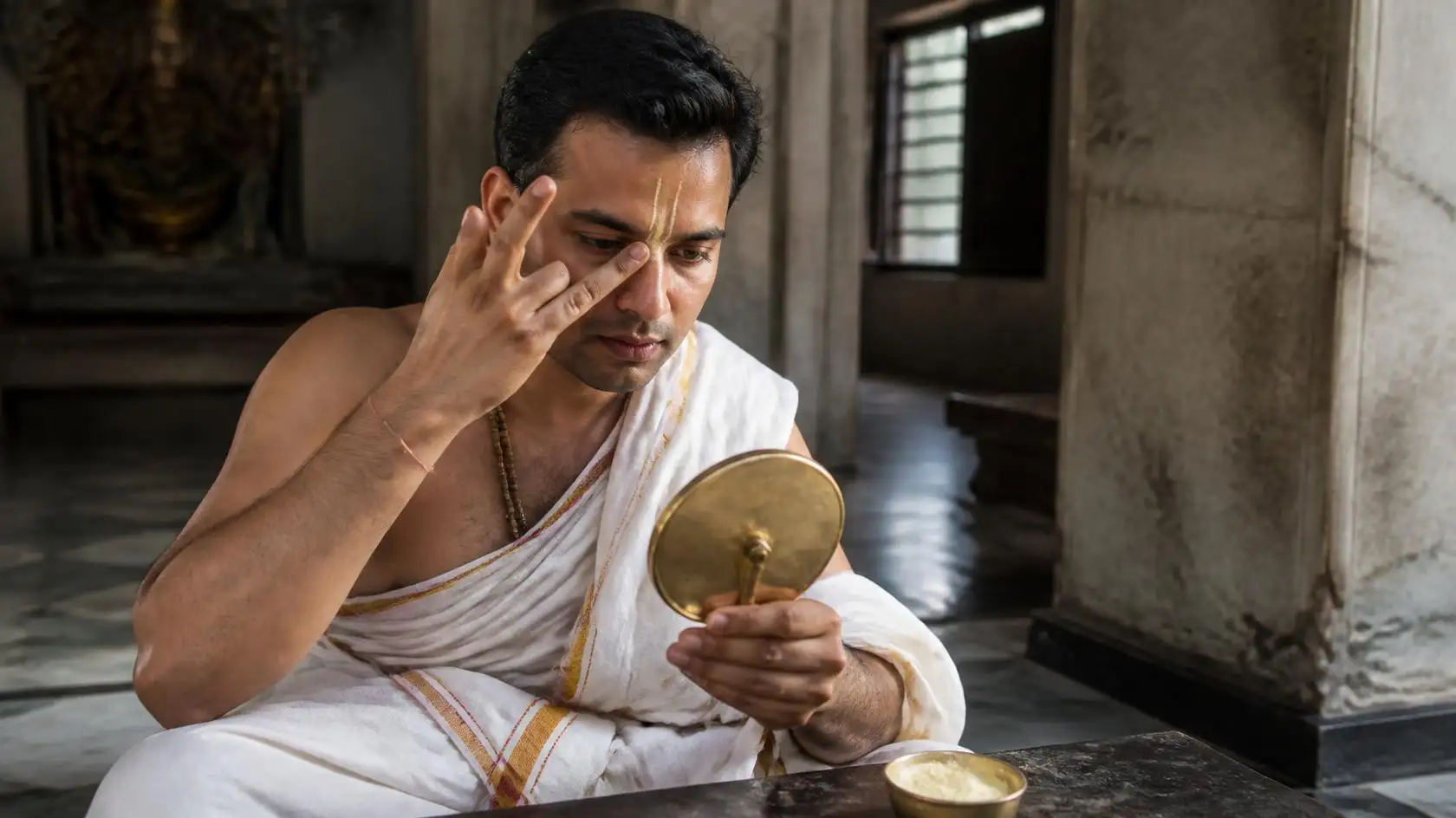
Applied to the body as a tilak, or sacred mark, it carries a deeper spiritual significance, with its application traditionally described through a series of 12 specific markings across the body. (Image credit: Canva AI) Gopi Chandana is regarded as a sacred yellow clay from the Gopi Talab near Dwarka, Gujarat. For believers, applying Gopi Chandana is therefore not merely an act of adornment but also a way of remembering the divine in the course of everyday life.
In Vaishnava traditions its significance is closely connected with the devotional stories of Lord Krishna and the gopis, the women of Vrindavan who shared a deep bond of love and devotion with him. (Image credit: Canva AI This Gopi Chandana, widely considered auspicious by priests and Vaishnava believers, is said to improve the bhagyas of a person and protect them from harm and evil, bringing good luck and high spiritual clarity. In our everyday lives, we form certain habits that become an integral part of our routine and some sacred rituals become ways for us to connect with ourselves. It could be an ornament we wear, a keepsake we carry for good luck, or a familiar habit that allows us to feel at peace. Sometimes, even the simplest act can become a way of reconnecting with ourselves and our beliefs. Gopi Chandana, a sacred yellow clay derived from Lord Krishna and Vaishnava traditions, is one such ritual. The application of this Chandana begins with mixing a few drops of water with the Chandana on the palm of the left hand, followed by applying it on four key chakras of the body: Ajna Chakra, Anahat Chakra, Manipuri Chakra and Vishuddha, as well as the Pingala Nadi and Ida Nadi. This daily practice of Gopi Chandan tilak, or putting a sacred mark on the body, along with repeating the Gopi Chandana mantra, calls for an understanding of relating to the higher self of the body and mind. The story also reflects the intimate relationship between devotion, remembrance and the sacred in Vaishnava belief. What might otherwise appear to be an ordinary substance becomes a symbol of a cherished spiritual connection, carrying the memory of Krishna and the devotion of the gopis. Gopi Chandana brings the sacred into the ordinary through a ritual that encourages reflection, mindfulness and devotion. In a world filled with distractions, uncertainties and competing demands on our attention, familiar spiritual practices can offer a moment of stillness. For devotees, applying this sacred clay, particularly alongside the chanting of a mantra, can become an opportunity to pause, turn inward and cultivate a sense of clarity. Beyond its religious symbolism, the practice can be understood as a reminder of the importance of intention in everyday life. A ritual performed with awareness allows a person to step away from habitual distractions and reconnect with the beliefs and values that guide them. In this sense, Gopi Chandana is not simply a mark worn on the body; it can also represent remembrance, humility and a conscious effort to remain connected with one’s spiritual self. Its significance is also rooted in Vaishnava teachings, in which the tilak serves as an outward expression of devotion. The act of applying it can become a personal moment of reflection, allowing devotees to approach their daily responsibilities with a renewed sense of purpose. The repetition of a familiar ritual, accompanied by prayer or mantra chanting, may also provide a sense of continuity and grounding. These meanings arise from religious tradition and individual experience rather than from a universally established spiritual or scientific effect. You use AI every day. Now get your AI Quotient. Take the AIQ test Get the latest Lifestyle News and more. Download the TOI app.