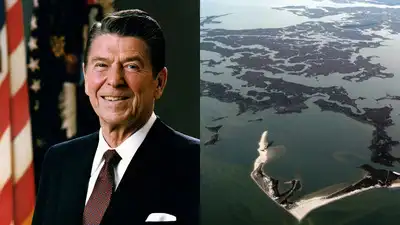
Atlantic coastline of Virginia, 2008. Ronald Reagan and Aerial view of saltwater (intertidal) wetlands that include emergent salt marsh and non-vegetated shoals and sandbars (foreground). Credits – fws.gov
That cycle stopped in October 1982 when President Ronald Reagan signed the Coastal Barrier Resources Act, which didn’t prohibit anything. The agency now has 942 units in 24 states and territories along the Atlantic, Gulf, and Great Lakes coasts, as well as in Puerto Rico and the US Virgin Islands, and Congress still has to approve most changes to the map. It simply announced that Washington would no longer pay for it.
The Fish and Wildlife Service said Congress acknowledged that federal policies have long funded and encouraged development on coastal barriers, so it removed the incentive rather than outlawing construction. More than four decades later, the core idea of the legislation remains unusual. It never dictated to landowners what they could build. Whether this market-style strategy can be used elsewhere, as the authors recommend for inland floodplains and wildfire-prone areas, depends on whether legislators are willing to let people bear their own risk.
A 2007 analysis by the Government Accountability Office revealed that around 84% of the system’s land was underdeveloped but noted that building was going on regardless in places, aided by commercial interest, local government backing and affordable private flood insurance.
It said several federal agencies had also provided prohibited assistance in some cases. A new study examines what happens at the boundaries of these protected areas.