
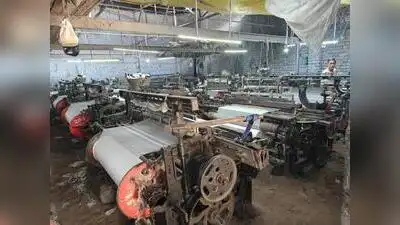
Powerlooms in Malegaon
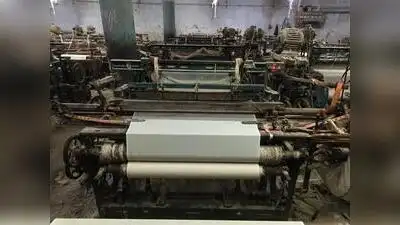
Nashik : The complete closure of processing units in Pali, Balotra, and Jodhpur in Rajasthan due to non-compliance with zero liquid discharge policy mandated by Supreme Court has caused inventory at powerlooms in Malegaon to pile up, resulting in forced shutdown of several manufacturing units.
Production costs have increased, inventory is piling up, and powerloom owners are forced to cut down on production to arrest mounting losses,” said Shabbir Degwala of Malegaon Powerloom Bunkars Association. Yusuf Ilyasi, president of the local powerloom association, said, “The disruption has triggered widespread unemployment among thousands of textile workers and daily wage labourers. “We have requested the govt to kindly bear with us on the power tariff for the last five months, as we are currently unable to provide anything to the workers,” said Ilyasi. This is why production was scaled down—by way of cutting down shifts or keeping units closed for a couple of days in a week—to minimise losses, but there is a limit to what we can sustain, and the situation is now going out of hand,” said Degwala.
The powerloom owners have sought the help of state and central govts to act fast to save the industry. “Both factors are impacting the weavers’ community in Malegaon and across Dhule, Bhiwandi, Vita, Ichalkaranji, and Solapur in Maharashtra. All our powerlooms are self-funded, and the only assistance we receive from the govt is the power tariff subsidy provided by the Maharashtra state govt. Weavers have petitioned education minister Dada Bhuse, representing the Malegaon Outer assembly constituency, Dhule MP Shobha Bacchav, and Maharashtra textile minister Sanjay Savkare seeking immediate state intervention. “If we run powerlooms, owners face direct financial losses while selling the cloth. If we stop them, labourers have nowhere to go.