
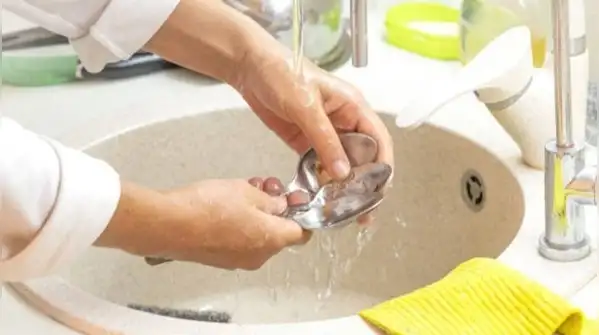
Every Diwali, the steel utensils come out from the back of the cupboard: the big kadai for sweets, the tall vessels for festive cooking, the plates and katoris for guests. And every year, the same thing happens. Steel doesn’t rust easily, but it does stain, and the good news is that you rarely need anything stronger than what’s already in your kitchen. Here’s a simple six-step routine to get your steel utensils looking festive again.
Some have burnt bottoms from last year’s halwa, some are covered in cloudy white spots, and a few have that odd rainbow tint nobody can quite explain.
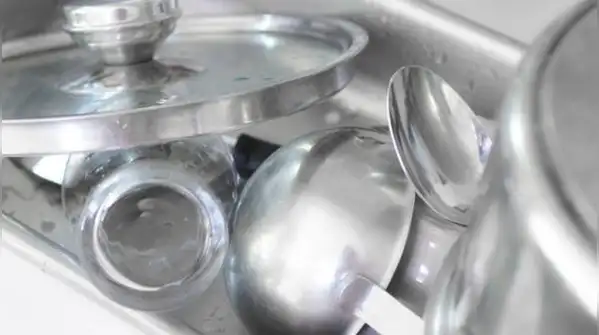
Before you reach for anything fancy, fill the stained vessel with hot water and a good squirt of dish soap, and leave it for half an hour to an hour. This softens baked-on food and grease, so you’re not scrubbing blindly later. Use a soft sponge or nylon scrubber, and always scrub in the direction of the steel’s grain, those faint lines on the surface, so you don’t leave scratches behind. For lightly stained utensils, this step alone often does most of the work. For stubborn burnt food, add water and a couple of tablespoons of baking soda to the pan, bring it to a boil, and let it simmer for a few minutes. Once it cools a little, the burnt bits come away easily with a wooden spoon. For dark, greasy stains on the outside bottom, let the vessel cool completely, spread a thick baking soda paste over the marks, wait a while, and scrub with a nylon pad. It works well on turmeric and masala stains too.
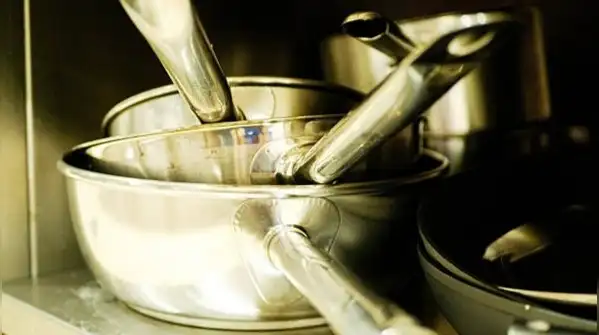
A few habits quietly undo all your hard work. Skip bleach on steel, avoid harsh steel wool on polished or mirror-finish pieces, and don’t leave lemon or vinegar sitting for hours. Never mix vinegar with bleach either. Once you’re done rinsing, dry each vessel with a clean cloth, since water left to evaporate is exactly what causes new white spots. Wipe and dry after every wash through the festive season, and your steel will keep its shine long after Diwali ends. This article is intended for general informational purposes only. Test any cleaning method on a small area first, as results can vary depending on your utensil’s finish and the quality of the steel. Handle hot water and simmering liquids with care, keep children away while cleaning, and never mix vinegar with bleach or other chemical cleaners. If your utensil has a special coating or non-stick layer, follow the manufacturer’s care instructions instead.