
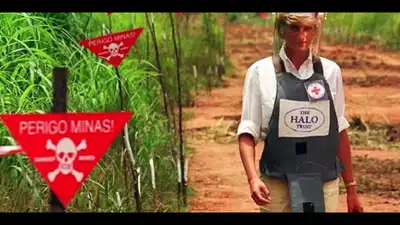
PC: Halo Trust
In its January 2024 report, the International Campaign to Ban Landmines showed that at least 5,544 people were killed or injured by mines worldwide in 2021, with most of the victims being civilians and half being children. Because their positions have been forgotten, leaving communities exposed to hazards that can persist for decades, some devices are difficult to locate.
Diana explained why Angola was an appropriate place to begin the campaign, saying: “There couldn’t be a more appropriate place to begin this campaign than Angola because this nation has the highest number of amputees per population than anywhere in the world. ” Her visit brought worldwide attention to the human consequences of landmines and the challenges facing communities living among unexploded hazards. She was accompanied by Paul Heslop, a mine-removal expert from the HALO Trust, and wore protective equipment as photographers and journalists documented the event. The problem extends well beyond Angola. The report also highlighted the lasting danger in countries including Afghanistan, Croatia, Cambodia and Libya, where landmines remain buried long after fighting has ended.
The Ottawa Treaty, adopted in 1997 and entering into force in 1999, established an international framework aimed at eliminating anti-personnel landmines through prohibitions on their use, production, stockpiling and transfer. According to the The HALO Trust reported in December 2020 that the minefield Diana visited in Huambo had become a thriving community. Her son, Prince Harry, visited the area in September 2019, renewing attention to the location and the continuing significance of landmine clearance.
Her support for the Red Cross campaign for a worldwide ban attracted public attention but also created political controversy in the United Kingdom, where her position differed from the government’s policy at the time, according to the BBC. Responding to questions about the dispute, Diana said: “I’m not a political figure, nor do I want to be one. In June 1997, she delivered a speech at the Royal Geographical Institute in London calling for an end to what she described as “the plague on Earth caused by landmines”. In its account of the visit’s legacy, HALO Trust chief executive James Cowan said: “Diana’s visit to Angola in 1997 transformed the public perception of landmines from a military weapon to a global humanitarian issue. ” He added that the campaign had helped save lives and said the organisation was proud to have played a part in her journey.
Diana’s appearance in the minefield was intended to draw attention to the effects of landmines and encourage action to address their use. I come with my heart, and I want to bring awareness to people in distress, whether it is in Angola or any part of the world. She described herself as a humanitarian figure seeking to highlight the suffering caused by the weapons. Diana continued her advocacy after returning from Angola. She also travelled to Bosnia in August that year to observe clearance work and meet people injured during the country’s conflict. The public attention surrounding her campaign helped increase funding for demining projects and encouraged governments to address the issue.
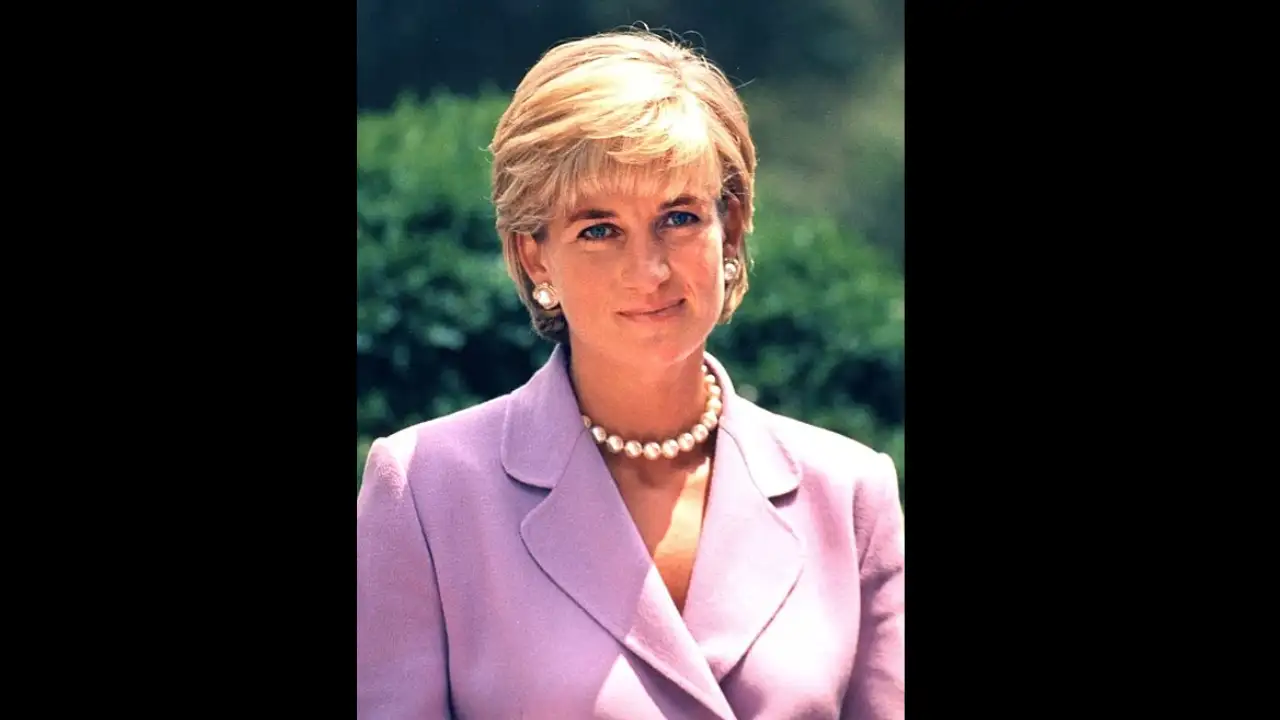
In January 1997, Princess Diana walked through a minefield in Huambo, Angola, wearing protective equipment and accompanied by a mine-removal expert from the HALO Trust. Her visit highlighted the devastating impact of landmines after a civil war that had left Angola contaminated by more than 15 million mines. Decades later, Angola still faces clearance challenges, with 7,300 hectares of land reported to require mine clearance in 2024.
The appearance brought worldwide attention to the campaign for a landmine ban and helped build public support for international action.