
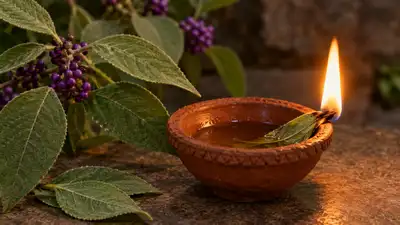
Pandavara Batti can burn like cotton in a lamp and give off a camphor like aroma. Image Credits: ChatGPT AI
A small piece of the plant’s hairy material is positioned so that one end can absorb vegetable oil while the other remains exposed.
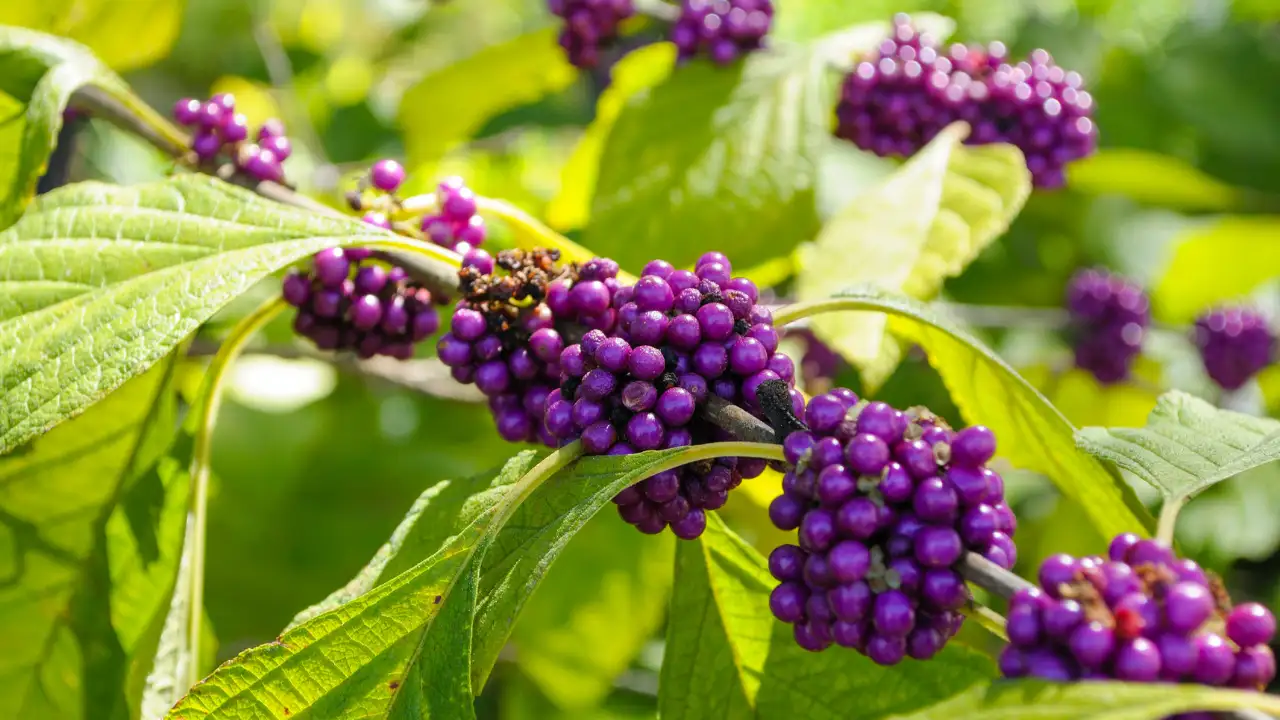
Known in Kannada as Pandavara Batti, a name commonly translated as “the Pandavas’ wick” or “the Pandavas’ torch”, Callicarpa tomentosa has soft, woolly plant material that has traditionally been used as a substitute for a wick in oil lamps. Plants are a very important part of the ecosystem: they provide nutrition, produce oxygen, help treat sickness, and are used to make fabric and paper, among many other things. But did you know that one plant can also provide us with light? Its fibrous and hairy texture can absorb and hold oil. Once the material absorbs oil and is lit, it can sustain a small flame, much like a conventional cotton wick. Botanical records from Karnataka specifically document the use of its densely hairy buds as substitutes for wicks in oil lamps. Callicarpa tomentosa is commonly known as beautyberries. Callicarpa tomentosa belongs to the genus Callicarpa, commonly known as beautyberries. The species is currently classified under Lamiaceae, the mint family, although some older botanical literature placed it under Verbenaceae. The word tomentosa refers to a surface covered with dense, matted hairs. Botanical records from Karnataka document its densely hairy buds being used as substitutes for wicks in oil lamps. It is a large shrub or small tree that can grow to around five metres. Its leaves grow in opposite pairs and have a broadly oval shape, with a dark green upper surface and a densely woolly underside. Small purple flowers grow in clusters, eventually giving way to small, round fruits that can turn dark purple or almost black when mature. The plant is native to India and Sri Lanka and is found in parts of the Western and Eastern Ghats. In India, it has been recorded in states including Maharashtra, Karnataka, Kerala and Tamil Nadu, particularly in forest habitats such as semi-evergreen and moist deciduous forests. The most accurate way to describe the practice is as an oil-lamp method, rather than a leaf that acts like a candle by itself. Once the oil has soaked into the material, the exposed end can be lit. The oil provides the fuel, while the plant material works as the wick, carrying the oil towards the flame.
Before everything came in a packet
Some popular accounts show oil being applied directly to a fresh leaf before its tip is lit. However, botanical documentation more specifically refers to the plant’s tomentose, or densely hairy, buds being used as a wick substitute. So, the viral claim that any green leaf from the plant can simply be set on fire is worth treating with caution. And, as with any experiment involving fire, this is not something to recreate casually. The plant should first be correctly identified, and any demonstration should be carried out in a fire-safe, well-ventilated setting, away from dry vegetation. Candles, matches and lighters are readily available, and few of us need to think about where the wick or fuel actually comes from. Traditional plant knowledge developed in a very different material world. Plants were not merely things to grow in gardens or admire in forests. This is where ethnobotany, the study of the relationship between people and plants, becomes fascinating. Much of this knowledge comes from generations of close observation. The texture of bark, the fibres inside a stem, the oil in a seed or the hair on a leaf can all reveal a practical use that may not be obvious at first glance. Pandavara Batti is one such example. Its significance is not that it was some ancient version of a modern candle. Candle-like lighting has existed for thousands of years, and different communities have used various fibrous plants as wicks and tapers. What makes this plant interesting is the local knowledge that identified a particular part of it as something capable of holding oil and supporting a flame. Modern conversations around plants tend to revolve around balcony gardens, indoor décor, flowering seasons or, at the other extreme, food and medicine. But there is an entire world of everyday uses sitting somewhere between the two, and much of it is easy to forget. Pandavara Batti is a small reminder of that world. It is a plant that may appear just like any other plant at first, but can quite literally light up our world. You use AI every day. Now get your AI Quotient. Take the AIQ test Get the latest Lifestyle News and more. Download the TOI app.
Today, making a small flame requires almost no thought. Many everyday items we use today have their roots in the materials and resources that people once obtained directly from the natural world.