
Image Credit: AI Generated
Why the timing of discovery matters
The proposed amended complaint alleged that neither Graves nor PG&E knew the pole was on her land before the 2023 survey, and that the boundary fencing, maps and utility records had indicated otherwise. Because a utility’s ownership of equipment does not, by itself, establish an unrestricted right to place it anywhere, the distinction matters. As reported by AcreSeal, utility companies commonly own and maintain their poles, while an easement defines their rights to access and use the land beneath them.
The person claiming the easement must establish these elements through clear and convincing evidence. The length of time alone does not automatically settle the matter. The circumstances surrounding the use, including whether the owner knew about it or gave permission, can be important. An easement also differs from ownership. It may grant someone a limited right to use land without transferring ownership of the land itself. In Graves’s case, PG&E’s position raised the question of whether its long-standing use could establish a valid right to keep the pole in place, even though the property boundary had been misunderstood. A utility pole can occupy only a small portion of a property, yet its presence may have consequences beyond the ground it covers. The court’s order explained that a permanent physical occupation can restrict an owner’s ability to use the affected area, exclude others and develop the land. It may also reduce the value of the property or complicate a future sale. A deed may identify an existing easement, but the absence of an obvious reference does not automatically resolve every dispute. The relevant documents, the history of the installation and the applicable law all need to be considered. One of the central difficulties in the Graves case was the time that had passed since the pole was installed. PG&E argued that the homeowner had not owned the property when the original occupation began and that the legal time limit for bringing a claim had expired. The company also disputed whether the delayed discovery rule could apply. The court agreed that Graves’s original complaint did not adequately establish her right to pursue the federal and state compensation claims or explain why the time limits should not apply. However, the order also recognised an important distinction. The court considered whether these circumstances could bring the case within an exception for physical intrusions that were unknown to both the previous and subsequent owners. It decided that amendment was not necessarily futile and recommended allowing Graves to file an amended complaint. This did not amount to a final ruling that PG&E was liable or that compensation was owed.
How a utility pole on private property sparked a legal dispute
Graves acquired the property in Stockton in 2009, according to the court’s order. That understanding changed in September 2023, when a professional land survey established that the pole was actually within her property boundaries. As explained by Vokshori Law Group, such rights generally require open and noticeable use, continuity for at least 5 consecutive years, and use that is adverse rather than permitted by the owner. The July 2026 order in Graves v.
The recommendation was therefore a procedural development instead of a final determination of the parties’ rights. Records of correspondence with the company can also help establish when the issue was reported and how it was addressed. The case, Graves v. Pacific Gas and Electric Company, was brought by Kimberly A. Graves in the US District Court for the Eastern District of California. Both she and Pacific Gas and Electric Company (PG&E) believed the pole stood on the neighbouring parcel. Graves alleged that neither she nor the previous owners had granted PG&E a lawful easement or other permission to occupy the land. She contacted the company seeking compensation, but PG&E maintained that it had acquired property rights through long-term use. The disagreement became a legal dispute over the company’s continued occupation and the homeowner’s right to control her property. A prescriptive easement is a legal right to use another person’s land that may develop through sustained use, even without a written agreement. For a homeowner facing a similar situation, a professional boundary survey can help establish the location of the property line. Reviewing the deed, title records and any recorded easements may clarify whether the utility has a documented right to occupy the land. PG&E recommended granting the utility’s motion to dismiss the original complaint while allowing Graves an opportunity to amend it. It also addressed her proposed additional claims, including continuing trespass, unjust enrichment and deceptive conduct. You use AI every day. Now get your AI Quotient. Take the AIQ test.
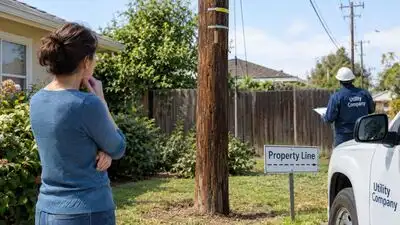
A California homeowner’s discovery that a utility pole stood on her property instead of the neighbouring plot has brought attention to the legal complications that can arise when land boundaries and long-standing infrastructure do not match. The utility company argued that decades of use had given it rights over the land, despite the apparent absence of a formal agreement. The dispute highlights a difficult issue for property owners of whether the passage of time can establish legal rights over privately owned land, and what happens when an intrusion is discovered years after it began. The dispute demonstrates why property records and reliable evidence can be particularly important when a long-standing structure is found in the wrong place. Vokshori Law Group recommends collecting photographs, maps, witness statements and other documentation when investigating disputes involving long-term use of another person’s land.