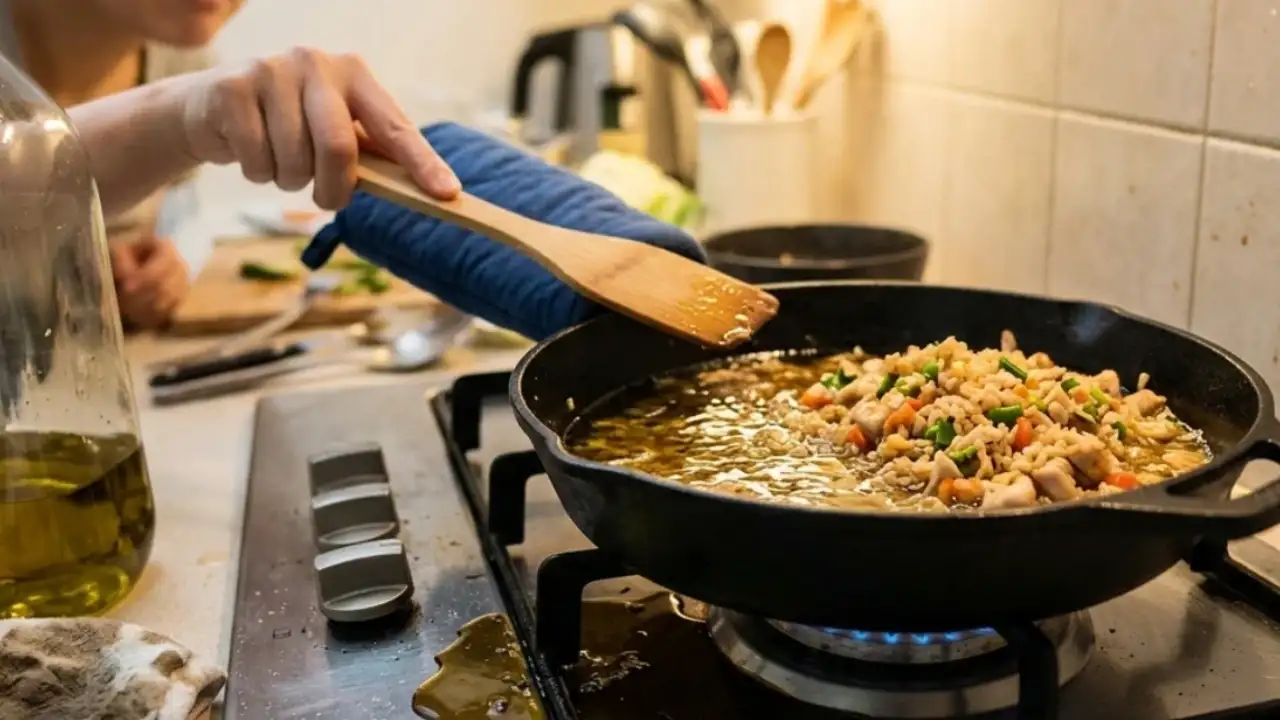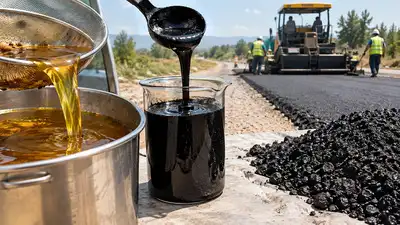
Representative AI image of researchers exploring the use of recycled restaurant cooking oil as an alternative asphalt binder for road construction. Image Credits: ChatGPT.
Restaurant fryer oil, usually collected for recycling or discarded after repeated use, offered an unexpected possibility for road construction in 2014. The team estimated that the alternative binder could cost as little as $200 per ton, compared with the $700 to $800 per ton then quoted for conventional asphalt binder. Researchers at Washington State University developed a bio-based asphalt binder using waste cooking oil, aiming to reduce reliance on petroleum while finding a productive use for a common commercial waste product. A road trial was underway at the time. The project explored whether used cooking oil could provide a practical alternative to petroleum-derived binder. the estimated price did not establish the material’s final commercial cost, and its long-term performance needed to be assessed under real road conditions Although the early findings attracted interest. How restaurant oil became an asphalt binder Normal asphalt binder is an oil product which helps keep crushed stones, sand, and other aggregate particles intact. The asphalt binder makes the pavement resistant to mechanical stress and temperature changes. Researchers from Washington State University looked at the possibility of converting waste cooking oil from restaurant deep-fat fryers into a binder which has the characteristics necessary for road building.
Earlier research published in the Journal of Materials in Civil Engineering in 2013 examined waste cooking oil-based bioasphalt as a potential alternative to petroleum-derived binder. The researchers blended the bio-based material with conventional asphalt binders at proportions of 10%, 30% and 60% by weight of the original binder, then tested both the binders and the resulting hot-mix asphalt. In 2014, the university stated that waste cooking oil cost about one-third less than crude oil, while researchers estimated that the recovered-oil binder could cost up to $200 per ton. The project progressed from laboratory testing to road trials, with the 2014 report mentioning a test section of at least a quarter-mile. A 2016 study in Construction and Building Materials examined bio-oil derived from waste cooking oil as an asphalt modifier.
The findings showed that adding bioasphalt softened the mixtures, reduced stiffness and resistance to rutting and fatigue cracking, and increased resistance to thermal cracking. The mixtures also passed the minimum tensile strength ratio test for moisture susceptibility. In conclusion, the experiment showed that waste cooking oil can be incorporated into asphalt, but the mix must balance flexibility with resistance to deformation and cracking. The financial viability of the project was an important part of the Washington study. The study also noted the potential for substantial demand, given the millions of tons of asphalt binder used annually in US road construction. However, the available record does not establish how the test section performed in subsequent years, so the cost estimate should not be treated as proof of long-term commercial success. The main engineering challenge is balancing flexibility with resistance to deformation. Asphalt must withstand heavy traffic and hot weather without developing ruts, while retaining enough flexibility. The research indicated that the oil could soften the binder and improve its stress-relaxation properties, potentially helping it resist cracking at low temperatures. However, excessive softening could compromise its resistance to deformation at higher temperatures.