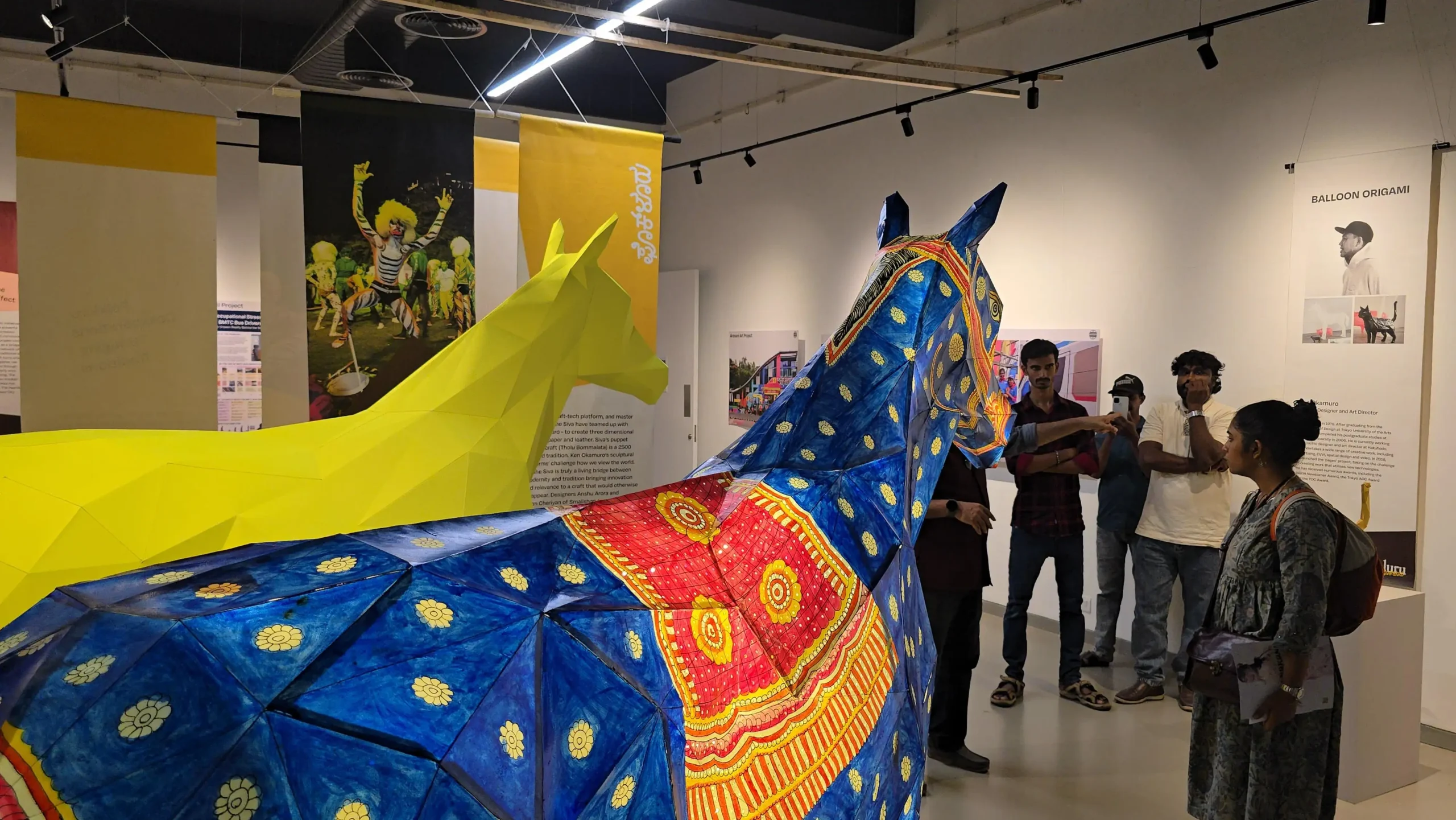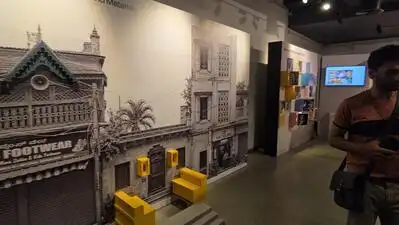
The public exhibition ‘Living City: Mapping New Ideas’ was organised at Venkatappa Art Gallery in Bengaluru on Saturday
The team, led by design consultant Abhijit Bansod, made 10 site visits, studying the street from opening to closing hours and mapping its visual texture, from building materials to signage.
Designers said each location tested their creativity differently. We discovered so many existing features, structures, cultural artefacts and living ecology, and realised that we want people to be part of Hebbal as well,” Reddy said. He said residents visiting the Shani Eshwara temple, vendors, daily commuters and students sought basic amenities such as streetlights, safer pathways and public toilets. “We want those things to happen by design so that you accommodate them when development happens,” he added. With new-age systems, night markets can come together, along with art, craft and heritage programmes, while retaining the commercial aspect,” Bansod said.
The RV Road Metro corridor in Jayanagar examined last-mile mobility and how unused space beneath transit infrastructure could be repurposed. Veerapillai Street explored how a street, its shops, signage and informal workers could absorb change without losing its character. At Hebbal, where a lake and a mobility corridor converge, the focus was on ecological repair alongside urban growth. At Hebbal, designers worked in a complex setting surrounded by flyovers, Metro viaducts, railway tracks and waterbodies. Led by Muralidhar Reddy, director, School of Architecture, CMR University, the project focused on tracing the undiscovered Hebbal beneath its flyovers. “There are two Hebbals: one moves the city while the other makes the city live. Hebbal was actually a village. Veerapillai Street, located in the central business district (CBD), was studied with a focus on preserving and highlighting its heritage buildings. They also spoke to shopowners, workers, residents, shoppers, BBMP workers, informal waste pickers and local associations. “Our proposal is to create a system that celebrates local culture. The exhibition also showcased the fusion of two ancient craft traditions clubbing Indian leather puppetry craft with Japanese balloon origami for the first time. Tholu Bommalata, a form of leather puppetry, is traditionally flat, but Japanese artist Ken Okamuro and Tholu Bommalata artisan Sindhe Siva together reimagined the art, folding leather into a 6ft-tall, three-dimensional horse.