
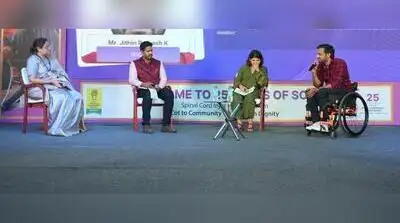
A panel discussion about the rights of persons with SCI
He was speaking at an event organised by the Association of People with Disability (APD)last week to mark 25 years of its Spinal Cord Injury Rehabilitation (SCIR) programme. Because we get fatigued if we sit for hours, “If we are joining a new company, we have to check if they have disabled-friendly toilets or if they have beds.
Help yourself and help your friends,” Jithin said. We require rehabilitation and spaces that provide us access,” Jithin said. He said accessibility barriers often affect decisions such as choosing a workplace or accessing govt services. We are not asking for privilege,” he said. Ganga Mandel, a person living with SCI, from Chikkaballapur, said accessibility remains a challenge in public transport, banks and workplaces. These are the things we are asking for,” she said.
“Raise the issues when you see them instead of posting it on Instagram. “I want long-term sustenance. Our focus is on becoming independent — dressing up, bathing, getting in and out of bed. Even while getting a Unique Disability ID (UDID), there are no specific criteria for us and, on top of that, I could not even go inside the govt office to obtain the card as it did not have proper ramps for access. We are asking for basic things. “In railway stations, we struggle from entry to the station and platforms to locating the reserved compartment. Most govt buses do not have ramps, and if some do, the drivers and conductors aren’t cooperative. We join an office and the toilets will not have enough space for wheelchairs. If we want to deposit the money we earn, many bank branches are on higher floors with no lifts or ramps.
Experts said such individual experiences also need to be documented and backed by data to translate into sustained policy changes.