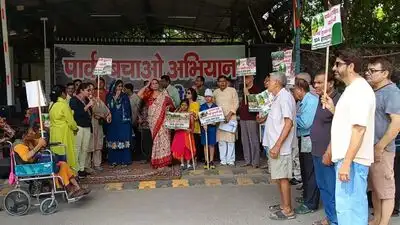
Residents of Narmada, Saraswati, Ganga and Yamuna societies in Vasant Kunj are protesting to save their green land.
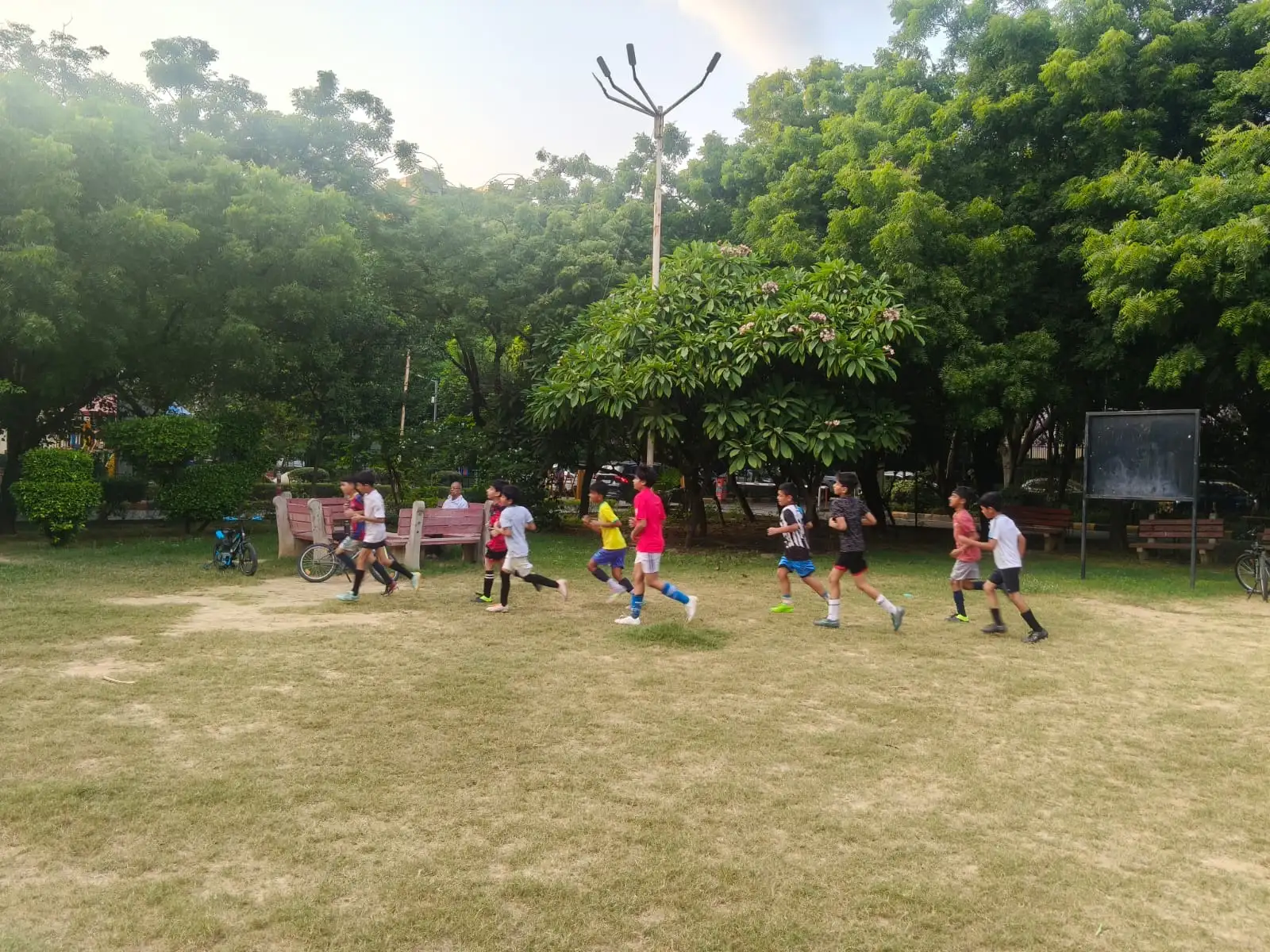
NEW DELHI: Across the four housing societies of Narmada, Saraswati, Ganga and Yamuna in Delhi’s Vasant Kunj, the stretch of green land is more than an open patch between residential blocks. It is where children play, senior citizens walk and residents gather for yoga and other daily activities. Now, residents fear that parts of these spaces could give way to commercial development, changing the character of the campus they moved into years ago. The dispute centres on the Delhi Development Authority’s plan for two Local Shopping Centres (LSCs) in the housing complex, which residents say departs from the original layout that provided for one. With all four societies now opposing the proposed development, the disagreement has moved beyond a neighbourhood protest to a dispute over planning approvals, public consultation and how much green space will remain available to residents. Residents have held candle marches, staged demonstrations and submitted petitions to officials, but say they have received no satisfactory explanation for the decision.
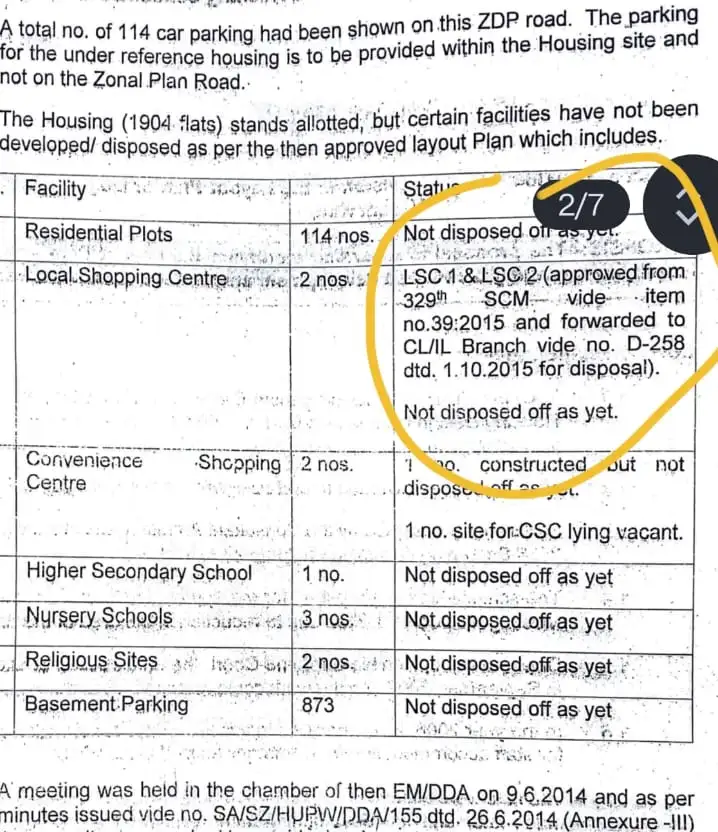
The screening committee document records their approval under item 39 of the committee’s 329th meeting in 2015, with the proposal forwarded to the concerned branch for disposal. Screening Committee minutes where it changed to 2 LSC The two documents form a key part of the residents’ objection. The original environmental clearance obtained when the housing project was developed in 2008 was for one shopping complex, according to him. “Whenever DDA changes something in the master plan, it has to take feedback from the public within 30-45 days. In an order dated September 30, 2026, the court allowed the Narmada Residents Welfare Association to withdraw its special leave petition, leaving it free to approach the Delhi high court through a review petition. Narendra Mor, president of the Ganga RWA, said the land had been vacant since residents were allotted flats around 2010. He claimed that constructing a shopping centre could affect around 1,000 trees, though the number of trees likely to be affected has not been independently established. Kundra said the housing complex originally had around 18 acres of green space on paper and that, according to the residents’ calculations, only around four acres would remain after the proposed development. Kundra said the Convenience Shopping Centre in Narmada had around 20-22 shops, of which only one was functioning. The flats were allotted in 2010, but residents were now being told that the campus infrastructure would be handed over to the Municipal Corporation of Delhi (MCD) for maintenance, Hari said. Kundra said a petition bearing around 550 signatures had also been submitted, seeking protection of the green spaces.
For the RWAs, the dispute over the LSCs has, therefore, become part of a wider set of questions about how the housing complex has been developed and maintained. You Can Also Check: Gold Rate in Delhi | Silver Rate in Delhi | Bank Holidays in Delhi | Public Holidays in Delhi | Delhi AQI | Weather in Delhi | Petrol Price in Delhi | Diesel Price in Delhi | CNG Price in Delhi | LPG Price in Delhi Stay updated with the latest Delhi news.
The original plan, according to them, shows one LSC. Harsh Kundra, president of the Saraswati RWA, said the residents had approached the Delhi high court over the change. They did not do any of that,” Kundra said, alleging that the change was approved through the Screening Committee instead. The next step, according to Kundra, is to pursue the review petition while continuing their peaceful protests. When families began moving in, he said, the area was barren and had accumulated waste. Now they are saying that they will construct a shopping complex,” he said. He said two rounds of auctions had resulted in only one or two shops being sold, according to his account. KS Hari, general secretary of the Yamuna RWA, said the housing complex continued to face drainage problems, seasonal flooding in the basement and a lack of sports facilities. Residents also had concerns about parking and firefighting infrastructure, he said. “Sell the shops in the existing shopping complex first rather than building another one,” he said. Hari said Yamuna had not joined the legal proceedings but supported the concerns over the loss of green space. Residents staged demonstrations but received no satisfactory response Narendra said the pace of work at the site had slowed following the protests, but that activity had not stopped altogether. He said the DDA had also written to the police seeking protection for construction of a boundary wall at the site. He recalled a meeting with DDA’s chief architect, Harleen Behl, as one instance in which residents felt they had been heard, but said it had not led to a resolution.
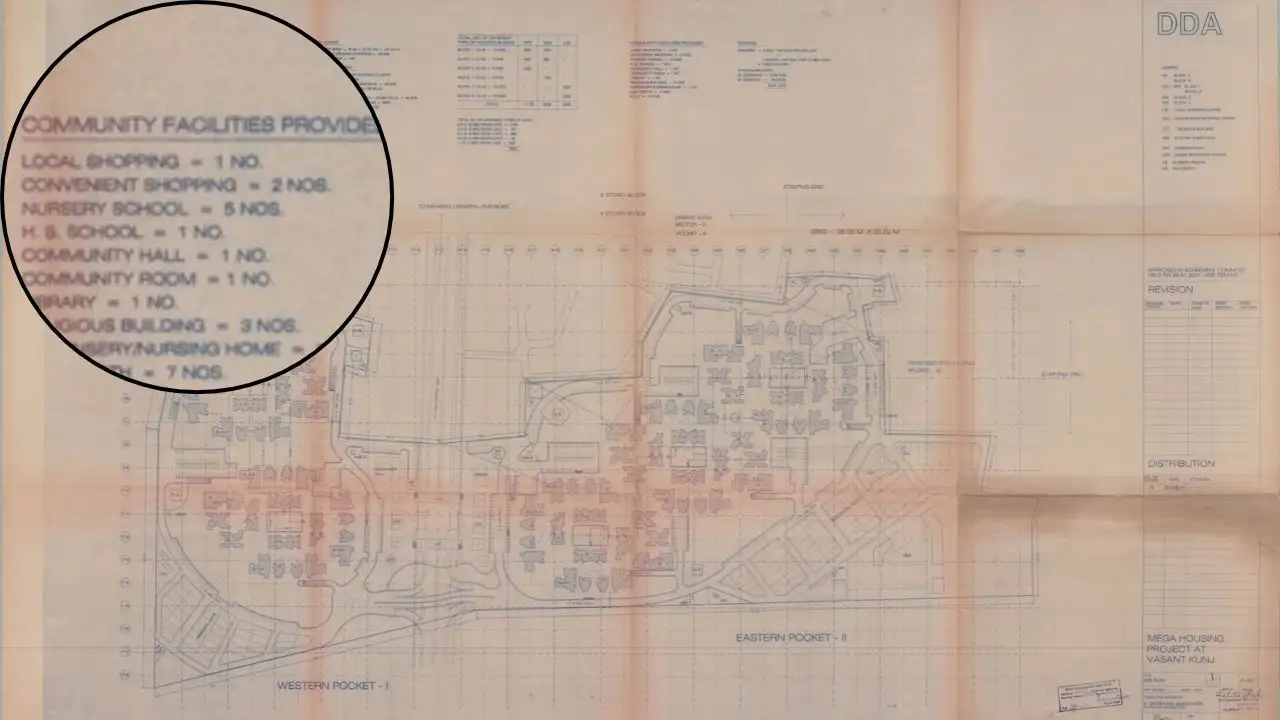
The residents have shared copies of the original layout plan and a DDA Screening Committee record with TOI. They argue that the provision for two centres conflicts with the original plan and have questioned the process through which the subsequent proposal was approved. He alleged that the DDA subsequently moved towards two without following the required process of public consultation. The residents’ challenge also reached the Supreme Court. The order also permitted the association to return to the Supreme Court if the outcome of the proposed review was adverse. The order does not decide the merits of the residents’ objections to the proposed shopping centres. For residents of the Ganga society, the dispute also concerns how the land came to be used as a green space in the first place. Residents gradually developed it into a green space, which they have since used for exercise, yoga, children’s play and walks by senior citizens. It is where children play, senior citizens walk and residents gather for yoga and other daily activities. “No DDA official objected when residents began using it as a green area. Narendra questioned the need for more commercial development in Vasant Kunj, pointing to the malls, markets and shops already present in the area. The residents’ concerns extend beyond the particular patch of land adjoining their society. These figures, too, have not been independently verified. The four societies are separated by a road, with Ganga and Yamuna on one side and Narmada and Saraswati on the other. Residents say green spaces on both sides are now under threat from the proposed commercial development. For them, the issue is not confined to the number of shopping centres on a plan. It is also about whether land used by residents for years will continue to serve that purpose, and whether they were given a meaningful opportunity to respond before decisions affecting it were taken. The residents also question the commercial rationale for another shopping centre when existing facilities have struggled to attract buyers and businesses. Residents of Yamuna have raised similar questions about the need for additional commercial space, while pointing to what they describe as unfinished basic infrastructure in their own campus. He added that the residents wanted the facilities originally envisaged for the campus to be provided. But the concerns are not identical: while the proposed commercial development is the immediate point of contention, Yamuna’s complaints about drainage, flooding and other facilities concern the broader condition of the campus. The residents say they have approached DDA officials, the lieutenant governor’s office, elected representatives and other authorities through meetings and written representations. Kundra, meanwhile, alleged that officials had not adequately explained the reasoning behind the decision or engaged with residents to examine their concerns on the ground. The residents’ objections, however, remain allegations and demands; the documents and court proceedings do not by themselves establish that the DDA acted unlawfully. The question of whether the approval process followed the applicable requirements remains central to their challenge. The DDA was contacted for its response but no response was received. The residents moved into the housing complex with a plan for their homes and the spaces around them. Years later, they find themselves fighting to preserve those spaces. The question that remains is how much of the neighbourhood they knew will still be there when the next set of plans takes shape? Download the TOI App.
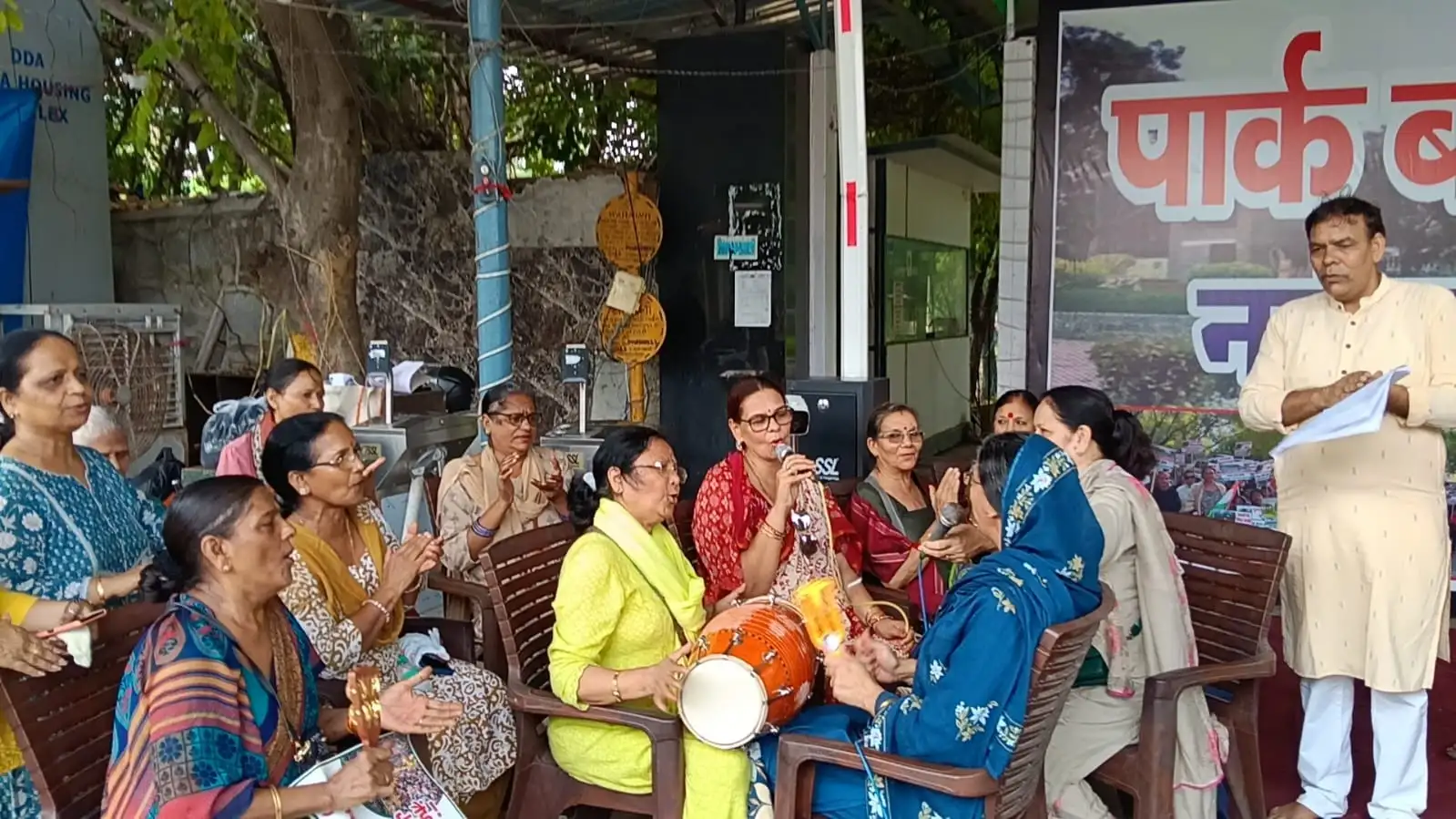
Vikram Gahlot, president of the Narmada Residents Welfare Association (RWA), said the housing complex had around 1,000 flats and residents were now facing the prospect of losing a park spread over approximately 2,000 square metres. The question is why another shopping centre is needed when the existing Convenience Shopping Centre (CSC) has remained largely unused for around 15 years,” he said. Gahlot claimed that the original master plan of 2001 provided for one LSC, while the DDA was now proceeding with two. Original master plan He also alleged that the layout was changed in 2018 without consulting residents and questioned whether the change had received the necessary approvals.
They allege that work has continued despite their objections and that the DDA has not adequately addressed their concerns about the need for another shopping centre or the effect it could have on the existing green areas. For the residents, the question is not whether the neighbourhood needs shopping facilities. It is why another complex is being proposed when, they say, existing shops remain largely unused and the land earmarked for development serves a daily purpose for hundreds of families. “Our objection is not against shopping facilities.