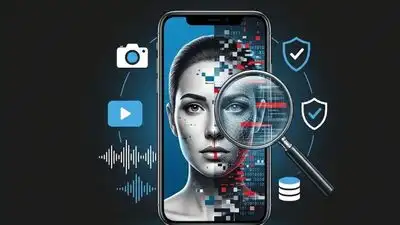
Recent incidents highlight how Artificial Intelligence can create deceptive videos and audio that mislead individuals (AI image)
October 8, 2023: An original video featuring social media personality Zara Patel was posted on Instagram. November 7, 2023: A manipulated version featuring Rashmika Mandanna’s face went viral online. November 10–11, 2023: Delhi Police registered an FIR and began investigating the circulation of the video. March 18, 2024: A mother from Khargone, Madhya Pradesh, received a phone call claiming that her daughter had been kidnapped. The caller used a voice resembling her daughter’s and demanded ₹3 lakh as ransom. The frightened mother transferred ₹50,000 before discovering that her daughter was safe in her hostel. November 21, 2024: A manipulated video falsely portrayed Finance Minister Nirmala Sitharaman and RBI Governor Shaktikanta Das as endorsing an investment scheme.
Because people often trust what they can see and hear, these developments are concerning.
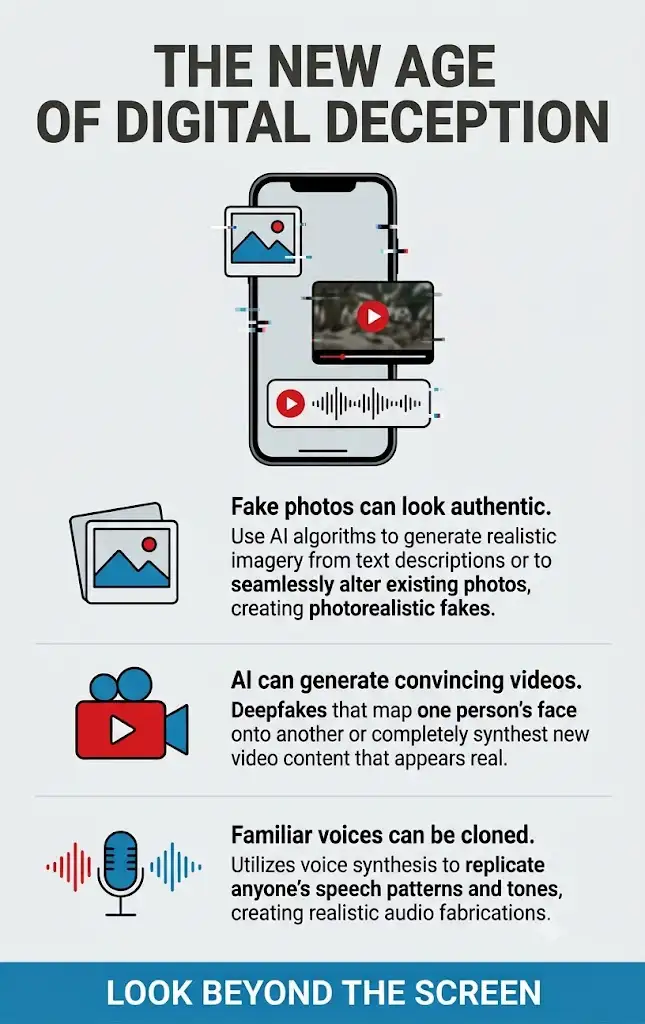
Artificial intelligence (AI) can produce videos of individuals saying things that they never said, can produce voices using a brief audio recording, and can produce photos of things that did not happen. For decades, people have been holding on to the idea that seeing is believing. Photographs were believed to be the evidence of something happening, videos were believed to be the proof of something, and the known voice on a phone call would prove a person’s identity. However, nowadays, these notions seem to lose their reliability. In times when news spreads all over the world in seconds, differentiating the truth from the fiction becomes a difficult task. Videos shared via WhatsApp, voice messages from family members, and posts on the Internet featuring a famous political leader might be authentic, but they are fake. This is not just a problem of modern technology. This is about a threat for people’s safety, freedom of democracy, credibility of journalism, and the overall public trust. High-profile figures are increasingly targeted by tech-driven scams. The incident raised serious concerns about privacy, online misinformation and the misuse of AI technology. It demonstrated how a person could be falsely portrayed in a video without their knowledge or consent. This incident demonstrated how scammers can use AI-generated voices to exploit people’s emotions and trick them into transferring money. The video promoted unrealistic financial returns and used manipulated footage and AI-generated audio. Fact-checkers established that the officials had not endorsed the scheme. The incident highlighted how fraudsters can misuse the images and voices of public figures to make fraudulent investment schemes appear trustworthy. These incidents show that videos can be manipulated, voices can be cloned and public figures can be falsely portrayed as endorsing fraudulent schemes. They establish why online content must be verified rather than accepted at face value. It is essential for individuals to adopt cautious practices to combat misinformation effectively Artificial intelligence has made it easier than ever to create realistic images, videos, and audio recordings. Deepfake technology can imitate a person’s face, expressions, and voice, making it difficult for viewers to identify whether a video is genuine. A video of a public figure making a statement or an audio recording of a familiar voice may appear to be reliable evidence, even when it has been manipulated or completely fabricated. AI-generated videos, commonly known as deepfakes, can make people appear to say or do things that never happened. education, and filmmaking, it can also be misused to spread misinformation, damage reputations, and influence public opinion While this technology can be used for entertainment. For example, a fabricated video of a political leader making a controversial statement could circulate widely before fact-checkers have time to verify it. Even after the video is exposed as fake, the damage may already have been done. Some viewers may continue to believe the original claim, while others may lose trust in genuine recordings.
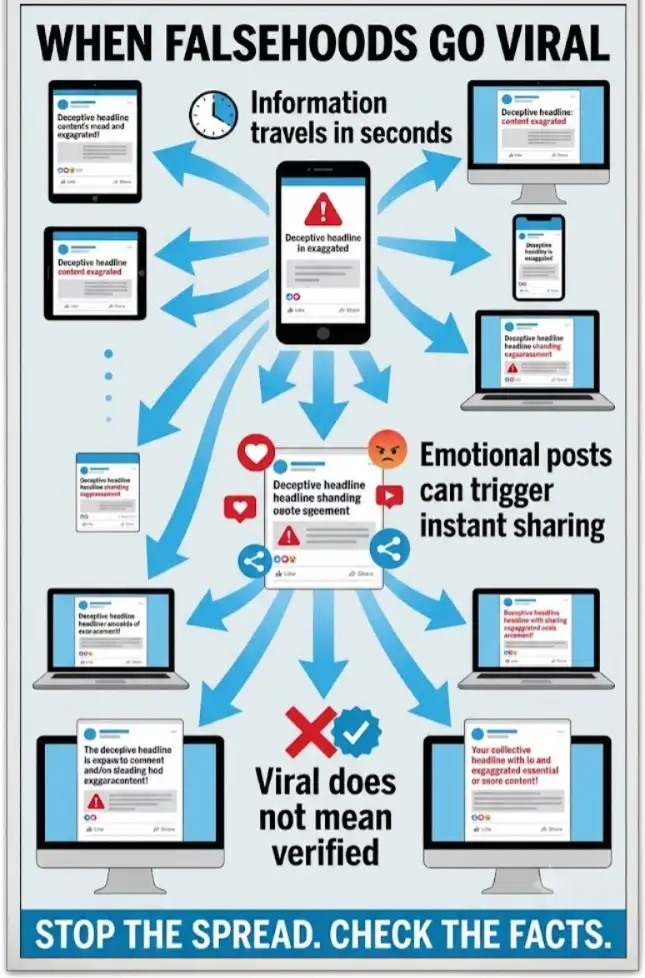
At the same time, fake news can spread rapidly through social media, often reaching thousands of people before the truth is established.
You Can Also Check: Gold Rate in Delhi | Silver Rate in Delhi | Bank Holidays in Delhi | Public Holidays in Delhi | Delhi AQI | Weather in Delhi | Petrol Price in Delhi | Diesel Price in Delhi | CNG Price in Delhi | LPG Price in Delhi Stay updated with the latest Delhi news. Download the TOI App.
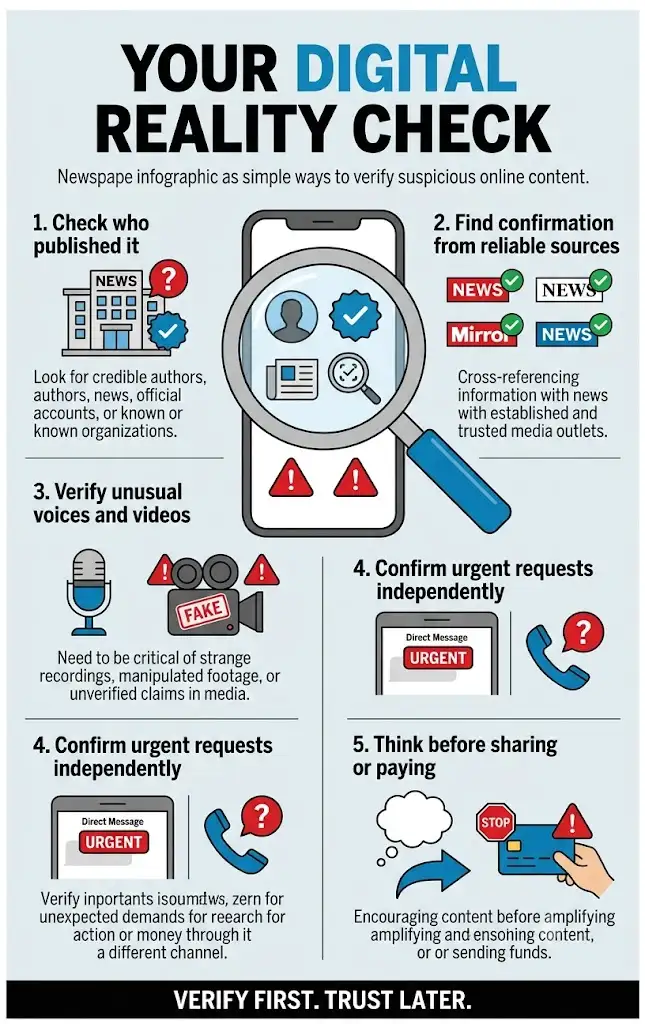
Because they appear authentic, videos, photographs, and voices can no longer be accepted as unquestionable proof simply. Check the source: Look for the original publisher and check whether reputable news organisations have reported the same information. Fake news is not new, but digital platforms have made it easier to create and distribute misleading stories at an extraordinary speed. Sensational headlines, edited images, and false claims can attract attention and be shared before users check their accuracy. Algorithms that recommend engaging content can sometimes contribute to the spread of misinformation. When people repeatedly encounter similar claims, they may begin to accept them as true, even when reliable evidence is missing. The problem is not limited to completely fabricated stories. Genuine photographs and videos can also be taken out of context, edited, or paired with misleading captions to create a false impression. AI voice-cloning tools can reproduce a person’s voice using relatively small amounts of audio. Scammers can exploit this technology to impersonate family members, company executives, or other trusted individuals. Imagine receiving a phone call from someone who sounds exactly like a family member asking for urgent financial help. The familiar voice may make the request seem genuine, causing the listener to act without checking the facts. To protect themselves, people should verify unusual requests through another communication channel, avoid sharing sensitive information over unexpected calls, and be cautious when someone pressures them to transfer money urgently. there are still steps people can take to assess whether something online is trustworthy Although AI-generated content is becoming more realistic. Verify the context: Check the date, location, and circumstances in which a video or image was supposedly recorded. Look for inconsistencies: Unnatural facial movements, strange lighting, mismatched lip movements, or unusual audio may indicate manipulation, although modern deepfakes may not show obvious flaws. Read beyond the headline: Sensational headlines may exaggerate or misrepresent the actual content of a report. Pause before sharing: If a claim seems shocking or emotionally charged, verify it before forwarding it to others. Confirm through another channel: For suspicious voice messages or urgent requests for money, contact the person directly using a trusted phone number. No single method can identify every deepfake or misleading post. The most reliable approach is to combine careful observation with independent verification. Digital awareness builds trust and accountability online. Social media platforms have an important role in limiting the spread of deceptive content. They can improve systems for detecting manipulated media, label AI-generated content when appropriate, and provide clear information about the origin of images, videos, and audio recordings. Platforms can also work with independent fact-checkers, respond more quickly to reports of harmful misinformation, and make it easier for users to understand why particular content is being recommended. Greater transparency about how content is created and distributed can help people make better-informed decisions. However, automated detection systems are not perfect. Platforms must balance the need to reduce harmful misinformation with the importance of protecting legitimate expression, satire, journalism, and creative uses of AI. Governments, technology companies, news organisations, and users all have a role to play in building a more trustworthy digital environment. As AI technology continues to advance, the boundary between real and fake content will become increasingly difficult to identify. The solution is not to distrust everything online, but to develop stronger habits of digital awareness. By checking sources, verifying claims, and thinking carefully before sharing information, users can reduce the risk of being misled. In a world where seeing is no longer believing, critical thinking and responsible sharing are essential. Technology may make deception easier, but awareness and verification can help us protect the truth.
Use reverse image searches: Searching for an image can help reveal whether it appeared earlier in a different context.