
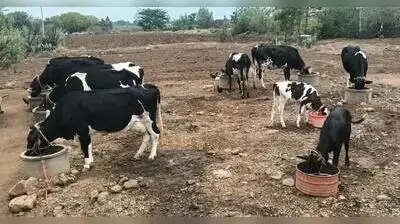
Sanjay Rajage of Khupsangi village of Mangalwedha taluka mortgaged his wife’s mangalsutra to get Rs 90,000 to buy silage for his cattle
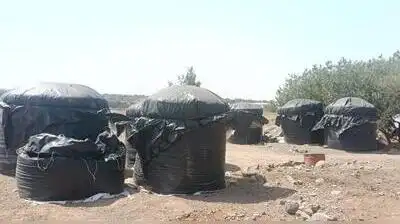
Sanjay Rajage of Khupsangi village of Mangalwedha taluka mortgaged his wife’s mangalsutra to get Rs 90,000 to buy silage for his cattle Sanjay Rajage of Khupsangi village of Mangalwedha taluka mortgaged his wife’s mangalsutra to get Rs 90,000 to buy silage for his cattle Sanjay Rajage of Khupsangi village of Mangalwedha taluka mortgaged his wife’s mangalsutra to get Rs 90,000 to buy silage for his cattle Sanjay Rajage of Khupsangi village of Mangalwedha taluka mortgaged his wife’s mangalsutra to get Rs 90,000 to buy silage for his cattle Kolhapur: When the fodder ran out, Sanjay Rajage took the one thing his family had guarded for years, his wife’s mangalsutra, and mortgaged it. The Rs 90,000 he received was not spent on a wedding, a house or a medical emergency. Two 500-ft borewells and our 55-ft well have all gone dry. The loan bought murghas , or silage, enough to feed his 10 adult cattle and two calves for a few months. Fodder that once cost Rs 3 to Rs 4 a kg now costs around Rs 9 a kg. In Khupsangi, dairy farmer Sudarshan Chougule borrowed around Rs 4 lakh from a dairy society to buy fodder. The buffaloes he purchased for over Rs 1.2 lakh each a few years ago are now worth barely a quarter of that amount in the market. The desperation was evident when 1,225 farmers from 45 rain-dependent villages submitted a joint petition to local authorities demanding immediate fodder camps and govt intervention. Farmers’ activist Ankush Padwale estimates that dairy farmers from these villages have collectively spent nearly Rs 139 crore on fodder in just the past 70 days.
“I handed over my wife’s gold and brought home fodder,” said Rajage, a dairy farmer from Khupsangi village. “I bought 15 tonnes of fodder with borrowed money,” Chougule said. “There are hardly any buyers,” one farmer said and added, “And the animals fetch barely half of what we paid for them.
It was spent on feeding cattle. Across drought-hit villages of Mangalwedha taluka, such stories are becoming common. Jewellery is being pledged. Loans are mounting. Savings are vanishing. Farmers are doing whatever they can to keep their animals alive as Maharashtra’s deepening drought leaves fields bare, wells dry and fodder scarce. “I had no other choice. The kharif crop failed. The land lies barren. If I don’t feed these animals, how will they survive? But he paid nearly double the normal rate. In most places, the cattle are now eating borrowed food and drinking purchased water. He had once left his job with a dairy company to build his own dairy business. Milk prices have fallen while fodder and water costs have soared. “Every few days, I have to buy water for the animals. We are somehow managing. But we cannot keep doing this forever. Govt must start fodder camps before it is too late. In village after village, animals stand beside empty fodder racks as farmers scramble for feed. Many families say they are approaching a painful choice: either sink deeper into debt or sell the cattle they spent years building their livelihoods around. But even selling the animals offers little relief.
Today, that decision hangs by a thread.
“People have exhausted every source of money they had,” Padwale said. “They borrowed from relatives, societies and lenders. Many already had loans for purchasing cattle. Now they are taking fresh loans simply to keep those animals alive. There is very little hope left without immediate government support. Local MLA Samadhan Autade has assured farmers that their concerns will be raised with state revenue minister and chairman of ministerial sub-panel for drought mitigation Chandrashekhar Bawankule.
You Can Also Check: Gold Rate in Kolhapur | Silver Rate in Kolhapur | Bank Holidays in Kolhapur | Public Holidays in Kolhapur Stay updated with the latest Kolhapur news. For now, however, the reality in Solapur’s drought belt remains stark. The monsoon has failed. Fodder is vanishing. Water is becoming costlier by the day. And for hundreds of dairy farmers, keeping their animals alive until the next rain arrives is a struggle. What is murghas or silage? Murghas, or silage, is a nutritious cattle feed made by fermenting high-moisture fodder such as maize, jowar, bajra and certain grasses in airtight pits, silos or wrapped bales. The process preserves the fodder for long periods, retaining much of its nutritional value. It serves as a crucial feed source during droughts and dry seasons, helping dairy animals maintain health and milk production when fresh fodder is scarce. Download the TOI App.