
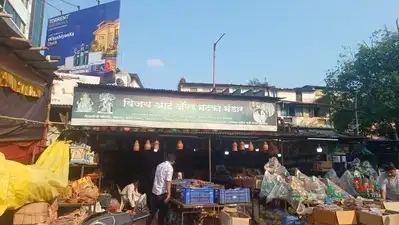
Clay diyas at a stall in Kumbharwada
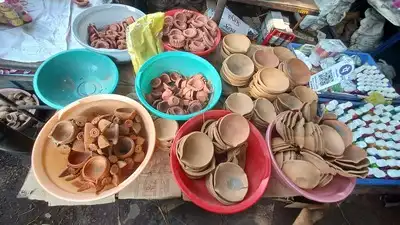
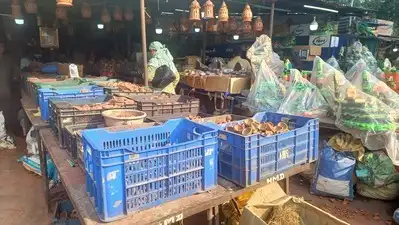
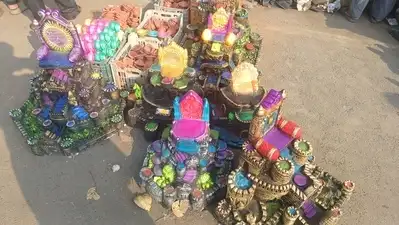
During Diwali season, families in Kumbharwada make nearly 1,000 diyas a day, compared with around 100 a few years ago. However, the increase in output has not translated into better margins, with sellers earning barely Rs 1 to Rs 1.5 per diya. A shop at Kumbharwada selling clay diyas and idols A buyer shopping for clay diyas at Kumbharwada Colourful POP killas at Kumbharwada Clay diyas at a stall in Kumbharwada A shop at Kumbharwada selling clay diyas and idols A buyer shopping for clay diyas at Kumbharwada Colourful POP killas at Kumbharwada Clay diyas at a stall in Kumbharwada Pune: On a hot afternoon during Diwali , Kumbharwada bustles with shops selling an assortment of clay diyas and plaster of Paris (POP) miniature killas. Visitors might expect to see potters working at their wheels and kilns firing in the background. Instead, hand-pressed moulds, ready-made clay sourced from other states and POP decorations have become the norm, reflecting how the community’s traditional craft is adapting to changing times. The shift to hand-pressed moulds has significantly sped up production.
Today, nearly 300 families live in Kumbharwada, balancing traditional work with modern occupations,” said Shashangi Shinde, a resident and seller. Simple hand-pressed diyas are sold at Rs 3 apiece, while colourful, hand-painted varieties cost Rs 60 a dozen. Sellers offer nearly 20 to 25 designs.
You Can Also Check: Gold Rate in Pune | Silver Rate in Pune | Bank Holidays in Pune | Public Holidays in Pune | Petrol Price in Pune | Diesel Price in Pune | CNG Price in Pune | LPG Price in Pune Stay updated with the latest Pune news.
We now directly use ready-made clay to make diyas in Kumbharwada,” said Sarika Kumbhar, a businesswoman and resident of the locality. Yash Vakikar, another resident, said members of the community could still assess the quality of clay by its feel and the shape of the diya, even when using hand-pressed moulds. “While it is important to preserve art and tradition, moulding diyas has made the process easier for us, especially as the number of traditional artisans is dwindling,” he said. Residents said most members of the community have lived in Pune since the Peshwa era. “LED decorations have not affected our sales, as customers still prefer natural clay diyas for puja,” Shinde added. Asked why these traditional Diwali decorations are no longer commonly made from raw clay, Vakikar said POP versions were lighter, sturdier and easier to produce, apart from offering a better finish when painted. “Clay killas are more prone to breaking, which is why most kumbhars and customers prefer POP models,” he said. Sarika Kumbhar said the initiative to preserve traditional killa-making was welcome, but it needs to continue over the years. “Given the adverse environmental impact of POP, it would be ideal to switch back to clay killas gradually,” she added.
The changing economics of the seasonal trade have also reshaped traditional practices, from sourcing ready-made clay from Rajasthan and Gujarat to replacing traditional clay killas with plaster of Paris (POP) versions. “The quality of clay is very different from that of Maharashtra, where pollution has made it impure and inconsistent. However, traditional pottery wheels and kilns are now largely confined to Keshavnagar, as shrinking spaces in the city have made it difficult to continue these practices in Kumbharwada. Most sellers and community members have adapted to and welcomed the change. “As the city expanded and urbanisation gathered pace, most kumbhars (potters) gradually shifted to hand-pressed moulds to increase production. This has changed our output significantly. The shift to modern methods is even more evident in the making of killas. Vakikar welcomed the Pune Municipal Corporation’s (PMC) recent initiative to distribute raw clay to children to encourage them to make traditional killas. “It is important for the younger generation to understand their history and legacy. Download the TOI App.
Involving children in traditional killa-making using clay can serve as a bridge to the past, especially in today’s fast-paced world,” he said.