
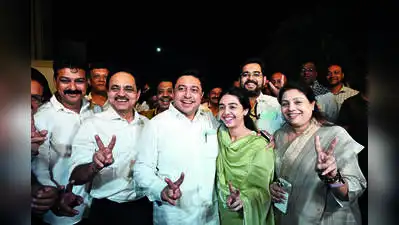
Congress starts celebrations
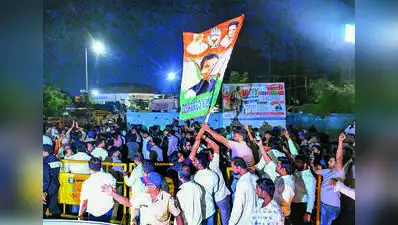
For Congress, retaining the constituency would consolidate its 2020 breakthrough, when Wanjarri defeated BJP’s Sandip Joshi. Figures reported after the second round placed Kohale at 60,924 votes and Wanjarri at 56,630, giving the BJP candidate a lead of 4,294. Karale’s tally reached 24,249, making the transfer of preferences from his ballot papers a crucial element in the remaining calculations. Wanjarri later appeared to narrow the gap and regain ground, with his lead reportedly improving by about 1,000 votes in subsequent rounds.
The contest has therefore become a measure of the two parties’ organisational strength in a region where BJP has a formidable political network. The stakes extend well beyond the Nagpur division graduates’ constituency. For the BJP, the election is an opportunity to reclaim a seat it dominated for decades, dating back to the Jan Sangh era. But the arithmetic shifted in the subsequent count. The evolving figures underlined how quickly the contest could change as counting progressed.
Ballot boxes were opened at 8am on Tuesday, Oct 27, and postal ballots were counted first. After the ballot papers were mixed and bundled, counting of the first batch began around 2pm, with 1,000 ballots assigned to each table. The first-round figures emerged around 10pm, roughly 14 hours after counting began. With 38 candidates in the fray and no clear winner emerging from first preferences, the process extended into successive rounds and continued till the filing of this report. More than 15,000 ballots have reportedly been declared invalid, adding another layer of uncertainty. In 2020, 11,540 ballots were declared invalid.
Ballots can be rejected if a voter fails to mark a valid first preference, writes “2” instead of “1” or uses a tick mark rather than the prescribed numeral. The counting process itself has become a story. In this election, voters must mark preferences numerically against candidates’ names rather than use party symbols. The scale of invalid voting has renewed attention on voter awareness in an election specifically meant for graduates.
Karale’s performance has complicated calculations for both leading candidates. His substantial first-preference tally means that the distribution of preferences from eliminated candidates could influence the result. Having entered the race as a rebel after breaking with the Sharad Pawar-led NCP, he has emerged as more than a spoiler, securing a vote share that has made his ballot papers politically consequential. Wanjarri arrived at the counting centre, accompanied by city Congress president Prafull Gudadhe and supporters. Outside the centre, rival claims about who was ahead reflected the uncertainty inside the counting hall, where table-wise trends were not always consistent.