
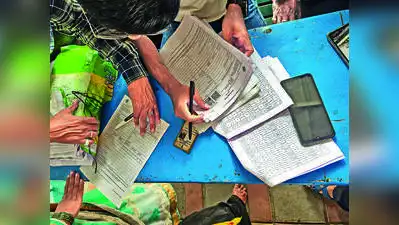
Details of only Shivajinagar seat have been uploaded in Pune district
Pune: Lists of voters with pending SIR notices have been published for only 39 assembly constituencies out of 288 in Maharashtra on the election authorities’ websites till Saturday. The chief electoral officer’s (CEO) office told electoral registration officers (EROs) to publish the lists by Oct 26 to help voters check their status and submit supporting documents before the Nov 10 deadline for disposal of notices. The final electoral rolls will be published on Nov 16. The latest circular iterates the requirement to make pending-case lists publicly accessible within three days of its issuance and before Oct 26.
Because the system did not support it then, election officials said some voters had submitted supporting documents to booth-level officers (BLOs) during the house-to-house enumeration exercise, but these were not uploaded.
Voters can check the “Pending Notices” section on the CEO Maharashtra website or approach BLOs for help. Lists of Malabar Hill, Byculla and Dharavi constituencies have been published in Mumbai City. Details of voters from Dahisar and Vandre West have been uploaded for Mumbai Suburban. EROs are now collating available documents and updating records for pending cases. The circular requires EROs to share part-wise lists of pending cases with booth-level agents (BLAs) of political parties and seek their assistance in obtaining documents from voters. The CEO’s office will review compliance by district election authorities across the state.
A circular issued on Oct 23 requires EROs to download the data from the Election Commission of India ’s ECINET platform, compile part-wise information into a single PDF for each assembly constituency and upload it on the respective district election officer’s website.
A name appearing on the list does not mean the voter has been finally deleted from the electoral roll,” an electoral official said. “The lists cover voters whose names could not be matched with previous electoral rolls, categorised as ‘No Mapping’, and those whose records showed logical discrepancies despite successful mapping.