
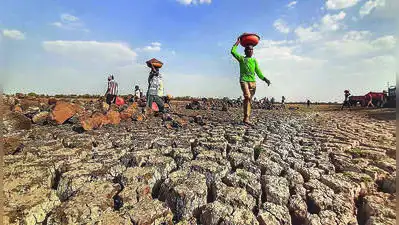
Nashik: The Nashik district administration has prepared a comprehensive drought action plan for Oct 1, 2026, to June 30, 2027, to tackle the anticipated severe water scarcity following deficient rainfall and a failed monsoon.
The plan provides for acquiring 375 private wells and operating 3,555 tanker trips across 555 locations to serve 1,672 localised spots and scattered habitations. The total financial outlay sanctioned for executing this comprehensive drought mitigation plan stands at Rs 13.8 crore, including Rs 11.2 crore for tankers alone, while Rs 1.9 crore is earmarked for acquiring private wells to augment local sources. Because of severe groundwater depletion during peak summer months, vulnerable talukas, including Malegaon, Nandgaon, Baglan and Yeola, have a high concentration of private well acquisitions and tanker deployments.
You Can Also Check: Gold Rate in Nashik | Silver Rate in Nashik | Bank Holidays in Nashik | Public Holidays in Nashik | Petrol Price in Nashik | Diesel Price in Nashik | CNG Price in Nashik | LPG Price in Nashik Stay updated with the latest Nashik news. Download the TOI App.
The state govt has declared 13 out of Nashik district’s 15 talukas drought-affected, with only Nashik and Dindori excluded. The action plan covers 777 villages and 1,280 hamlets across the district, identifying 2,906 water-scarcity mitigation works. These have been divided into three phases: Oct to Dec 2026, Jan to March 2027, and the peak summer period from April to June 2027.
“The comprehensive action plan targets 777 villages and 1,280 hamlets across the district, identifying a total of 2,906 water scarcity mitigation measures,” said Rajput. Submitted by resident deputy collector Rohit Rajput and coordinated with the zilla parishad’s rural water supply department, the plan factors in the impact of low rainfall on wells, borewells and surface water sources, many of which have already dried up or are likely to dry up in the coming months. The declaration has prompted urgent administrative measures to ensure drinking water supply for rural residents. Key infrastructure measures include completion of the ongoing piped water supply schemes, undertaking special repairs to existing piped networks, executing temporary supplementary piped water schemes, deepening existing wells, and carrying out special repairs on borewells. When all these fail, the administration will go for securing sustainable supplementary water sources through the acquisition of private wells and the last option would be to provide drinking water via tankers and bullock carts to hard-hit rural areas facing severe shortages.