
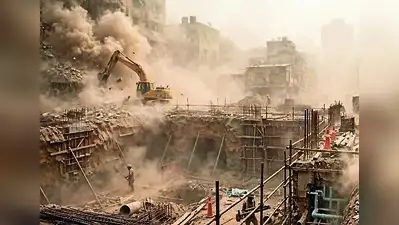
MUMBAI: The dust from the city’s construction boom is not limited to demolition sites. It is generated when old buildings are pulled down, when foundations for skyscrapers are dug several floors underground, and even when workers cut into walls to lay electrical conduits and plumbing. As redevelopment gathers pace, construction industry stakeholders say existing practices need an overhaul, with better dust suppression, changes to demolition techniques and greater use of precast materials.
Because it is the need of the hour,” he said, these measures will not increase costs too much, but ultimately, the additional expense will have to be absorbed.
Senior architect and former president of the Practicing Engineers, Architects, and Town Planners Association (PEATA), Manoj Daisaria, said demolition methods need to move away from using heavy equipment towards dismantling in stages. There needs to be a change in demolition techniques, with the use of cutters instead of simply smashing structures to pieces,” Daisaria said. “Today, with the growing number of skyscrapers, excavation can extend five or six floors underground, generating tremendous amounts of dust,” he said. He said curbs or restrictions on demolition were needed, along with a standardised model and greater self-discipline among those involved. So, when you cut into these concrete blocks, fly ash spews out,” Setia said. Developer Rajesh Jain said builders should use precast construction materials, which would help reduce pollution at construction sites. The cost increase is irrelevant in the long term, as most builders are used to varying costs and prices,” he said. Speaking about the BMC’s dust mitigation guidelines, Jain said they were suited only to developed cities such as New York and London. “Half of our city is a slum that needs to be developed first, and pollution is a by-product of this process,” he said.
“When a building is being demolished, the most amount of pollution is generated. “In the early days, particularly in locations near Fort and other parts of south Mumbai, buildings had tiled roofs and structures made entirely of bricks. When these buildings had to be demolished, bricks and tiles were removed one by one by hand. Daisaria identified excavation as another major source of dust, particularly as new buildings incorporate multiple basement levels. He suggested making netting mandatory at construction sites during excavation, along with regular fogging. “Currently, nets aren’t mandated during excavation, but introducing them should help. Structural consultant R C Tipnis also identified the demolition of older buildings and structures as a major source of dust pollution. “The days that generate the most dust during construction are those when grooving, or jari, is carried out. “Builders will adapt and they have the capacity to do so.
Instead, it should focus on two main priorities: the reconstruction of ageing buildings built before 1940 and slum development, and stop the sale of additional FSI.
Jain said the bigger problem lay in the priorities and incentives set by the government. This only incentivises revenue generation for the govt through additional FSI sale,” Jain said. “The govt is prioritising revenue generation for itself through the sale of additional FSI, which is driving the construction boom. The crux is that we are following a revenue-based DP and not a density-based model.