
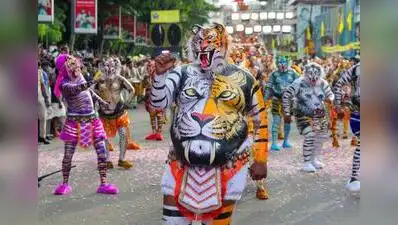
Hundreds of ‘tigers’ throng Swaraj Round in Thrissur on Saturday for pulikali, a unique folk art event staged as part of the Onam celebrations
Thrissur : About 450 men, women, children and senior citizens, painted and dressed as ferocious big cats along with thousands of enthusiastic spectators took over the streets of Thrissur on Saturday as the city hosted another spectacular edition of pulikali (tiger dance), marking the culmination of this year’s Onam celebrations. Each had roughly 50 ‘tigers’. One team was led by an eight-year-old boy and another by a 10-year-old girl, offering renewed hope for the survival and transmission of this vibrant folk art to a younger generation.
You Can Also Check: Gold Rate in Kochi | Silver Rate in Kochi | Bank Holidays in Kochi | Public Holidays in Kochi Stay updated with the latest Kochi news. The streets around Swaraj Round reverberated with the infectious beats of the chenda as the ‘tigers’ danced to the unique wild rhythm associated with folk performance. They bent low, sprang forward, swayed and leapt in energetic, feline movements, imitating prowling, stalking and pouncing tigers. The performance combines rhythm, physical endurance, dance and theatrical expression. Nine teams participated this year, a relatively high number compared to recent years. Financial constraints had contributed to declining participation in recent years, but enhanced allocations from the central and state govts and the Thrissur corporation brought a significant change. The South Zone Cultural Centre also continued its assistance. A particularly refreshing feature of this year’s pulikali was the participation of women and children in a folk tradition where the rhythmic dance of pot-bellied men has long dominated the spectacle. Mother-daughter and father-son duos further enriched the celebrations, adding to the atmosphere of joy, togetherness, and community participation. The participation of transgender person Deepthi Kalyani as a tigress was another significant moment. The large presence of women among the spectators also reflected the festival’s growing inclusivity and appeal. The transformation of dancers into tigers remains one of the festival’s most fascinating aspects. Their bodies are painted in vivid yellow, orange and red, with bold black stripes and spots painstakingly applied to resemble a tiger’s coat. The process can take several hours, involving layers of paint, intricate patterns and detailed facial make-up that gives performers a fierce, exaggerated appearance. Some also wear elaborate tiger masks or headgear with ears and fangs. The chenda provides the powerful, penetrating beats, while accompanying cymbals build the musical momentum. As the rhythm accelerates, the dancers become increasingly animated, turning the procession into a dramatic combination of music, dance, physical theatre and spectacle. Each team also presented colourful tableaux and floats based on different themes, ranging from Mahatma Gandhi ’s message to Cockroach Janata Party’s protest. Minister for sports and youth welfare O J Janeesh flagged off the pulikali as the first team entered Swaraj Round. Download the TOI App.