
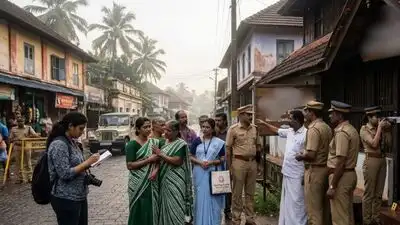
Keralam’s spa industry is facing significant challenges related to illegal activities and exploitation concerns (AI image)
The latest in a series of controversies was the arrest of two spa owners in Kovalam a week ago after investigations revealed that a 16-year-old girl was exploited there. A 32-year-old Ernakulam resident shared — on condition of anonymity — how he began visiting spas three years ago to manage postural strain caused by desk-bound work. All spa owners are ready to pay a licence fee of Rs 10,000 or Rs 15,000 if a legislation is made,” he said. New York & Los Angeles: Massage therapy is regulated through individual state board licences requiring more than 500 hours of accredited training. Bangkok: Spas are regulated by health service support department under health establishment act, requiring therapists to undergo a minimum 150 hours of certified training and mandating licensed spa managers.
Jamal said the police usually act when illegal activities like drug abuse, non-consensual acts or minors’ involvement are reported. State authorities have already announced plans for a long-overdue legislation to bring the shadowy wellness market out of limbo. In Feb, Rajasthan govt proposed ‘Model Guidelines for Spa, Massage Centre, Beauty Parlour and Yoga Therapy Centres’) You Can Also Check: Gold Rate in Kochi | Silver Rate in Kochi | Bank Holidays in Kochi | Public Holidays in Kochi Stay updated with the latest Kochi news.
“I was surprised when they said it could be discussed directly with the therapist. The UPI payment was made directly to her,” he said. Kochi-based lawyer Jiyas Jamal said soliciting was illegal in Keralam but not cross massaging (a therapist of opposite gender). Even if any commercial sexual activity is taking place, it would be tough for the police to prove it since they could easily claim that the client tipped her for a massage,” he said. Spa Wellness Development & Welfare Association president Rinshad K said that continuous raids were affecting regular spas as well. “A lack of a proper Act to issue licences or oversee the sector is encouraging illicit activities under the guise of spas,” Rinshad said. “Our demands include bringing in an Act to regulate spas and conducting periodic inspections respecting the privacy of clients and therapists,” he said. Kerala Travel Mart Society president Jose Predeep said that mainstream hotels are providing massage therapy, which can be seen as a model for running spas. It’s run professionally as well,” said Predeep. Beyond the expected muscular relief, it specifically targets vital anatomical points (marma),” he said. Karicheri said an ideal framework would integrate registered Ayurveda and Naturopathy practitioners into wellness setups to ensure professional oversight without turning the space into a clinical environment.
Keralam must give its spas a makeover with right regulations and incorporate traditional wellness ways into therapy to tap world’s tourists. Japan is famous for its onsen bathhouses and Thailand for its Nuad Thai, but the spa culture of Keralam, the land of Ayurvedic massages, is yet again in the news for all the wrong reasons. Early this month, a woman applying for a manager post at a spa in Ernakulam was lured to an interview and a subsequent selection party. Her beverage was allegedly spiked, and she was subjected to severe sexual assault after being held captive for two days at a nearby lodge. Police raided and sealed the establishments and arrested four key suspects, including a woman. A sub-inspector, allegedly acting in collusion with the spa staff and a woman associate, joined the conspiracy by threatening to reveal the visit to the officer’s family and his superiors unless he paid up. Why is a spa, supposedly a centre for wellness and rejuvenation, becoming the focal point of illegal activities? there is a rising trend of soliciting commercial sexual services under the guise of massage While most spas offer feel-good Swedish and deep tissue massages or aromatherapy. “The experience at the prominent Kochi spa was truly professional. The therapist was quite capable and I felt genuinely relaxed,” he recalled. He shared the experience with his friends, and during a subsequent group visit, one of them inquired whether any additional services were available. Everything was communicated in coded language, and the therapist explained the services on offer. He availed a similar service while staying at a hotel in Thiruvananthapuram. “Front desk called my room to ask if I was interested in a spa session. I asked if any additional services were available. On receiving a positive response, I went to the facility. This time, I was allowed to choose from available staff. Booking fee was paid at the counter and a separate payment was made directly to the therapist based on what was agreed upon,” he explained. “Spas are run using a licence from the local body concerned. “In most countries, spas are associated with the tourism sector. Keralites have a different perception about them. Many people are against their very existence. By developing the sector through proper regulations and issuing appropriate licences, govt can make good revenue. Govt can charge a fixed annual fee for renewal. Spas now fall under Ayurvedic treatment plans, though massage is mostly for pleasure and relaxation. But such professionalism can’t be expected from unregulated spas operating from rented spaces. “In many hotels, doctors, and male and female therapists are available. Massages are provided as per the guest’s request, though cross massaging wouldn’t be available. Go to any five-star hotel and they’ll have a good spa. “Apart from Ayurveda, Keralam is also home to traditional Kalari massage. Its distinct physiological benefit is that it actively promotes both arterial circulation and venous return, alongside lymphatic drainage. “Furthermore, implementing a standardised accreditation system like National Accreditation Board for Hospitals & Healthcare Providers for wellness centres would elevate industry standards. For a state that markets its lush backwaters and ancient healing arts to the world, the current crisis could prove a turning point. By enforcing clear operational boundaries, Keralam has a rare opportunity to purge the bad actors without disturbing the good. If govt gets this balance right, the state can eye its rightful place as a premier, authentic sanctuary for global wellness. Cross-gender services are standard and boundaries are enforced through legal body-draping standards rather than structural room restrictions. London: Premises must obtain a special treatment licence from local borough councils, with a focus on therapist credentials, hygiene and fire safety. Cross-gender appointments are standard, but facilities must provide unisex or dedicated single-sex changing rooms under equality laws. By law, therapist roles are strictly reserved for Thai citizens to protect local employment. Singapore: Operates a two-tiered licensing system under police-enforced massage establishments act. Premium (category I) spas in commercial centres have flexible operating conditions while budget (category II) outlets face open-plan structural rules and strict zoning checks. Tokyo: Distinctly separates traditional public bathhouses, which are gender-segregated under public health laws, from modern-day spas where licensed therapists offer individual cross-gender services. Rajasthan proposal: The proposed draft model guidelines for spas and beauty centres prohibit any form of sexual activity and seek to ban cross-gender therapeutic services. To prevent illicit operations, the guidelines mandate self-closing service doors without internal locks or bolts and insist on fully segregated, non-interconnected service areas for men and women. (Most states in India lack a specific law or set of rules regulating spas. Download the TOI App.
In Nov last year, in an even more curious case, a civil police officer visited a wellness spa in Palarivattom, Kochi, for a massage, where he was allegedly entrapped under the false accusation of stealing a gold chain from the premises. Today’s clients, particularly tourists, pay close attention to such certifications,” he said.
Dr Vinod Kumar Karicheri from Kasaragod, who has held health and wellness retreats across Europe and explored wellness destinations including Texas (USA), Costa Rica, and health spas in the Maldives, says that integrating Naturopathy, Ayurveda, and Kalari to create a new spa culture will help attract a significant number of international wellness tourists to Keralam. Experts view the situation as an opportunity to overhaul the sector and package Keralam as a wellness tourism destination.