
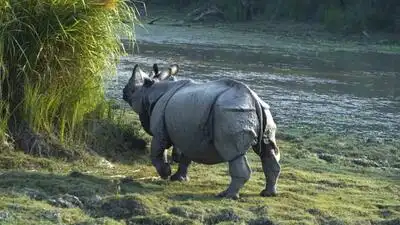
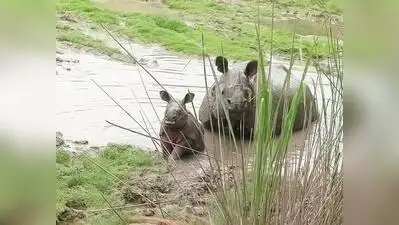
RM28 Indian one-horned rhino with calf
India Adopts Genomic Approaches for Rhinoceros Conservation
India is transitioning its conservation strategy for the greater one-horned rhinoceros, which numbers over 4,000 individuals in India and Nepal. The new approach emphasizes genomic stewardship, utilizing DNA profiling and advanced scientific techniques. This shift aims to enhance the effectiveness of conservation efforts, moving away from traditional field patrolling methods, according to officials in Pilibhit.
According to a 2025 International Rhino Foundation report shared with the ministry of environment, forest and climate change (MoEFCC), the global rhino population stands at approximately 26,700 — marking an increase of roughly 430 individuals since the 2022 assessment. India is home to more than 75% of the greater one-horned rhino population. The population recovery and habitat expansion gained fresh momentum following the rollout of the environment ministry’s National Rhino Conservation Strategy (NRCS) for the Greater One-Horned Rhinoceros in Feb 2019, with a focus on expanding the species’ range, strengthening protection and improving transboundary cooperation. Ramesh Pandey, additional director general at the environment ministry, said India had 3,323 greater one-horned rhinos as of March 2025, while Nepal had 752 — a steady rise from the 4,014 recorded in 2022. Kaziranga National Park recorded the largest population in India, estimated at around 2,600 in the 14th and latest census of March 2025, up from 2,413 pachyderms in 2018. The International Rhino Foundation has estimated the black rhino population at 6,788 and described the Javan and Sumatran rhinos as critically endangered.
1340 DNA samples have so far been collected in what officials called an “outstanding performance” under the RhoDIS programme. The species is found in Assam , West Bengal and Uttar Pradesh, according to the environment ministry. Rajamohan said the National Conservation Strategy had also provided for dedicated funding for rhino conservation. Earlier, there was no specific fund allocation for rhinos,” he said.
The Rhino DNA Index System (RhODIS) is being used to create genetic profiles of rhinos and support wildlife crime investigations, while data will also help officials track parentage, assess genetic diversity and reduce the risk of inbreeding in isolated populations. “We are preparing a five-year Annual Plan of Operation. India’s conservation efforts come against the backdrop of mixed global trends. The greater one-horned rhino is classified as vulnerable, while the black, Javan and Sumatran rhinos face more severe conservation threats.