
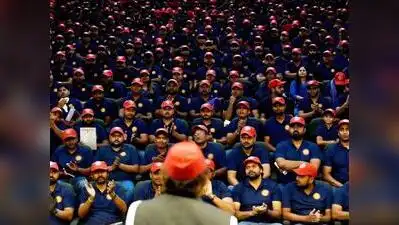
Lucknow: As political parties in Uttar Pradesh gear up for the 2027 assembly elections, colours are increasingly becoming political messages in themselves. From blue and saffron to green, parties are deploying visual symbolism alongside slogans and icons to signal social alliances, cultural positioning and electoral intent.
In the 2024 Lok Sabha elections, BSP’s performance saw a dramatic decline. Its vote share fell from 19.42% in 2019 to 9.39%, and the party failed to win a single seat. It secured a record 37 Lok Sabha seats and garnered 33.59% of the vote share, compared to just five seats and 18.11% vote share in 2019. So, since the 2024 LS elections, questions have intensified about the future alignment of Dalit votes in the state. Saffron has been and will remain BJP’s colour and 2027 assembly polls will again see saffron wave across the state.
The latest debate was triggered by Samajwadi Party chief Akhilesh Yadav ’s PDA Rath Yatra, launched from Rae Bareli. The symbolism was not lost on BSP chief Mayawati , who argued that adopting blue or invoking Ambedkar’s legacy was not enough to represent the interests of Dalits, tribals, backward classes and other marginalised communities.
However, SP’s former MLC Udaiveer Singh said that the party had always followed in the footsteps of those great personalities who have raised their voices against suppressed, deprived and exploited people, and it has nothing to do with the use of colours and symbols. UP BJP’s chief spokesperson Dinesh Pratap Singh said people of UP are scared of red colour, used by SP. Akhilesh these days is so frequently ‘changing colours’ that even the chameleons are embarrassed,” Singh further said.
Akhilesh flagged off his Rath Yatra from Congress leader Sonia Gandhi’s bastion in a luxury bus carrying the slogan, “Jo peedit hai wahi PDA hai. The vehicle also prominently displayed a portrait of Dr BR Ambedkar and featured a noticeable saffron shade, elements that political observers believe are far from incidental. She maintained that genuine commitment to Ambedkarite politics required substantive policy and ideological change rather than symbolic gestures. The timing is significant. SP, which fought the election in alliance with Congress as part of the broader INDIA bloc, emerged as the biggest gainer in the state. Political parties are now competing not only through policy promises but also through symbols that evoke identity, representation and belonging. “Hence the SP Chief first changed the colour of its student’s wing uniform to blue and now putting saffron shade in the rath.
Contesting as an ally of SP, it increased its vote share from 6.3% in 2019 to 9.53% in 2024 and improved its tally from one seat to six seats. Its vote share dropped from 49.98% in 2019 to 41.67% in 2024, while its seat tally came down from 62 to 33 seats. SP camp believes that a section of Jatav voters consciously chose SP in 2024 irrespective of the alliance arrangement While some Congress leaders maintain that the shift in Dalit votes was facilitated by SP-Congress alliance.
Congress, meanwhile, also registered significant gains. BJP remained the single largest force in the state but also witnessed a decline. SP functionaries attribute much of their dramatic rise not only to anti-incumbency against BJP but also to a substantial dent in BSP’s traditional support among Jatav Dalits.