
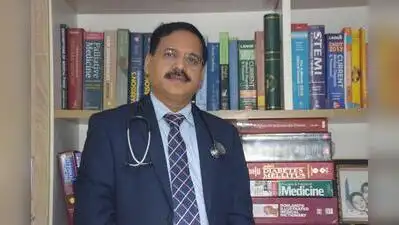
Dr Abhishek Shukla
Oct 1 is observed as the International Day of Older Persons, a day that gives us an opportunity not merely to celebrate longevity, but to reflect on what it means to grow older with dignity, security and quality of life. WHO estimates that around one in six people aged 60 years and older experience some form of abuse in community settings. WHO notes that India had about 104 million people aged 60 years and above according to the 2011 Census, representing 8.6% of the population at that time.
We, therefore, need to stop thinking of social connection as a luxury.
It is: “How well can we live those additional years?” On the International Day of Older Persons, we must look beyond longevity and ask a more important question: How are our older people living? Medical science has helped us live longer. But longevity, by itself, is not the same as healthy ageing. An older person may live for many more years, but those years can become increasingly difficult when illness, disability, loneliness, financial insecurity, loss of independence or inadequate care begin to dominate everyday life. This is the conversation we need to have. PROBLEMS OF AGEING NOT LIMITED TO DIEASES When we think of an elderly person, we often think first of blood pressure, diabetes, arthritis or heart disease. These conditions are important, but geriatric medicine teaches us that the health of an older person cannot be understood through individual diseases alone. Older adults frequently live with several health conditions simultaneously. They may also experience frailty, falls, delirium, dementia, incontinence, impaired mobility, hearing or vision problems and difficulties with daily activities. WHO identifies these as important complex health states associated with older age. A fall that may appear minor to a younger person can result in a fracture, hospitalisation, prolonged immobility and, sometimes, permanent loss of independence in an older adult. Similarly, dementia does not affect only memory. It can affect communication, behaviour, decision-making, mobility and the ability to perform everyday activities. The family, too, becomes part of the caregiving journey. This is why older people need comprehensive geriatric care, rather than simply treatment for individual diseases. LONELINESS CAN BE AS SERIOUS AS ILLNESS Perhaps one of the least visible problems of ageing is loneliness. Families are changing. Children may move to different cities or countries. Spouses and friends may pass away. Retirement can alter a person’s sense of purpose and social identity. An older person may be surrounded by people and still feel profoundly alone. WHO reports that social isolation and loneliness affect approximately one in four older people and are important risk factors for mental health problems in later life. A conversation, a visit, a meaningful activity, participation in the community, or simply being listened to can have enormous value in the life of an older person. Healthcare must recognise this dimension of ageing. AGEISM IS ANOTHER FORM OF NEGLECT There is also a quieter problem that older people face every day: the assumption that they are no longer capable, productive or entitled to make their own choices. We sometimes speak to an older person through their son or daughter instead of speaking directly to them. We assume that they cannot learn technology. We assume that confusion is simply “old age. We assume that pain, weakness or poor mobility are inevitable consequences of ageing. And sometimes we stop asking them what they want. These attitudes matter. WHO describes ageism as stereotypes, prejudice and discrimination based on age, and recognises that such attitudes can negatively affect the health and well-being of older people. Growing older should never mean losing one’s voice. ELDER ABUSE IS REALITY WE CANNOT IGNORE Another issue that deserves far greater public attention is elder abuse. Abuse is not limited to physical violence. It can include psychological or emotional abuse, financial exploitation, neglect, abandonment and denial of dignity or basic care. The most uncomfortable aspect of this problem is that abuse can occur within relationships where an older person expects trust and protection. We must create an environment in which older people feel safe enough to speak, and in which families, caregivers and healthcare professionals know how to recognise warning signs. THE CAREGIVER ALSO NEEDS CARE Behind many older patients is another person who is often overlooked, the caregiver. A spouse, daughter, son, daughter-in-law or professional caregiver may spend years managing medications, appointments, feeding, mobility, hygiene and behavioural changes. Caregiving can be deeply meaningful, but it can also be physically and emotionally exhausting. If we want better care for older people, we must also support those who provide that care. Respite services, caregiver education, counselling, financial support and access to professional healthcare can make a significant difference. INDIA MUST PREPARE FOR AN AGEING POPULATION India is also experiencing a significant demographic transition. The number of older people is increasing, while traditional family structures and patterns of living are changing. It also highlights loneliness and neglect as concerns associated with changing family and social structures. This means that elderly care cannot remain solely a family responsibility. We need stronger geriatric services, accessible primary healthcare, rehabilitation, dementia care, palliative care, home-based care and long-term care systems. Hospitals and healthcare institutions must also become more age-friendly. Our cities, public transport, buildings and neighbourhoods need to be designed with older people in mind. A healthy ageing society is not one in which older people are merely kept alive; it is one in which they can continue to participate, contribute and make choices. THE GOAL IS NOT SIMPLY TO ADD YEARS TO LIFE As a geriatrician and palliative care physician, I believe one of the most important questions we must ask is not simply: “How long can we live?
LET’S CHANGE THE WAY WE SEE AGEING Oct 1 should not be limited to greetings, photographs and ceremonial celebrations. Therefore, our approach must also be individual. Healthy ageing is ultimately about dignity, independence, participation and the ability to live according to one’s values for as long as possible. (Writer is a geriatrician & physician and a member of Rajya Parishad (Varishtha Nagrik), Uttar Pradesh) You Can Also Check: Gold Rate in Lucknow | Silver Rate in Lucknow | Bank Holidays in Lucknow | Public Holidays in Lucknow | Lucknow AQI | Weather in Lucknow | Petrol Price in Lucknow | Diesel Price in Lucknow | CNG Price in Lucknow | LPG Price in Lucknow Stay updated with the latest Lucknow news.
There is no single picture of an older person. Some people remain active and independent well into their eighties and nineties. Ageing is deeply individual. We must preserve independence wherever possible, treat pain and other distressing symptoms, prevent avoidable disability, recognise dementia and frailty early, support caregivers, protect older people from abuse and ensure that those who require long-term or palliative care receive it with dignity. It should remind us that older people are not a burden to be managed. They are individuals with histories, relationships, rights, preferences and aspirations. They have raised families, built institutions, contributed to communities and carried generations forward. Our responsibility is not merely to care for them when they become ill. It is to build a society in which growing older does not mean becoming invisible. Download the TOI App.
Others require considerable assistance much earlier.