
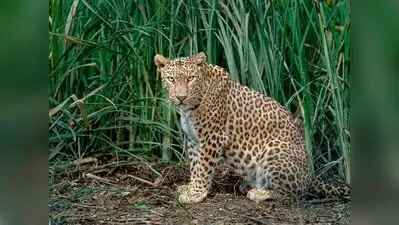
Forest dept seeks approval for annual 15% sterilisation target as leopard numbers are projected to rise 201% in five years without intervention
Pilibhit : UP forest officials have proposed capturing and sterilising up to 75% of ‘problem leopards’ across the Terai belt over five years to curb rising human-wildlife conflict as the animals increasingly establish breeding territories in farmland, river catchments and scrubland near settlements. The proposal, covering Bahraich, Lakhimpur Kheri, Pilibhit, Moradabad and Bijnor, sought approval for an annual sterilisation target of 15%, citing departmental estimates that leopard populations in the affected areas could grow by 201% over five years without intervention. Bareilly zone chief conservator of forests PP Singh submitted the proposal to UP principal chief conservator of forests (wildlife) Anuradha Vemuri, seeking permission under Section 12(bb) of the Wild Life (Protection) Act, 1972. Singh said leopards bred throughout the year, with females typically giving birth to two to four cubs every 21 months after a gestation period of 90 to 105 days. With cub mortality estimated at 20% and an approximately equal male-female ratio, officials projected substantial population growth unless breeding was controlled. The proposed annual sterilisation target of 15% was intended to gradually reduce reproductive capacity and stabilise leopard numbers over the five-year period. Official records showed that Bijnor forest division recorded 825 leopard encounters across 446 villages between 2015 and 2025, with attacks claiming 35 lives and injuring 55 people, particularly after 2022. In Kheri district, forest teams trapped 17 leopards around North Kheri forest division this year, while seven people died in attacks. In Bahraich, 26 leopards were captured in villages surrounding Katarniaghat wildlife sanctuary and Bahraich forest division between April and Oct 15, while attacks claimed 10 lives. The wider conflict-management blueprint estimated expenditure of more than Rs 610 crore across three sensitivity phases, including physical barriers designed to protect settlements while keeping natural wildlife corridors open. It also proposed a dedicated wildlife surgical and hospital facility with operation theatres, squeeze cages and specialised post-operative care enclosures at an estimated cost of Rs 2.74 crore, besides thermal cameras linked to a district command centre for monitoring leopard movement.
Because relocated leopards often returned to prey-rich sugarcane fields, singh said conventional measures such as cage-trapping and translocation had proved inadequate. The department therefore proposed a programme combining population management with measures to reduce encounters between leopards and residents. Vemuri confirmed to TOI that the proposal was under consideration on merit. Officials said growing tiger populations around Corbett, Rajaji and Amangarh reserves had also pushed leopards towards human settlements, while similar patterns were reported around Dudhwa, Katarniaghat and Pilibhit, where agricultural workers frequently encountered the animals. Divisional forest officers Apoorv Dixit and S Sundaresh confirmed the figures for their respective jurisdictions.
The department proposed sterilisation as a longer-term alternative to repeated trapping and relocation, which officials said had failed to prevent leopards from returning to villages and agricultural fields. If approved, it would be UP’s first leopard sterilisation programme aimed at controlling population growth in conflict-prone areas. The proposal covered a vast agricultural landscape where sugarcane fields, river catchments and dense vegetation provide leopards with shelter, water and access to domestic prey. Sugarcane occupies nearly half the cultivated land in parts of the region, allowing the animals to establish breeding territories outside protected forests. Zoos and rescue centres were also operating at capacity, limiting options for housing captured animals.
The proposal cited Maharashtra’s experience in Pune district’s Junnar forest division, where authorities secured approval from the ministry of environment, forest and climate change under Section 12(bb) for targeted immunocontraceptive trials involving female leopards. Stay updated with the latest Bareilly news. Senior forest officials recommended technical reviews of the UP proposal by Wildlife Institute of India and WWF-India before any implementation. Download the TOI App.