
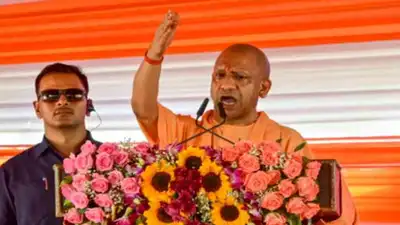
Under the Yogi Adityanath government’s broader development strategy, the programme places technology skills alongside digital infrastructure
The Tech Yuva–Samarth Yuva Yojana is a technology-focused initiative announced in the 2026–27 State Budget to equip young people with skills relevant to emerging industries, strengthen their employability and create opportunities in the digital economy. 1. Objectives of the scheme The Uttar Pradesh Budget 2026–27 includes Tech Yuva–Samarth Yuva Yojana among its new science, technology and information technology initiatives. A department-wise policy update reports a Rs 100 crore budget provision for the scheme.
LUCKNOW: Tech Yuva–Samarth Yuva Yojana represents Uttar Pradesh’s effort to make youth skill development more responsive to the needs of the digital economy. By focusing on technologies such as AI, AR, VR and XR, the initiative seeks to equip young people with capabilities that may become increasingly important across industries. Under the Yogi Adityanath government’s broader development strategy, the programme places technology skills alongside digital infrastructure, innovation and employment generation. Its success will ultimately be measured by how effectively training reaches young people and translates into jobs, entrepreneurship and sustained career growth. The programme reflects the Yogi Adityanath government’s broader emphasis on developing skilled human capital and positioning Uttar Pradesh as a centre for innovation and advanced technology. This allocation forms part of the state’s wider technology-development strategy, which also includes the Uttar Pradesh AI Mission, the New and Emerging Technology Mission, data-centre development and startup-support infrastructure. Connection with Uttar Pradesh’s technology ecosystem The scheme is designed to complement the state’s wider efforts to develop technology talent and encourage innovation. Proposed U-Hub facilities in Lucknow and Gautam Buddha Nagar are intended to strengthen the startup ecosystem by providing support for innovation and entrepreneurship. The state is also pursuing initiatives in AI, robotics, digital infrastructure and emerging technologies. By linking technology training with this expanding ecosystem, the government aims to improve the prospects of young people seeking employment in advanced industries and those interested in developing technology-based enterprises. If implemented effectively, the scheme could help Uttar Pradesh in several ways: Improve access to emerging technology skills among students and young jobseekers.
The detailed curriculum, training delivery arrangements and certification framework should be confirmed from the scheme’s official implementation guidelines. Augmented and Virtual Reality: Acquiring exposure to immersive technologies used in education, design, simulation and industrial training. Extended Reality: Exploring advanced digital environments and emerging applications. Employment-oriented skills: Building technical capabilities that can improve young people’s readiness for new jobs and career opportunities. Innovation and entrepreneurship: Creating a stronger connection between technical skills, startups and emerging technology businesses. These areas reflect the government’s broader strategy of preparing the workforce for a rapidly changing digital economy. Who is expected to benefit? The scheme is intended to benefit young people and students in Uttar Pradesh who need exposure to emerging technologies and the skills required by technology-driven industries.
Prospective applicants should therefore check the relevant government notification before applying. Budgetary provision You Can Also Check: Gold Rate in Lucknow | Silver Rate in Lucknow | Bank Holidays in Lucknow | Public Holidays in Lucknow | Lucknow AQI | Weather in Lucknow | Petrol Price in Lucknow | Diesel Price in Lucknow | CNG Price in Lucknow | LPG Price in Lucknow Stay updated with the latest Lucknow news. However, the precise eligibility conditions—including age limits, educational qualifications, income criteria, application procedures and whether training is available free of cost—have not been established by the sources reviewed. Download the TOI App.
The programme envisages training approximately 25 lakh young people and students in modern technologies, including Artificial Intelligence (AI), Augmented Reality (AR), Virtual Reality (VR) and Extended Reality (XR), according to reports on the 2026–27 Budget. Key areas of focus The programme’s reported technology priorities include: Artificial Intelligence: Understanding AI applications and developing capabilities relevant to technology-enabled industries. The scheme seeks to bridge the gap between conventional education and the practical technology skills increasingly demanded by employers. Its central objective is to prepare young people for emerging career opportunities by encouraging technology-based learning, innovation and industry-relevant competencies. Reduce the gap between academic learning and industry requirements. Improve employability in technology-intensive sectors. Encourage innovation and technology entrepreneurship. Build a skilled workforce to support investment in advanced manufacturing, IT and digital services.