
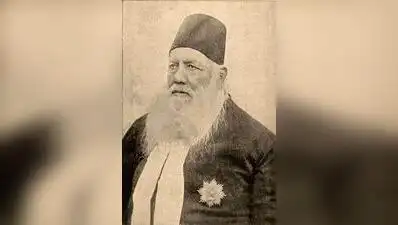
Sir Syed Ahmad Khan
As his 209th birth anniversary is observed on Oct 17, his call for education, rational inquiry and social reform remains remarkably relevant. In 1864, he founded the Scientific Society, with the objective of making modern knowledge more accessible through translations into Urdu. You Can Also Check: Gold Rate in Lucknow | Silver Rate in Lucknow | Bank Holidays in Lucknow | Public Holidays in Lucknow | Lucknow AQI | Weather in Lucknow | Petrol Price in Lucknow | Diesel Price in Lucknow | CNG Price in Lucknow | LPG Price in Lucknow Stay updated with the latest Lucknow news.
A famous couplet aptly captures the dilemma confronting society: ”Aain-e-nau se darna, tarz-e-kohan pe adna, Manzil yahi kathin hai, qaumon ki zindagi mein.” (To be afraid of new ways and stubbornly cling to old customs is indeed a difficult stage in the life of nations.) Sir Syed not only advocated modern education but also championed scientific rationalism and supported women’s education. More than a century ago, when large sections of Indian Muslims were struggling to reconcile traditional learning with the demands of a rapidly changing world, Sir Syed Ahmad Khan saw education as the bridge between the two. A reformer, educationist and champion of scientific thought, he believed that a community unwilling to embrace modern knowledge risked being left behind. Sir Syed pioneered the Aligarh Movement, aimed at modernising education among Muslims in the 19th century. During his eventful career, he also served in the judicial and administrative system, including as a sub-judge. In the aftermath of the Industrial Revolution, the world was evolving rapidly in education, science and industry. The Muslim community, however, remained inadequately equipped to keep pace with these developments. This educational backwardness was among Sir Syed’s biggest concerns. In the 19th century, apart from religious instruction, Muslim education relied heavily on classical works such as Bostan and Gulistan, two celebrated works of Persian literature by Sheikh Saadi Shirazi. These were, undoubtedly, great works of literature, wisdom and moral philosophy, but contemporary education also needed greater engagement with science and economics to prepare the community for the approaching 20th century. Sir Syed’s vision was that Muslims should break the shackles of orthodoxy and provide their children with modern scientific education. His emphasis on scientific thinking was strikingly forward-looking. Decades later, the Constitution of India would include the development of scientific temper among the fundamental duties of citizens under Article 51A. Sir Syed firmly believed that a Muslim equipped with modern education and knowledge could become an asset to the country and contribute meaningfully to nation-building. Without education, he feared, the community would struggle to participate fully in economic and national progress. The most enduring institutional legacy of that vision is Aligarh Muslim University (AMU). Over the decades, the university has produced scientists, litterateurs, sportspersons and professionals who have distinguished themselves in their respective fields and contributed to the country. Download the TOI App.