
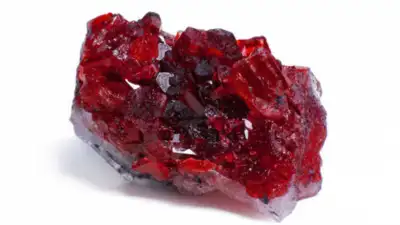
Because its colour catches someone’s eye, a gemstone can spend millions of years forming beneath the Earth’s surface, only to be chosen in a few minutes. But that brilliant ruby, deep blue sapphire or vivid emerald may have a story that goes far beyond its appearance. Was it formed naturally or grown in a laboratory? Has it been treated to improve its colour? Can a certificate establish what it really is? And if you’re buying it for astrological reasons, what should you know before wearing it?
Because a friend wears it or a relative recommends it, a gemstone may catch your eye in a shop window, but if you’re buying it for astrological reasons, Jagasia advises against choosing one simply. For centuries, coloured gemstones have occupied a fascinating space between nature, craftsmanship, personal taste and belief. They have adorned royal jewellery, travelled through generations as family heirlooms and become part of traditions surrounding marriage, prosperity and astrology. Yet choosing one involves more than finding a stone that looks beautiful. For Diya Jagasia, founder of Cosmic Gemstones, the decision begins with understanding why a person wants a gemstone in the first place. Someone buying an emerald for its rich green colour may have very different priorities from someone seeking a stone for its place in Vedic astrological traditions. Jagasia is drawn to this intersection of beauty, nature and astrology. She even hopes to spend her seventies studying gemstones from a mountain villa. Until then, her advice for anyone considering a purchase is practical: understand what you’re buying, ask the right questions and give yourself time to choose. Here are five things she believes every buyer should consider.
Because of traditional beliefs about their significance, jagasia notes that people buying gemstones for Vedic astrological practices may specifically seek natural, untreated stones. Jagasia compares this approach to understanding individual needs before making a choice. Her point is that a recommendation should be personal, not based on a passing trend or someone else’s experience. It is worth distinguishing traditional belief from established science, however. There is no robust scientific evidence that gemstones can alter planetary influences or reliably change a person’s fortune. Buyers can still value their cultural or spiritual significance while making an informed decision about what they purchase. Image: AI A beautiful stone can be difficult for an inexperienced buyer to assess. Colour alone cannot establish its identity, origin, treatment history or value. That is where the jeweller becomes important. In many Indian families, jewellery buying is built on relationships. People return to the same jeweller their parents or grandparents trusted, relying on years of familiarity and word of mouth. That continuity can be useful, but it should not replace asking questions. Look for a seller who can explain the gemstone’s characteristics, disclose known treatments, provide appropriate documentation and clearly state what you are paying for. Ask about the return policy, too, particularly when buying a valuable stone. A trustworthy jeweller should be willing to explain the details without pressuring you into a purchase. If basic questions about whether a stone is natural, treated or lab-grown are met with vague answers, take your time before committing. Two gemstones can look remarkably similar while having different origins and histories. Understanding those differences is one of the most important steps before buying. Natural gemstones form through geological processes within the Earth over long periods. Treated gemstones are natural stones that have undergone processes intended to improve their appearance or other characteristics. Treatments vary by gemstone and may include heating, irradiation or fracture filling. Some are widely accepted in the trade, but they can affect a stone’s value and must be disclosed appropriately. Lab-grown gemstones are created through controlled processes that reproduce many of the conditions involved in natural gemstone formation. They can share the same chemical composition and crystal structure as their natural counterparts, although they have different origins. They are not necessarily imitations: an imitation merely resembles another gemstone, while a lab-grown stone may be the same gemstone material produced artificially. These distinctions matter when comparing prices, assessing resale expectations or buying a stone for a particular purpose. That is a matter of belief rather than a scientifically established property of the stones. For buyers primarily interested in colour, design and wearability, treated or lab-grown options may also be worth considering. The important thing is to know exactly what you are buying and whether it matches your expectations. A stone may look impressive under shop lighting, but appearance alone cannot tell you everything about it. A report from a reputable gemmological laboratory can help establish its identity and disclose detectable treatments or whether it is natural or laboratory-grown. Before purchasing an expensive gemstone, ask what documentation is available and check which laboratory issued the report. Make sure the report corresponds to the stone being sold to you. Where possible, verify the report directly with the issuing laboratory. It is also important to understand what the document does not establish. A gemstone identification report is not automatically a valuation certificate, a guarantee of future resale value or proof of every claim a seller might make about the stone. Jagasia compares a gemstone report to an Aadhaar card: a useful form of identification that should be kept safely. The analogy has its limits, but the underlying advice is sound. Retain the report, purchase invoice and any treatment disclosures, particularly if you intend to insure the jewellery, resell it or pass it down as a family heirloom. Coloured gemstones are unusual objects: they bring together geological history, human craftsmanship, cultural traditions and individual taste. Their appeal can lie in a rare colour, a family story, a long-standing belief or the simple pleasure of finding a stone that feels unmistakably yours. That personal connection need not come at the expense of practical judgement. Ask questions about origin and treatment, seek independent documentation when appropriate, understand the limits of astrological claims and never feel pressured to buy before you are ready. The biggest or most expensive gemstone is not automatically the right choice. A well-informed purchase begins with knowing what matters to you, what the stone can genuinely offer and what you are paying for. Choose with curiosity, buy with clarity and let the meaning of the gemstone be your own. You use AI every day. Now get your AI Quotient. Take the AIQ test Get the latest Lifestyle News and more. Download the TOI app.
5. The most beautiful gemstone is the one you will actually wear
Because it is fashionable, expensive or recommended by someone else, jagasia’s advice is to choose something you genuinely enjoy wearing rather than buying a stone simply. Within Vedic astrology, different gemstones are associated with particular planets and astrological interpretations. Practitioners may recommend stones after examining an individual’s birth chart. If you follow these traditions, seek guidance from a practitioner you trust rather than assuming that a gemstone considered auspicious for one person will be suitable for everyone. There is a temptation to equate a gemstone’s worth with its size, rarity or price. But a large statement stone that rarely leaves its box may bring less personal satisfaction than a smaller one that becomes part of your everyday jewellery. Think about how you intend to wear it. Will it be set in a ring, pendant or pair of earrings? Does the design suit your lifestyle? Will the setting protect the stone adequately? If the stone carries spiritual or astrological meaning for you, wearing it may also become a personal ritual. If you are drawn to gemstones for their colour or craftsmanship, that connection can be just as meaningful in its own way.