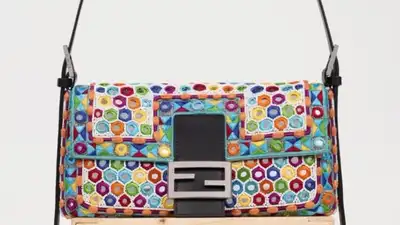
India is a melting pot of cultures and the statement has held true for as long as the country has existed. From clothes to spices and even festivals, there is nothing the country has not shared with others across the globe. But cultural exchange and appropriation are different. And what has been happening recently with India’s culture and the global fashion industry is an event that must not go unnoticed, not when the country’s heritage and fashion have been repeatedly used by high-fashion global brands without proper crediting.
What happened with Fendi?
The bag belongs to Fendi’s Fall/Winter 2026-27 collection. From Indian embroidery to Japanese dyeing techniques, all have made debuts in pieces launched by global brands. But the uproar over Fendi’s actions might be uncalled for, slightly. Maria Grazia Chiuri leads the creative direction of the brand now and has built a reputation for blending regional craft with high fashion. The bag does have an Indian connection as it was made by hand in Mumbai, at a workshop called Chanakya. Chanakya is one of India’s most respected embroidery and craft houses. For decades, it has produced hand-embroidered textiles for major European fashion labels. Its artisans use techniques passed down through generations: mirror inlay, thread work, and beading done entirely by hand. Luxury fashion has a history drawing from non-Western craft traditions. Sometimes the brands do the deed and mention the region, the artisans and the technique. Other times, they go vague just like this one. Industry members have often flagged this gap. Cultural inspiration without admission has never gone by without criticism and for now, Fendi’s colourful bag remains in a grey zone.
But what would probably cost no more than Rs 500 in India is being sold by the brand online for Rs 9.5 lakh or roughly $10,000. On Fendi’s website, the item is listed under the name: ‘Baguette 26424: Multicolour Re Edition bag with embroidery and mirrors. In 2025, Prada faced backlash for its sandals that closely resembled Kolhapuri chappals, traditional Maharashtrian slippers with roots going back centuries. In 2026, Ralph Lauren presented its Fall 2026 women’s collection at Paris Fashion Week.
Around the same time, a Scandinavian brand called a dupatta-style scarf a “Scandinavian scarf,” despite the drape and fabric style being peculiarly South Indian. If the price hike does not raise eyebrows, the plain technical name will surely elevate the emotions. Along with long jackets, trendy boots and stylish pants, the models donned long silver earrings. Numerous viewers accused the brand of appropriating Indian culture by using Indian jewellery called ‘jhumka’, again without attribution.