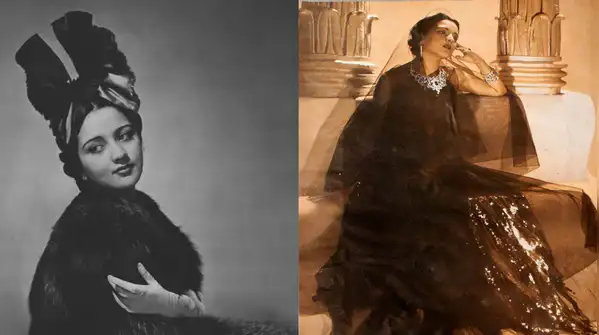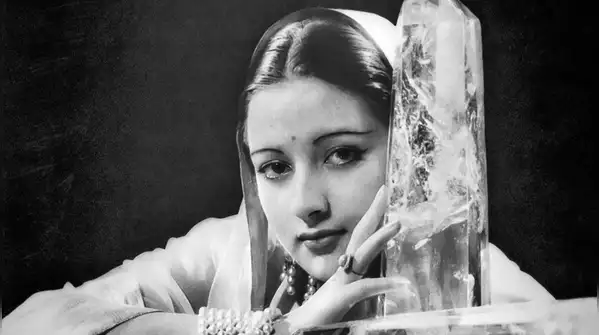
Long before Indian celebrities started appearing in headlines wearing couture sarees designed by international designers, an Indian royal was already earning accolades in the fashion salons of Paris. Meet the ever-glamorous Princess Sita Devi of Kapurthala, the Maharani credited with inspiring well-known fashion designer Elsa Schiaparelli to come up with one of her novel explorations of the Indian style of draping in the 1930s.
And then the Paris moment happened
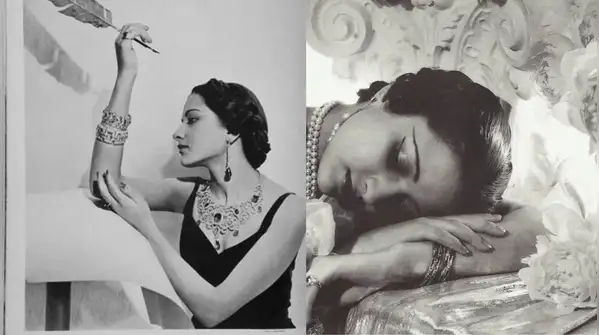
This tale dates back to 1934, when Princess Sita Devi touched down in Paris wearing her sarees. The historical records of some fashion magazines say that she turned out to be the source of inspiration for the designer Elsa Schiaparelli during the summer of 1934, when she finally arrived in Paris in a saree. In 1935, Elsa Schiaparelli revealed her ‘Stop, Look and Listen’ collection, which showcased dresses made of complex draping inspired by Sita Devi’s saree collection. According to some fashion and educational resources produced by the Philadelphia Museum of Art, the works were based on sarees worn by Princess Sita Devi, who created a stir in Paris in the summer of 1934.
Her style of wearing the saree was able to catch the public’s eye. Schiaparelli did not give an exotic reference to the saree, but it created a stunning, inspired piece featuring fluid drape and long lines, which turned it into a brand-new concept concerning evening dresses. The relationship between the princess and Schiaparelli is intriguing, as the collection made use of shapes reminiscent of the saree. The shapes were described as soft and draped, as their folds gave the fabric a flowing quality. An example of an impressive design from the collection had to be the famous black rayon dress with decorative borders made out of pink and yellow fabrics. The popularity of this iconic dress warranted it being produced commercially at Bergdorf Goodman in New York, making it a fusion of Indian and Parisian couture in the American fashion arena. From here, the narrative gets an even larger scope than just one designer and one royal lady, making such a strong impression across the globe.
Princess Sita Devi, born in 1915, was an Indian royal known for having been photographed the most in her time. The story that is famous often refers to Schiaparelli’s creation of 1935 as the fashion house’s ‘first sari’. Therefore, calling Schiaparelli’s creations early couture inspired by the saree seems more appropriate than calling them ‘sarees’ in the conventional sense.
Her incredible looks and amazing style made her one of the most sought-after persons in fashion and social circles in the early 1930s. What was particularly intriguing about Sita Devi was the fact that her style didn’t limit itself to traditional Indian outfits. She was known for wearing fancy chiffon sarees and Indian jewellery one day and Western haute couture the next day from famous designers like Coco Chanel, Madeleine Vionnet, Jeanne Lanvin, and Jeanne Paquin. Simply put, she was practicing the East-meets-West fashion idea long before it turned into a common luxury fashion theme. This is an instance where clarification regarding fashion history is necessary. But, in a more precise sense, these were not actual sarees from India but gowns that were inspired by the saree’s draping technique. The discussion surrounding the Schiaparelli exhibition at the Victoria and Albert Museum clearly highlighted this distinction. Schiaparelli’s designs were evening gowns worn with headscarves styled in a way that was different from the way sarees are traditionally worn.