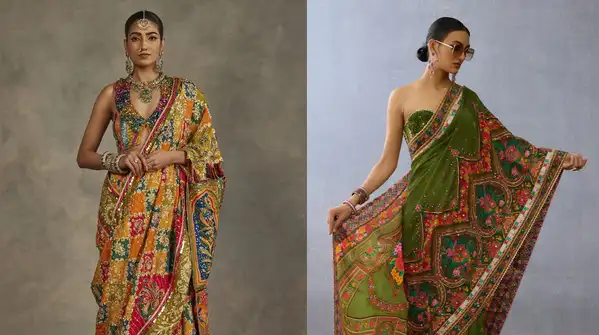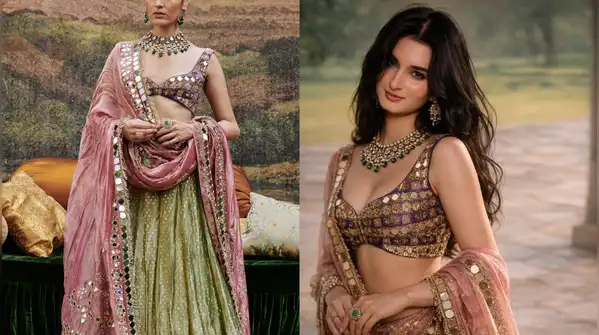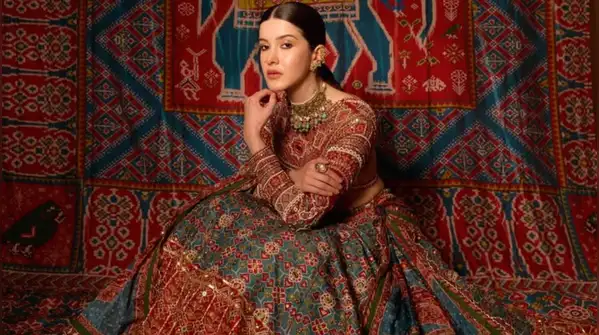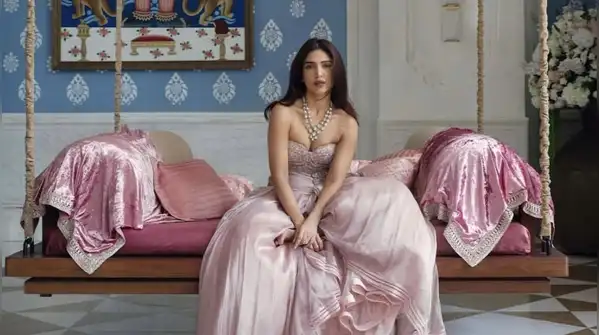
in India it was never lost While fashion keeps on rediscovering the maxim “more is more”. Maximalism isn’t a trend India has caught up with. It is a language conveyed through textiles for ages. Look at the dots of a bandhani, the ripples of a leheriya, the flowers of a phulkari, the glint of a mirror, and the glow of a zardozi. The Indian wardrobe has never been one of restraint. Layering of colours, prints, and textures isn’t a trend. That’s the way Indians have always dressed.
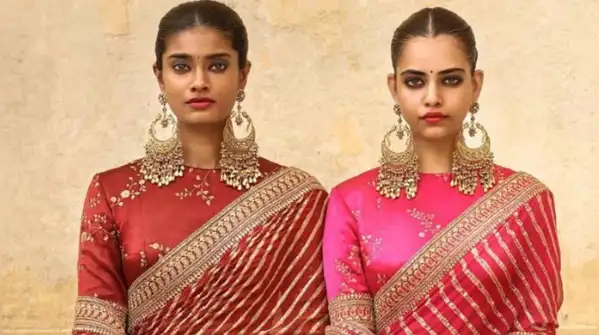
A phulkari, the “flower work” of Punjab, makes the entire fabric invisible due to the density of decoration. If you consider the traditional craft of the country, the richness would be apparent. A bandhani turns thousands of tiny tied dots into a field saturated with colours. A leheriya creates ripples of colour across the fabric in diagonal patterns. A mirror work piece brings the reflection of the light on the fabric, and zardozi adds the glory of royalty. All these crafts were created for weddings, harvests, and festivals, where rich colours and embroideries were essential parts of the celebration. The richness has always come from the hand of the maker. (Image Credits: Pinterest)
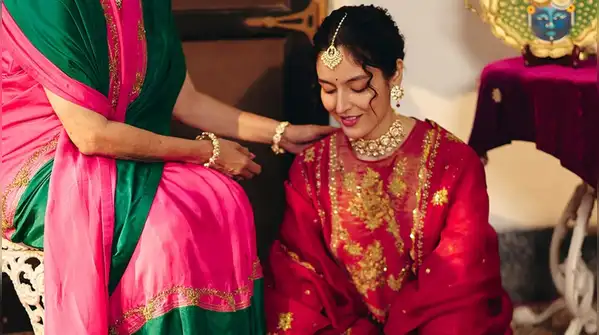
India was maximalist before it was cool
Maybe this is the real measure of “more”: how much of “it” lasts for the next generation to wear. (Inputs by: Shradha Bindra, Head of Design and Creative Direction, BIBA) (Image Credits: Pinterest) One of the most exciting shifts happening right now in Indian fashion is the growing number of young women digging through their mothers’ and grandmothers’ wardrobes and finding that the best pieces are already there. A phulkari dupatta worn over a white shirt and jeans. A bandhani saree restyled into a skirt. These combinations are unique since they have a history behind them, and no other person will be found wearing the same piece. Heirloom dressing has become a fashion choice. (Image Credits: Pinterest) Indian dressing has always been shy about mixing bold colours and combinations that others might call too much: pink with orange, red with green, stripes with florals. The skill lies in making them work. The key is to let one element dominate, while others remain quieter. Pick one colour and repeat it all through the attire, create contrasts using varying sizes of prints, and balance elaborate patterns of mirror work and zardozi with smooth textures of cotton or mulmul. (Image Credits: Pinterest) Maximalism does not necessarily mean any specific occasion. A leheriya dupatta makes an ordinary kurta into fabulous attire, a phulkari stole gives any plain shirt a new look, and a mirror-work handbag adds an extra spark to any office outfit. In order to be festive, a piece of zardozi blouse in a simple saree or accessories over one piece of cloth must be worn. Everything depends on how much is enough and how much more could be added to it. (Image Credits: Pinterest) Maximalism in India was never a rebellion against minimalism. It is an inheritance. Each tie, each stitch, and each mirror speaks the history of its creator and a family’s memory, and every time these pieces are worn, another chapter is added to their story. These clothes weren’t created to just sit around and gather dust somewhere. These clothes have been created to be worn, looked upon, and someday passed on to the next generation.