
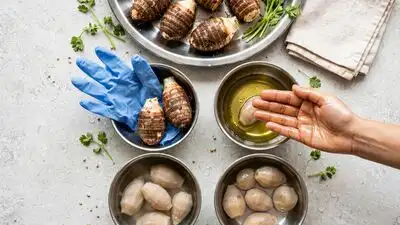
PC: AI Generated
1. Briefly boil the arbi before peeling
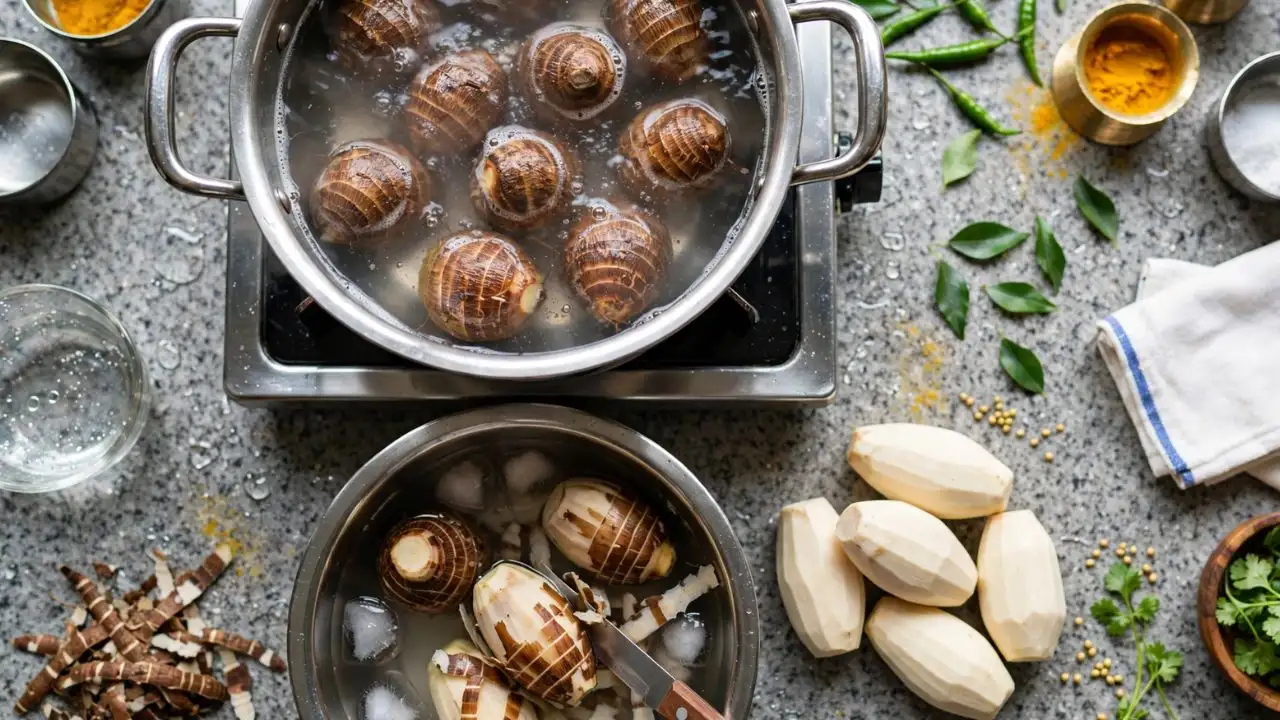
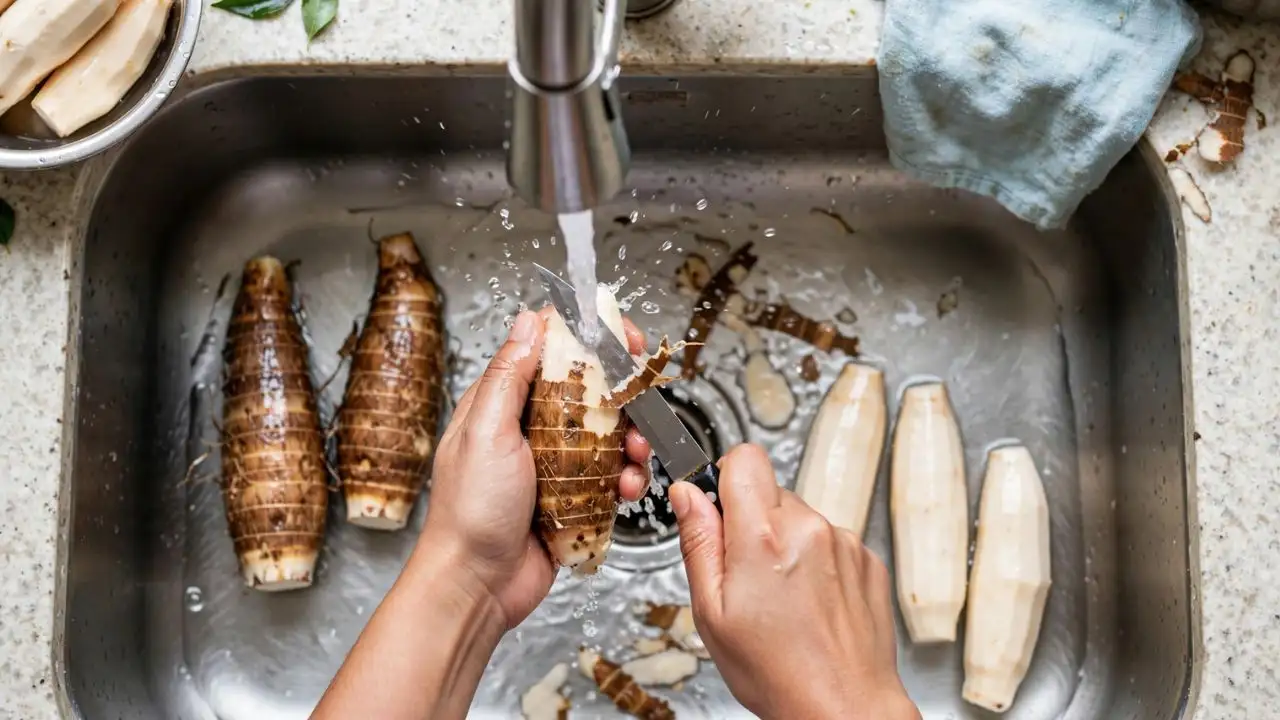
Because cooking can reduce the irritating effect associated with taro’s calcium oxalate raphides, heat is useful. Because you can rinse away the residue continuously instead of letting it build up on your hands, this is especially useful when handling several arbi at once. Fortunately, you do not have to tolerate the irritation. A few changes to the way arbi is prepared can reduce direct contact with its raw surface. From briefly heating the roots before peeling to keeping the exposed flesh away from your hands, these methods can make the task much easier. Instead of peeling completely raw arbi, place the whole roots in boiling water for a short time. The aim is not to cook them until soft but to heat the outer layer enough to reduce the harshness of the raw material. Leave them for a few minutes to let them cool, and then remove the loosened skin with a knife. PC: AI Generated Steaming gives you another way to heat the outer layer without putting the roots directly into water. Keep the whole arbi for steaming. Once it is cool enough to handle, trim the ends and slide or scrape away the skin. This method is particularly useful when you want the arbi to remain relatively firm. Proper cooking also helps reduce the irritating compounds found in raw taro. After trimming the ends, hold the arbi under a gentle stream of water while peeling it with a knife. The water helps wash away the sticky residue as the skin comes off and keeps the exposed surface from sitting on your fingers. PC: AI Generated If you prefer to peel raw arbi, the preparation should be organised properly before starting. Wash the roots and dry their outer surface thoroughly. Hold each root with a folded piece of kitchen paper or a clean, dry cloth while trimming and peeling it. The idea is to reduce how much raw material and moisture reach your fingers. Replace the paper or cloth when it becomes wet rather than continuing to handle the root with the same material. Changing the peeling method is only one solution. How you handle the root before, during, and after peeling can also make a noticeable difference. A food-safe disposable glove creates a physical barrier between your skin and the raw arbi. Wear it on the hand holding the root and use a peeler or knife with the other hand. If both hands tend to become irritated, use gloves on both. Remove them carefully afterwards and wash your hands normally rather than touching your face or other sensitive areas while wearing them. Once a piece has been peeled, place it directly into a bowl of clean water rather than leaving it on the chopping board. This keeps the exposed surface from sitting around while you continue peeling the remaining roots. Adding flour to the hands may make a slippery root easier to grip, but it does not remove the compounds responsible for arbi’s irritation. It can also leave a messy coating on both the hands and the root. Looking for trusted parenting advice? Follow TOI Parenting Circle on Instagram for expert guidance, relatable stories, and practical tips delivered every day.
Handling Arbi: Precautions for Peeling Taro
Peeling arbi, also known as colocasia or taro, can cause skin irritation due to the presence of tiny calcium oxalate crystals called raphides. These crystals, along with other irritating compounds found in raw taro, can lead to a prickly and itchy sensation on the skin. This discomfort often persists long after handling the root.
To avoid irritation, it is advisable to wear gloves when peeling arbi. Ensure that you handle the root carefully to minimize direct skin contact. Proper preparation can make the cooking process more pleasant and reduce any uncomfortable side effects associated with this vegetable.
Skin Reactions to Taro Exposure
Contact with the raw surface of taro can lead to skin irritation. Taro contains calcium oxalate crystals, specifically in needle-like formations called raphides. When these crystals come into contact with the skin, they can cause a prickling or itching sensation. Additionally, the layer just beneath the peel can also trigger similar reactions, contributing to discomfort for those handling the vegetable without proper precautions.