
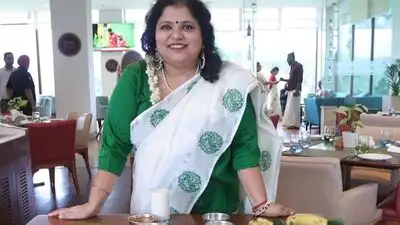
Rekha Raghavan
After spending nearly 18 years in the corporate world, she took the leap into food and began building her journey from her home kitchen. I worked with several companies and eventually spent nearly 18 years there.” says Rekha.
“It is not the right profession for women, I was told. Rekha, now a popular home chef, food curator and culinary entrepreneur known for bringing authentic Kerala and coastal flavours to food festivals, hotel pop-ups and private dining experiences says her journey was not easy. “I always had the cooking ka keeda inside me”, says Rekha.
Rekha Raghavan’s story begins at a time when catering was not looked upon as a profession suitable for women. So when Rekha expressed her desire to pursue Hotel Management, her family did not agree. She has also cooked for celebrity events, one example being the weedding of Rajkumar Rao and Patralekha at the Oberoi Sukhvilas. “I was just three when I came from Wayanad in Kerala to Bhopal with my mother. My parents had got separated, and I was brought up largely by my maternal grandparents. My mother worked, so my Naani became my world. I call her Amma”. I think that is where my relationship with food really began. I wanted to pursue hotel management, but in the 1990s I was not allowed to. So I went into the corporate world instead.
Since then, she has curated Onam Sadyas, Kashmiri and Bengali food festivals, worked with hotels and even cooked for the Indian Navy and Government events.
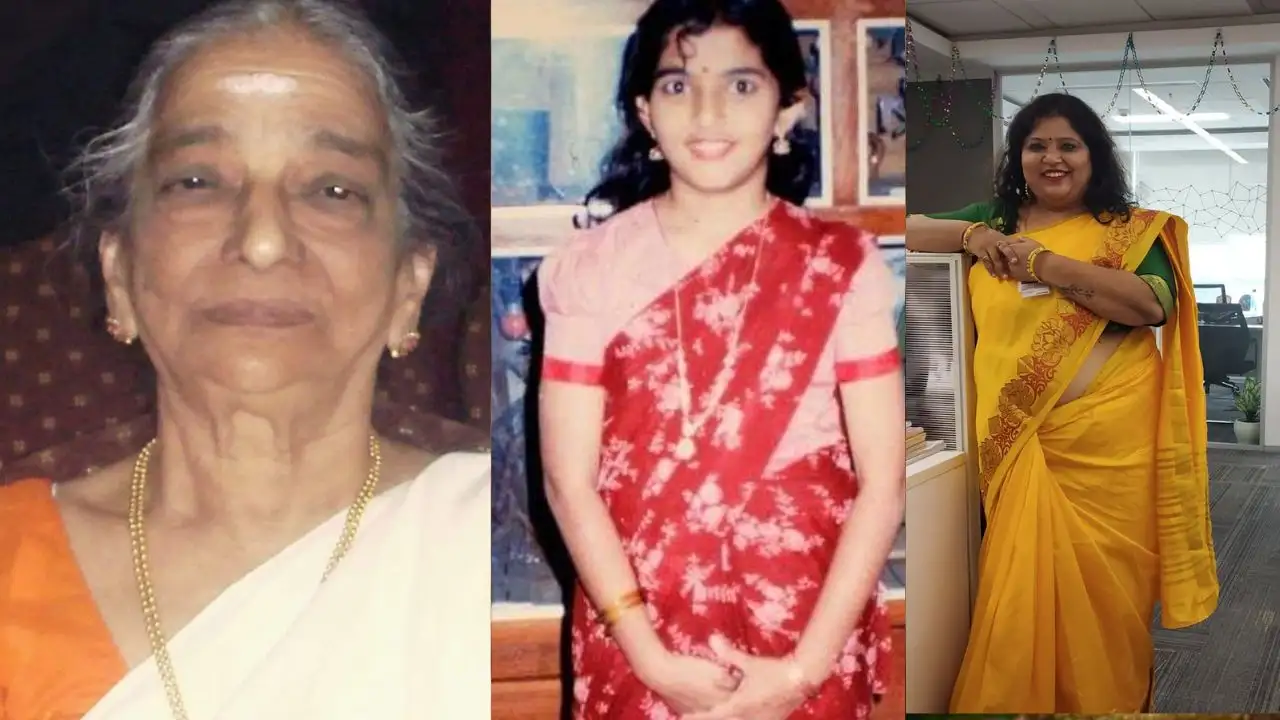
Rekha got an opportunity to do a small one-day event with Chef Gautam Kumar at Radisson, Sector 29. Because people order less and corporate events also reduce, summer is particularly difficult.
I met Chef Rajesh Rai and Sanjay Gupta, the General Manager, and told them that I wanted to do a Sadya. At a time when consumers are increasingly questioning what goes into their food and how much they can trust the promise of “quality”, whether from large brands, five-star hotels or small eateries, people like Rekha Raghavan are choosing to stand by something much simpler: know your food, respect your ingredients and don’t compromise. Gradually, work started picking up. “I will always be thankful to him for giving me my first opportunity. It was only one meal, but it gave her the confidence to continue. “I started doing Onam Sadyas with different hotels, including The Westin. A commercial kitchen was scary, but it was exciting. Another major opportunity came when I approached Le Méridien. They encouraged me. The Sadya was a huge hit. The hotel then gave me the opportunity to curate a food festival featuring different cuisines. I went on to do a Kashmiri food festival and two Bengali food festivals. For someone who had once wanted to study hotel management but had not been allowed to, those opportunities were deeply significant. As the work grew, I also began working with other women-home chefs and women who had their own culinary specialities. I wanted to give them opportunities through pop-ups and food festivals. There are so many women who cook exceptionally well but don’t have a restaurant, commercial kitchen or the money to establish a food business. A pop-up can give them a starting point. But being a home chef is not as easy as people sometimes imagine. “Home chefs’ business is not regular. Work can become very slow. Then work begins picking up around Sawan and the festive season. There is no fixed salary. And there is no real safety net either. “I don’t have a backup. If I fall ill, I have to work. That is one of the hardest parts of working independently. Even when you are unwell, the business depends on you. For her, that commitment to quality is not a business strategy. It comes from the way she learnt to cook and the values she inherited from her Naani. She refuses to take shortcuts or replace an ingredient simply to make the process easier. What she wants instead is to build a platform where women with culinary talent can find opportunities, home chefs who may not have the money or infrastructure to open a restaurant but have food worth putting on a larger table. A place where they can cook, participate in pop-ups, showcase their regional cuisines and earn from what they know. She also wants to create opportunities for specially-abled children, giving them a space to learn, participate and discover their abilities.
And perhaps that is why her ambition today goes far beyond building a successful food business of her own.