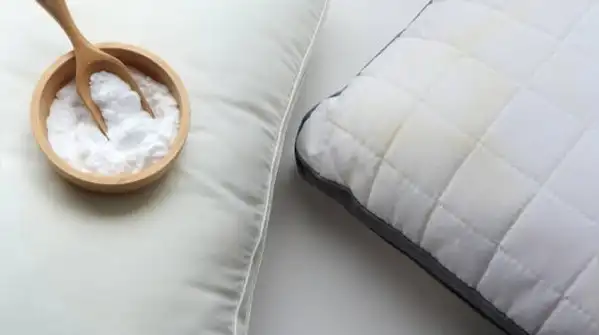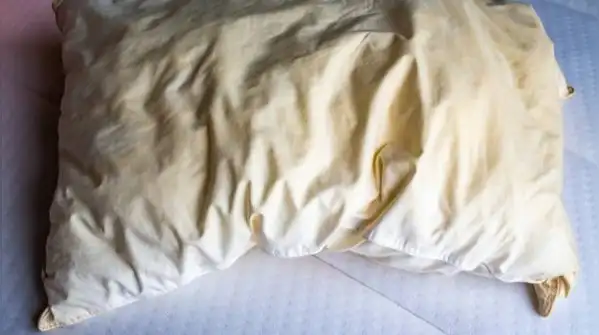
Pull a pillow out of its cover after a year or two and there’s a good chance it looks a lot less white than you remember. Those yellow patches come from sweat, body oils, saliva and everyday skin build-up soaking slowly into the filling, which also explains the stale smell that regular washing of pillowcases never quite fixes. Before you spend money on a new one, a few simple, mostly kitchen-cupboard methods can bring a tired pillow back to life. Here’s what actually works, and how to use each method safely.
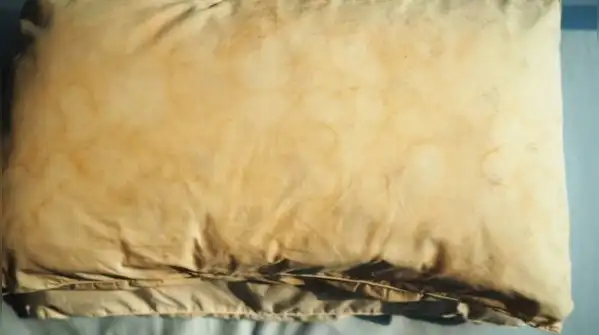
Never mix vinegar with bleach or hydrogen peroxide, and avoid machine washing memory foam or latex pillows unless the label says it’s safe. This article is intended for general informational and household purposes only. Always check the care label before washing or treating a pillow, and test any homemade solution on a small, hidden area first.
First, check what your pillow is made of
The right cleaning method depends entirely on the filling, so look at the care label before anything else. Polyester and fibre-filled pillows are usually machine washable, and feather or down pillows can often be washed too, though gently. Memory foam and latex pillows are a different story, since a washing machine can break them down, so they need spot cleaning only. If there’s no label, treat the pillow as delicate and stick to gentler methods.