(Image Credit: Wikimedia Commons, Canva)
the sign has a 2,000-year-old history, and its roots can be traced to the ancient Roman world While it serves as a warning. The sign served multiple purposes before the house was buried by the volcanic eruption of Mount Vesuvius in AD 79.
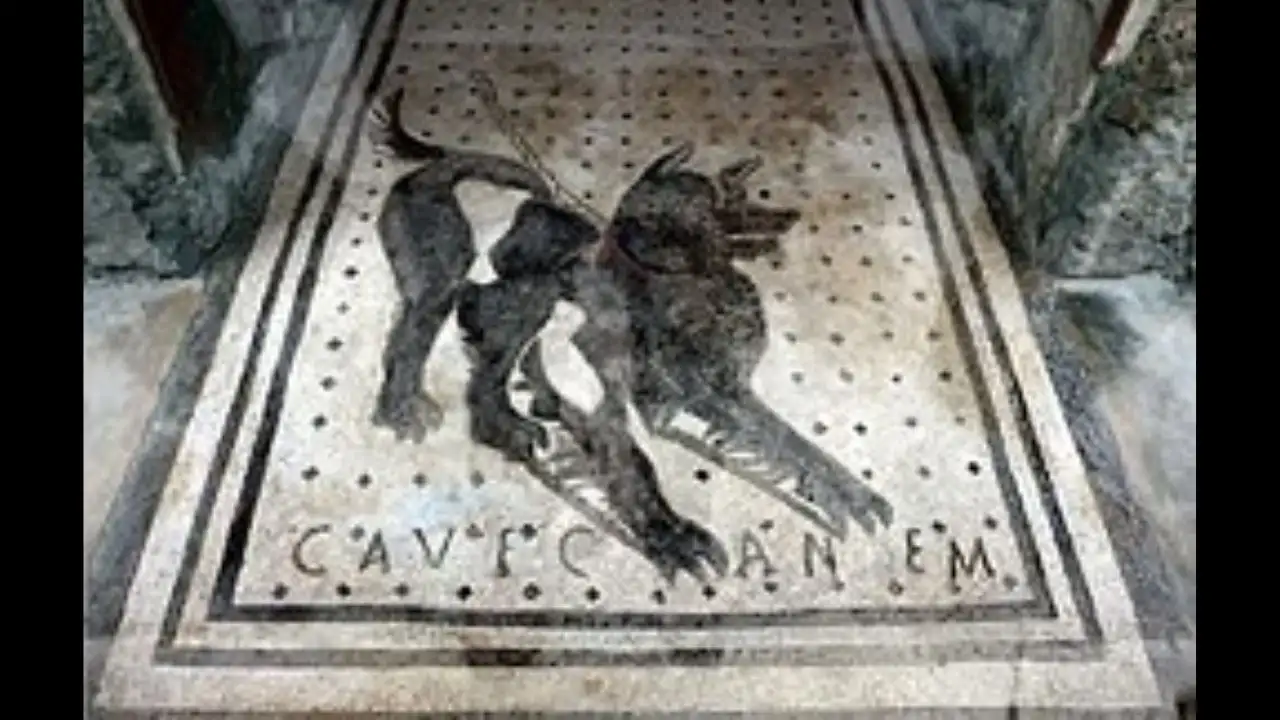
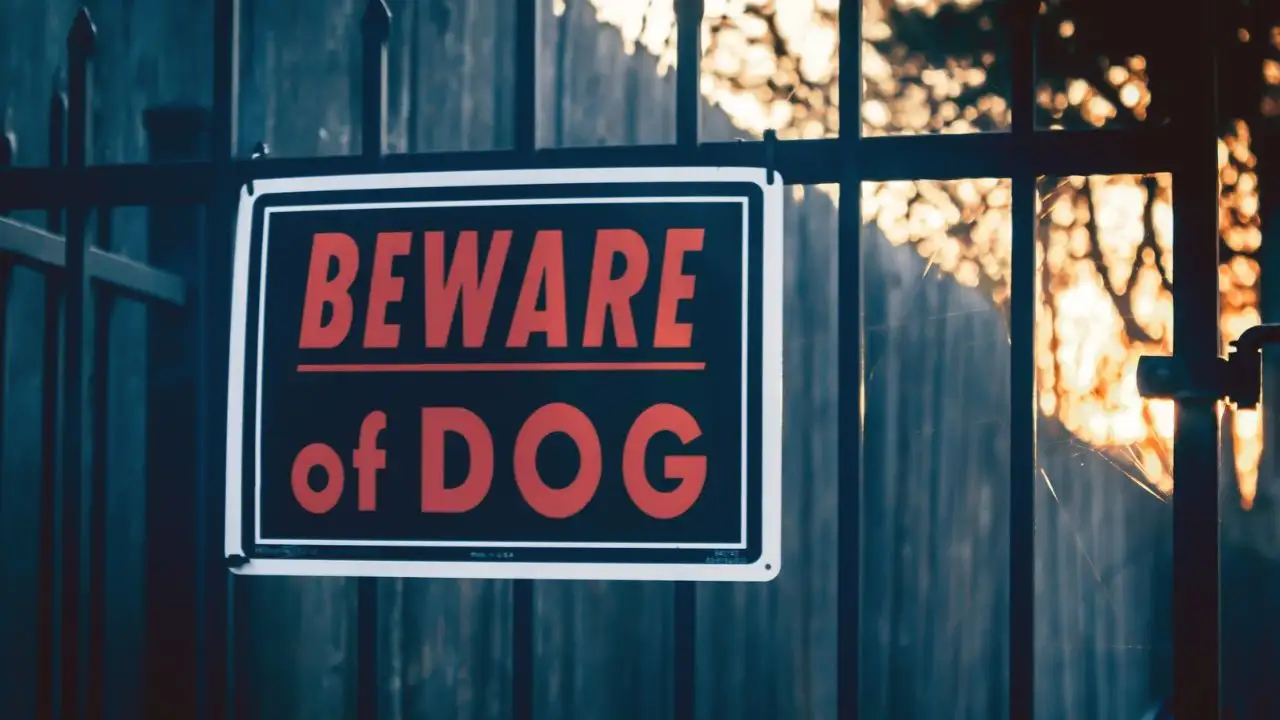
For those of us who are fearful of dogs, we take a moment before entering a house with a “Beware of the Dog!” sign. In the Roman city of Pompeii, the Latin phrase “CAVE CANEM” has been greeting visitors for a long time, yet not everyone knows what it means. Believe it or not, the sign reading “Beware of the Dog” is not a modern discovery. Ancient Romans had a mosaic depicting a dog with a spiked collar, with the Latin phrase “CAVE CANEM” written beside it. The phrase translates to “Beware of the Dog”, but its meaning is not that simple. “CAVE CANEM” (Image Credit: Wikimedia Commons) The mosaic was discovered during excavations in 1824–1825 in the House of the Tragic Poet in the Roman city of Pompeii, Regio VI, Insula 8. Describing the functions that dogs served for Romans, the poet Virgil wrote that “never with them on guard need you fear for your stalls a midnight thief, or onslaught of wolves. ” (Image Credit: Canva) Moreover, it was preferred that large, darker dogs were kept, as they were considered ideal for protecting the home. Roman writer Columella described how black farmyard dogs could “terrify thieves in the daytime” and remain “less visible to trespassers at night. ” In Roman homes, the entrance was considered an important space in the house, one that was carefully managed. meaning “welcome” or “be well”, others had an intimidating message of Cave Canem While some entrances offered warm greetings with phrases like Salve.
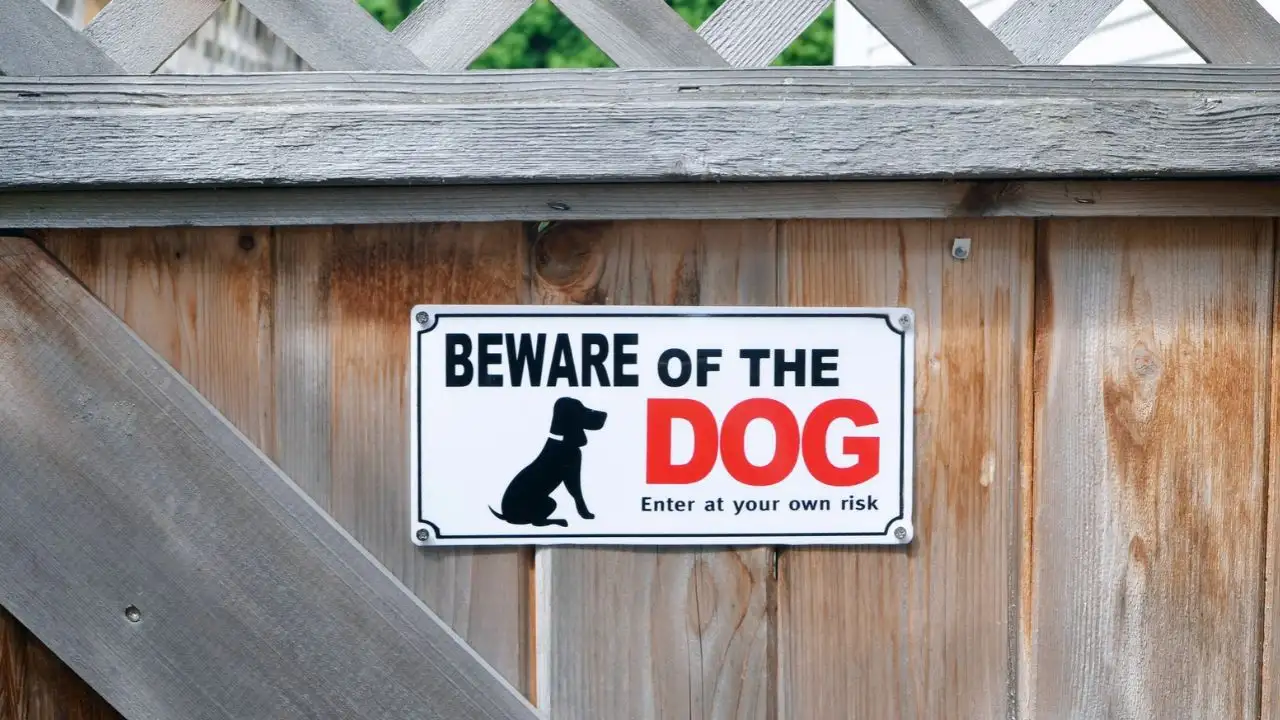
It is not a result of modern civilisation and its love for dogs. The dog in the famous Roman mosaic is neither sitting nor standing; rather, it is lunging forward, ready to pounce. It is not just a warning against dogs, but an intimidating dog mosaic placed at the vestibulum to scare off thieves and trespassers. Even though the house was not among the largest residences in Pompeii, it was exceptional in its appearance. Walls painted with frescoes, high-quality mosaic designs and scenes from Greek mythology adorned the house, along with this peculiar warning sign. The domestication of dogs is not a novel phenomenon of the modern world; it has been a centuries-old practice. The sign served a security function. Whenever anybody entered the house, they were made aware that a scary dog on a leash might be waiting for them if they entered with ill intentions. In the murals of Pompeii, a dark dog against a light background is also depicted. Darker dogs were considered intimidating during the day and less visible at night, making them suitable guards. It was the doorway from the public sphere to the private sphere of the family. This was the first space that a visitor encountered when entering. It was believed to be the place where the house defined itself by providing the first message. The sign served its obvious purpose of giving a warning, but it could also communicate wealth and taste. Such a sign was not cheap. It was crafted intricately using mosaics, suggesting an investment of time and money. Even though the House of the Tragic Poet was not the largest house, it had magnificent frescoes and mosaics, suggesting a certain degree of social standing. (Image Credit: Canva) The first-century Roman work Satyricon, attributed to Petronius, describes a character encountering a painted dog and a Cave Canem inscription at a house entrance. The detail suggests that this kind of warning was familiar enough to feature in Roman literature, even as an object of satire. Perhaps the most fascinating thing about the Cave Canem mosaic is how little its message has changed over the centuries. In modern times, the materials may have changed from mosaic designs to printed boards and metal plaques, but the intention remains the same. It is to protect a home and warn those who want to enter it. You use AI every day. Now get your AI Quotient. Take the AIQ test Get the latest Lifestyle News and more. Download the TOI app.
Variations of these signs can be seen all around the world today, but the story behind them deserves a moment of its own.