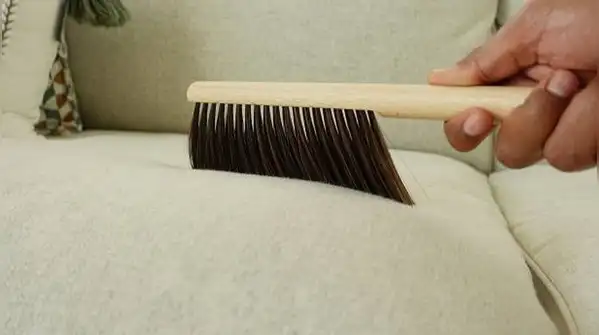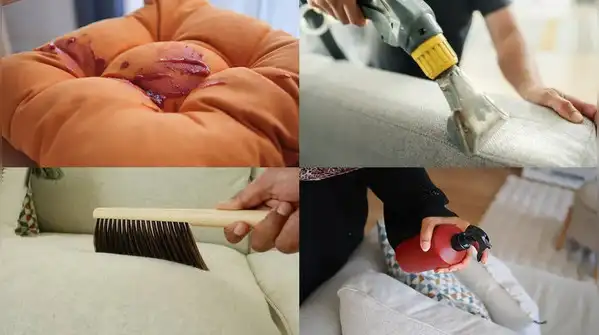
Couch cushions quietly absorb a lot, from crumbs and dust to spilled tea, sweat and pet hair. Eventually, they start to look dull and smell a little stale, even when the rest of the room is spotless. The good news is that most of the grime can be tackled at home with a vacuum, a few kitchen staples and some patience. The key is to know what your cushions are made of and to go gently, since soaking fabric and foam can cause more problems than it solves. Here’s a simple, step-by-step way to freshen them up.

Check the care label first
Before you reach for any cleaner, look for the care tag on the cushion or sofa. Many have a cleaning code. W means you can use water-based cleaners, S means use only a solvent-based or dry-cleaning product, WS means either is fine, and X means vacuum only. If the cushions have removable covers, the label will usually say whether they can go in the washing machine. If you can’t find a label, treat the fabric as delicate and test every product on a small hidden spot first. Act quickly on spills by blotting with a clean, dry cloth, pressing rather than rubbing, which pushes the stain deeper. For water-safe fabrics (codes W or WS), mix a few drops of mild dish soap into a cup of cool water, dab it on with a cloth and keep blotting from the outside of the stain towards the centre. Rinse by dabbing with a cloth dampened with plain water, then blot dry. For stubborn marks, a mix of equal parts white vinegar and water can help, but test it first, and never mix vinegar with bleach. A little routine care means fewer deep cleans. Vacuum your cushions weekly, and flip and rotate them every week or two so the wear is even. Wash removable covers every few months, following the label. Keep food and drinks away from the sofa where you can, and use washable throws if pets or children use it often. A quick baking soda sprinkle every month or so helps keep smells at bay. For very delicate, antique or expensive upholstery, it’s worth calling a professional cleaner. This article is intended for general informational and household purposes only. Always check the care label and test any cleaning method on a small, hidden area first, as results can vary with the fabric, dye and filling. Don’t soak foam or feather cushions, never mix vinegar with bleach or other cleaning products, and ventilate the room when using any solvent-based cleaner. For leather, velvet, silk or heavily stained upholstery, consult a professional cleaner.