
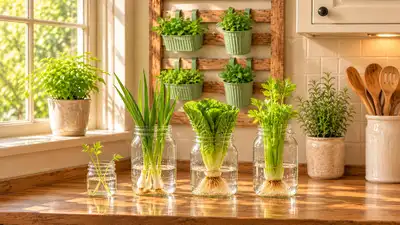
Sunlit Kitchen herb garden
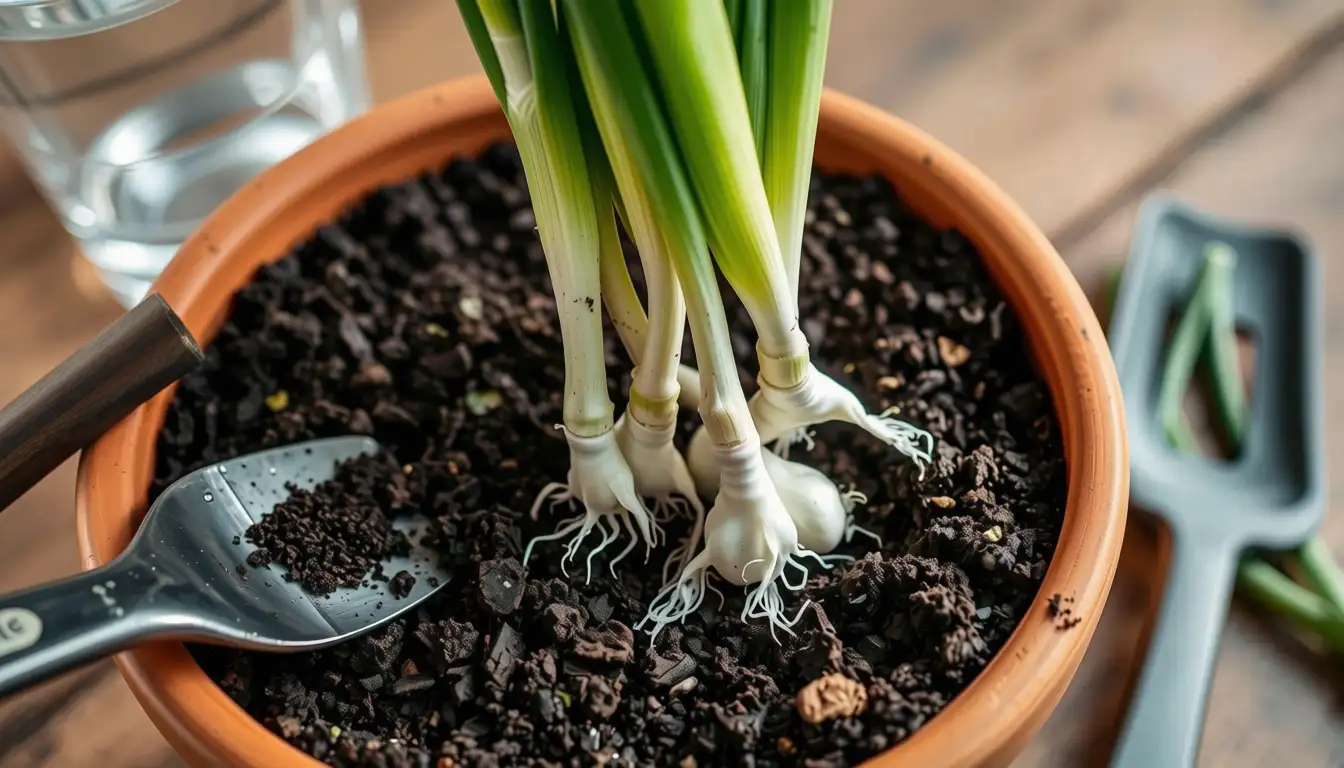
Rather than discarding the white bulb and its roots when cooking, retain the bottom 2.5 to 5 centimetres (1 to 2 inches) of the plant. The vegetable scraps you throw away after cooking could be grown to harvest fresh vegetables in your kitchen garden. The roots of spring onions, the base of a celery stalk, and even a leftover piece of ginger can be revived with some water, soil, and time. Re-growing vegetables from kitchen leftovers is an easy method to delve into home gardening without needing to begin with seeds. many typical kitchen ingredients can grow new shoots, leaves, or roots under suitable conditions Although not all scraps can yield an entirely new vegetable. All you need to know is which sections to preserve, when to transplant them into the soil, and the amount of sunlight and water required. Here are four common vegetables you can try to regrow using scraps from your kitchen. Spring onions rank among the simplest vegetables to regrow, making them an excellent option for those experimenting with kitchen-scrap gardening for the initial time. Position the roots in a small glass filled with water, making sure the roots are underwater while the top part stays above the waterline. Place the glass on a sunny windowsill and refresh the water daily to avoid stagnation. In a matter of days, new green shoots ought to start appearing from the centre. After the roots have grown more, typically in about a week, move the plant to a pot filled with well-draining soil. Cover the roots but leave the green shoots visible. Water it consistently and position the pot in a spot that gets sufficient sunlight. You can cut the green tops for cooking while letting the base keep growing. Even though it is feasible to harvest multiple times, the growth can slowly diminish, making it necessary to eventually substitute the plant. Ginger is another essential kitchen item that can be regrown; however, it’s crucial to note that ginger peels by themselves cannot yield a new plant. You require a section of the real ginger rhizome, the underground stem often utilised in cooking, featuring noticeable growth buds or small protrusions called eyes. If you have an unused ginger root containing healthy buds, you can propagate it into a new plant. Select a well-rounded piece that has at least one or two apparent growth tips. After cutting the rhizome into smaller pieces, let the cut areas dry for a few days to minimise the chance of decay.
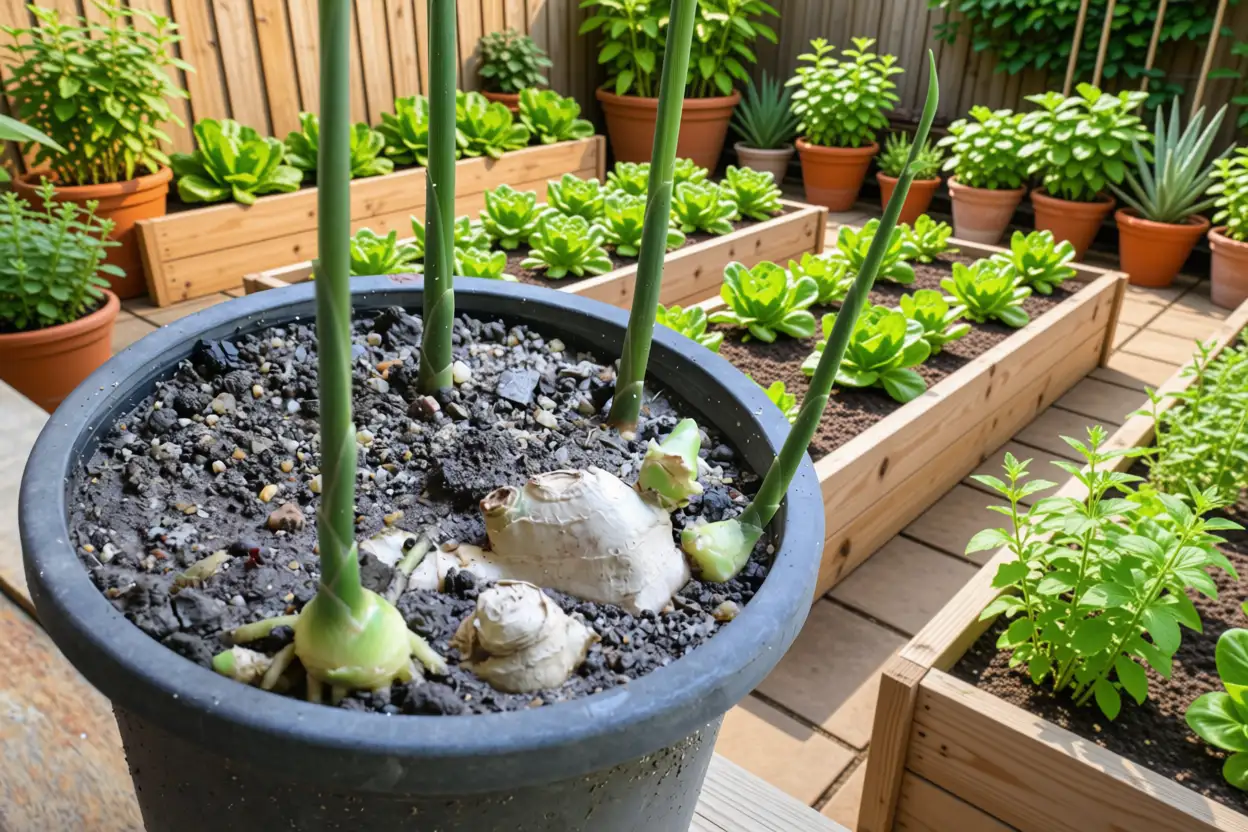
Place around 2.5 to 5 centimetres of soil over it, utilising a container that drains well or an appropriate garden bed. retain about 5 centimetres (2 inches) of the bottom part While prepping the lettuce. One leftover garlic clove from cooking dinner can serve as the foundation for a new garlic plant. In contrast to leafy vegetables that can sprout in water, garlic grows best when planted directly in soil. Detach a healthy clove from the bulb while preserving its papery skin. Select a solid clove and place it in the soil with its pointed end orientated upwards and its flat root side directed downwards. Position the pot in a bright area and ensure it receives regular watering, taking care not to let the soil become saturated. Green sprouts will slowly appear, succeeded by the growth of a subterranean bulb. As the leaves start to turn yellow and drop, the bulbs might be ready to be harvested. You can reserve some of the collected cloves to grow another crop. Garlic thrives in well-drained soil and benefits from timely seasonal planting. Romaine lettuce provides an additional easy experiment for a windowsill in the kitchen. The central part, often referred to as the heart, can generate new leaves even after the outer sections have been utilised in salads or sandwiches. Set it upright in a shallow dish with some water, ensuring the bottom stays damp without submerging the whole heart. Place the container in a well-lit spot and change the water often. In the coming days, fresh leaves could start to emerge from the centre. Eliminate outer leaves that become yellow or decay. Once the base forms roots, you can transplant with soil that drains well. Maintain moisture in the soil and ensure ample light is available. For those who regularly add ginger to their tea, curries or everyday meals, growing it at home offers a simple and rewarding way to make use of leftover pieces. Spring onions and romaine lettuce are among the quickest vegetables to regrow, often developing roots in water within a few days and producing fresh green shoots or leaves within a couple of weeks. The best part is that you don’t need a garden, expensive equipment or much space to get started. A sunny windowsill, an old glass jar and a small pot are all you need to turn kitchen scraps into a fresh supply of homegrown greens. With a little patience and regular care, everyday leftovers can become the starting point of a more sustainable kitchen.