PC: AI Generated
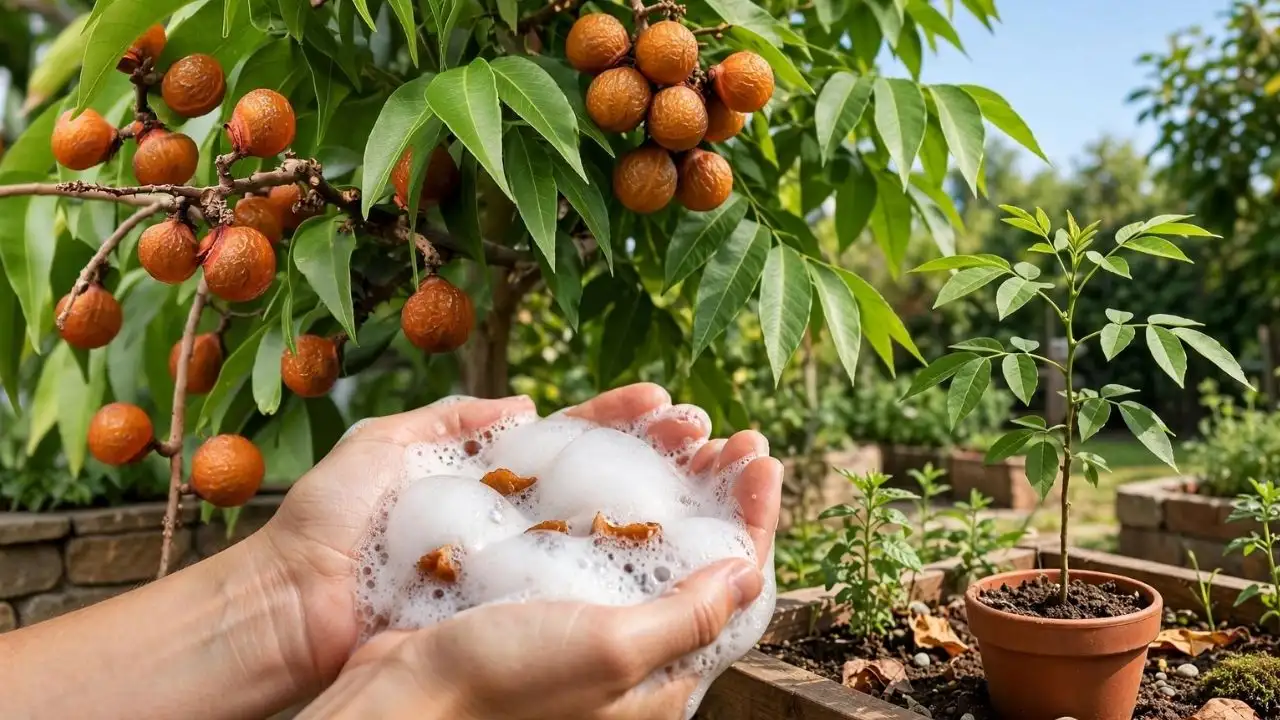
Because its fruits contain triterpenoid saponins, natural compounds with surfactant properties, the plant has attracted attention. Reetha is therefore more than a traditional cleansing plant. Reetha, also known as soapnut or washnut, is a tree valued for its naturally occurring cleansing compounds. Scientifically known as Sapindus mukorossi, it belongs to the Sapindaceae family and is cultivated across parts of Asia. When present in water, these compounds can reduce surface tension and produce foam, giving the fruit its soap-like and detergent properties. The fruit’s pericarp, or outer covering, is particularly rich in saponins and has traditionally been used as a natural soap. Research published in the National Library of Medicine titled ‘ Triterpenoid Saponins from Washnut (Sapindus mukorossi Gaertn.)—A Source of Natural Surfactants and Other Active Components ’ has examined its washing, wetting, and foaming properties. It is a natural source of surfactants that has applications in cleaning, cosmetics, and other industries. Reetha’s uses extend beyond hair care and household cleaning. The study describes soapnut extracts and saponins as potential sources of natural detergents, wetting and washing agents, foaming agents and solubilising materials. It also highlights the biodegradability and renewable nature of soapnut saponins.