
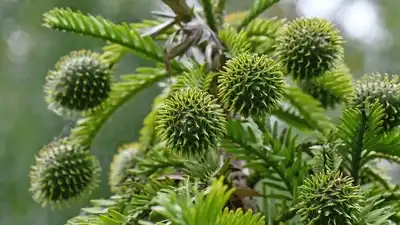
In 1994, a park ranger roped down into a canyon near Sydney; what he discovered there were trees that had been extinct for millions of years
The 2025 National Recovery Plan lists just 45 mature trees and 46 seedlings in the wild. Threats pile up: disease, climate change, catastrophic bushfires, especially the out-of-control Black Summer fires in 2019–2020, and trampling by uninvited visitors. Because one wrong move could wipe out the whole population, even the act of caring for them has to be handled with secrecy,.
As flames raced toward the canyons, a rapid-response team of specialist firefighters launched an intervention more fitting for a national treasure than a handful of old trees. They won, and the trees made it through. The answer’s simple: geography and luck. Wollemi National Park is a maze of sharp cliffs, tangled scrub, and narrow, secret canyons. The Wollemi pine’s home sits deep in one of these cracks, where thick shade and dripping moisture shielded it from wildfires, loggers, and even curious hikers. Back when its cousins grew all over the world, the Australian landscape was unrecognizable. Over millennia, almost everything changed, except for this stubborn little pocket of wilderness. It’s survived millions of years, but barely. That’s alarmingly few. Genetic research shows there’s not much diversity left among the wild trees, but every individual counts. Scientists at the Royal Botanic Garden Sydney and universities are racing to understand how to boost the trees’ survival odds: propagating clones, studying their reproduction, and managing disaster-response plans. During the Black Summer bushfires, their efforts were put to a terrifying test. They rigged up hoses and pumped water around the tiny groves, keeping the ground cool and moist while the inferno raged nearby. But it was a reminder: survival now depends on active care. A tree that dodged extinction for millions of years could still be gone in a single unlucky season.
Today, the Wollemi pine story is bittersweet.