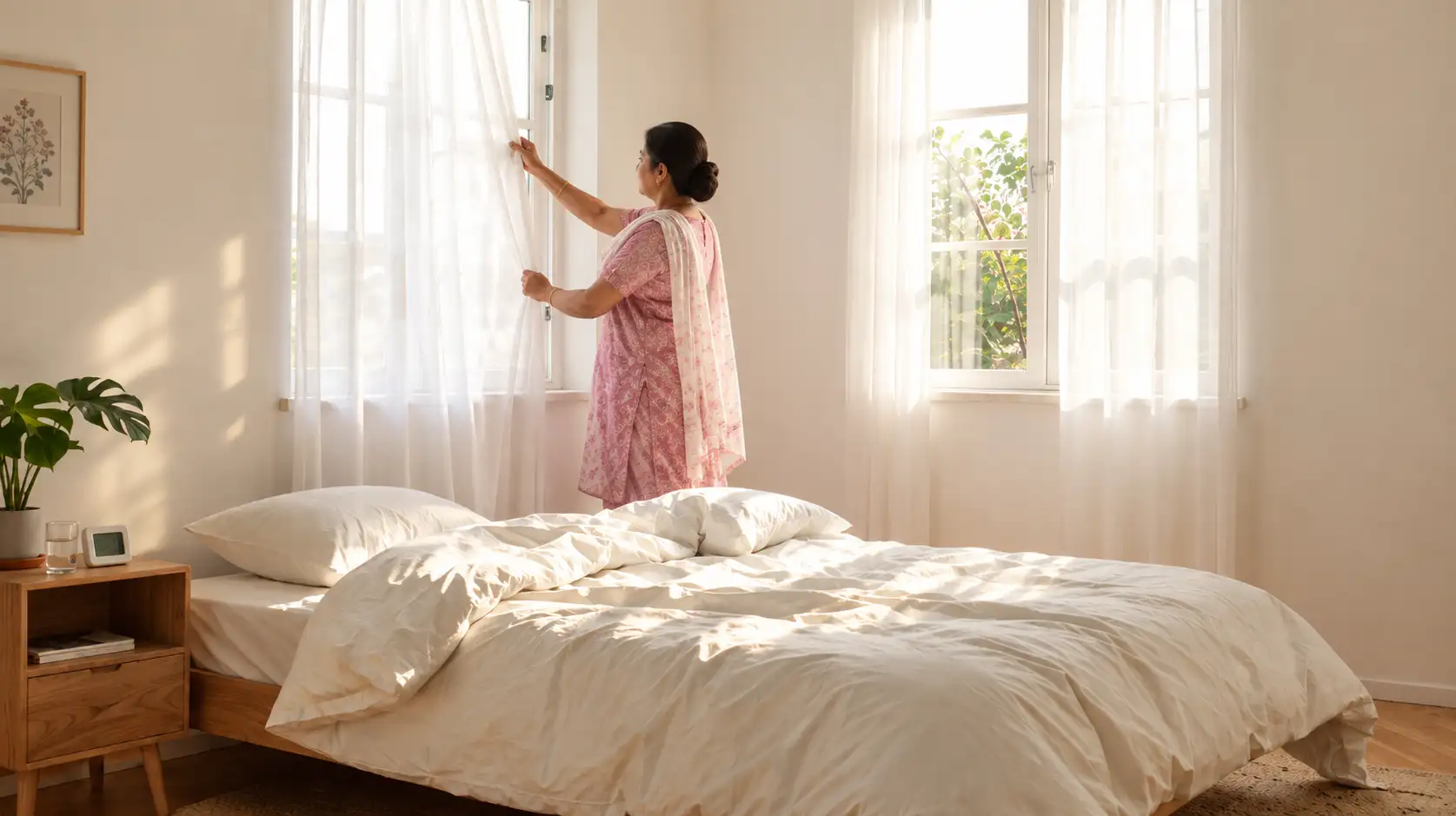
Morning stretch in a cozy bedroom
Why should one wait before making bed?
Therefore, maintaining a dry and well-ventilated sleeping environment is an important part of household hygiene.
Former executive director of the Home Care & Cleaning Lab at Good Housekeeping, allowing bedding to cool and dry helps reduce moisture buildup, according to Carolyn Forté . Making your bed every morning is often recommended as a good habit that helps keep your bedroom organised and sets a productive tone for the day. However, cleaning and sleep experts recommend waiting for a while before making it. Allowing your bedding to air out for some time after waking up can help reduce moisture buildup and create a less favourable environment for dust mites. During sleep, the body naturally releases sweat, causing moisture to accumulate in sheets, pillows and mattresses. Making the bed immediately traps this moisture, creating warm and damp conditions in which dust mites, bacteria and other allergens can thrive. This practice can be particularly useful in Indian households during the monsoon and winter seasons. During the monsoon, high humidity can make it difficult for bedding to dry completely. In winter, people often keep windows closed to retain warmth, reducing ventilation inside bedrooms. These conditions can contribute to moisture accumulation in mattresses, pillows and blankets. If you have a busy morning routine, you can use this time to shower, prepare breakfast or enjoy your morning tea. The idea is not to abandon the habit of making your bed but to adjust its timing. These allergens can accumulate in household fabrics, including mattresses, pillows, carpets and upholstered furniture. When disturbed, tiny particles can become airborne and enter the respiratory system. Children, older adults and people with chronic sinus conditions may also experience discomfort when exposed to indoor allergens. Additionally, trapping moisture in bedding for prolonged periods can contribute to unpleasant odours and create conditions favourable to bacteria and mildew. Apart from allowing your bedding to air out every morning, a few simple cleaning practices can help maintain mattress hygiene and reduce allergen accumulation. If you make a simple adjustment, it can make the sleeping environment less favourable for dust mites, which thrive in warm and humid conditions. So, perhaps it is time to rethink the long-standing habit of making your bed the moment you wake up. Rather than rushing to straighten your sheets and arrange your pillows, pull back the covers, let fresh air circulate and give your bedding some time to dry. You can always make your bed later in the morning or when you return home. After all, delaying this everyday chore by half an hour might be a small change that helps keep your sleeping space cleaner and fresher.