
Image: AI
A 1983 study by researchers Rachel Sebba and Arza Churchman , published in Environment and Behavior, examined how people perceive different areas within their homes. Based on interviews with 185 adults and children, the researchers identified different kinds of domestic spaces, including individual, shared, public and activity areas. Because it reminds someone of a happier period, a photograph might have been placed in a particular corner.
The researchers identified restoration, privacy, safety and positive emotions among the most commonly reported benefits of home. This explains why the placement of everyday objects can carry unexpected significance. A particular chair might be where someone reads the newspaper every morning. A side table may hold objects collected over several years. Even the way cushions are arranged might be part of an environment that feels familiar and reassuring. When a guest moves these things around, the resident may experience a small disruption to an arrangement that has quietly become part of their personal world. Another useful concept is territoriality. In psychology and environmental behaviour research, territoriality refers to the ways people establish, recognise and maintain boundaries around physical spaces. These spaces carried different expectations about access and control. The distinction is revealing. A living room may be open to guests, but that does not necessarily mean every object within it is available for rearrangement. People can welcome visitors into their homes while still expecting certain boundaries to be respected. This is why someone might happily let a guest use their favourite chair but feel uncomfortable when that person decides to move it elsewhere. The issue is not always possessiveness. It can simply be a preference for having control over one’s immediate surroundings. There is also an emotional reason certain household arrangements matter. A decorative item may have been inherited from a grandparent. Even seemingly ordinary objects can become connected to relationships, experiences and important moments. Not necessarily. There is a difference between enjoying a familiar arrangement and expecting every person in the house to follow rigid rules. Some people simply prefer their surroundings to remain organised in a particular way. Others attach considerable emotional meaning to their possessions or value privacy and personal boundaries more strongly. Neither preference automatically indicates anxiety, obsessive-compulsive disorder or an unhealthy attachment to material things. The more useful distinction is whether the preference causes persistent distress or creates difficulties in relationships. Being particular about where things belong is not, by itself, a psychological disorder.
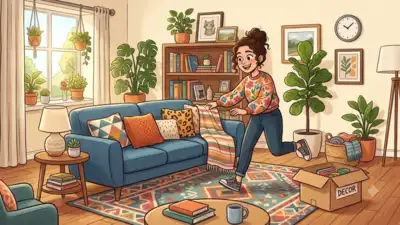
A 2024 study published in the Journal of Environmental Psychology , titled Predicting home attachment through its psychological costs and benefits, examined the factors that contribute to people’s attachment to their homes. Imagine inviting a friend over for dinner and watching them casually move the cushions on your sofa, shift a decorative bowl to another table and pull a chair closer to the window. Nothing is broken. Nothing has been misplaced. Yet, something about the room suddenly feels wrong. You wait until they leave before quietly putting everything back where it belongs. To someone else, it might look like an unnecessary fuss over a cushion. But for some people, the discomfort has very little to do with the object itself. It is about seeing a familiar space changed without their permission. Psychology offers an interesting explanation for this behaviour. Our relationship with home goes much deeper than decoration, cleanliness or personal taste. It is tied to identity, emotional security, privacy and the feeling that there is at least one place in the world where we get to decide how things should be. Environmental psychologists have long studied the emotional relationship people develop with physical spaces.
Because sometimes, what people are protecting is not the position of a chair or the arrangement of a room. Perhaps the next time someone quietly restores a cushion after a guest has moved it, there is no need to dismiss the gesture as fussiness. It may be their way of returning to an environment that feels familiar, predictable and entirely their own. It is the feeling of being at home. You use AI every day. Now get your AI Quotient. Take the AIQ test Get the latest Lifestyle News and more. Download the TOI app.