
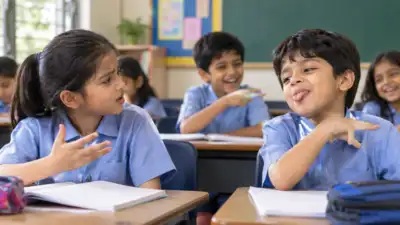
Because they are observing what happens in their social environment,, sometimes, children pick up behaviours.
A child comes home from school complaining about a classmate. They say the other child is bossy, refuses to share or keeps breaking classroom rules. Yet, a few days later, the parent notices something unexpected. Their child has started using the same phrases, making similar gestures or behaving in ways they previously criticised. For parents, this can be confusing. If a child does not particularly like someone, why would they copy their behaviour? 28 Sept 2026 | 08:18 The answer may lie in how children learn from the people around them. Imitation is not always a sign of admiration, friendship or even conscious approval. Because they are observing what happens in their social environment, trying to understand group expectations or learning what helps them fit in, sometimes, children pick up behaviours. Developmental psychology research suggests that imitation serves purposes beyond simply learning a new skill. Children’s relationships with others, their sense of belonging and the behaviour they see around them can all influence what they choose to copy. Parents often assume that children imitate their closest friends or the people they admire. it is not the only factor While affection can influence imitation. A 2020 review published in Annual Review of Developmental Psychology , titled The Social Function of Imitation in Development , examined how imitation helps children form and maintain social relationships. Research reviewed by psychologist Harriet Over suggests that children can use imitation as a way to affiliate with others, signalling social connection and a willingness to participate in shared activities. This does not mean that every copied action is an attempt to make friends. Rather, imitation can be influenced by the social significance of the person being observed and the situation in which the behaviour occurs. Consider a child who dislikes a classmate’s habit of making jokes during lessons. The child may still begin repeating those jokes after noticing that other classmates laugh or pay attention. What gets copied may not be the classmate’s personality but a behaviour that appears to attract a response from the group. The distinction matters: children can learn from someone’s behaviour without liking that person or approving of everything they do. Children can learn from someone’s behaviour without liking that person or approving of everything they do. Sometimes, the influence comes not from one particular classmate but from the behaviour of several children. A study published in the Journal of Experimental Child Psychology in 2015, The influence of peers on the tendency of 3- and 4-year-old children to over-imitate , examined how young children copied actions demonstrated by other children. The researchers found that children who initially used an efficient way to complete a task could switch to copying unnecessary actions after seeing several peers perform them. The children did not continue reproducing those unnecessary actions when they later completed the task privately. The findings suggest that children’s behaviour can be influenced by what a group appears to do, even when copying the group does not make a task more efficient. it offers a useful insight into peer influence: the behaviour of a group can sometimes matter more than whether a particular action is useful Although this experiment involved a puzzle task rather than children copying disliked classmates at school. Because several other children do the same thing, in a classroom, a child might start using a popular expression, adopting a particular way of reacting to a teacher or following a playground routine simply. The behaviour may become familiar through repetition and social exposure. This is one reason parents should avoid assuming that every copied habit represents a deliberate choice to imitate a particular child. A more complicated situation arises when the behaviour being copied is disruptive, unkind or contrary to what a child has been taught at home. Research suggests that younger children can be particularly sensitive to group membership when learning how to behave. Because it is noticeable, repeated frequently or associated with a particular social setting, children may imitate a behaviour. They may also experiment with words, gestures and habits before deciding whether these fit their own preferences. A 2011 study published in Developmental Psychology , titled Imitation in young children: when who gets copied is more important than what gets copied , explored how social affiliation influenced preschoolers’ imitation of adults performing a task. The research adds to evidence that imitation is not simply a mechanical response to watching an action. Social information about the person demonstrating the behaviour can affect what children reproduce. However, the study examined adults rather than disliked classmates, so its findings should not be treated as direct proof of why a child copies someone they do not like. The broader lesson is that imitation is socially influenced and context-dependent. Because everyone recognises it, copy a gesture because it has become part of a classroom joke, or adopt a habit after seeing it repeatedly, a child might repeat a classmate’s catchphrase. None of these behaviours, by itself, proves that the child secretly admires the classmate, wants to become their friend or is being pressured by them. The most useful response is to understand what the child is copying and why, rather than immediately focusing on the person they have copied.
- Ask about the behaviour without accusing the child Instead of asking, “Why are you behaving like that child?”, try asking, “I noticed you have started saying that. Where did you hear it? A neutral question gives the child room to explain without feeling that they must defend themselves or their classmate.
- Separate the child from the behaviour If the child has started using an insulting expression, explain why the expression can hurt someone. Avoid labelling the classmate as a bad influence based on one incident. Children need help evaluating actions, not just categorising people as good or bad.
- Talk about group pressure in everyday language For an older child, a parent might ask, “If everyone in your class starts doing something, do you feel you have to do it too? This opens a conversation about making independent choices without assuming that the child is deliberately following others.
- Because classmates laugh, notice what the behaviour achieves Does the child repeat a joke. Because it gets attention, do they use a particular phrase. Or are they copying a routine that has become common in their classroom? Understanding the context can help parents decide whether the behaviour needs a conversation, a clear boundary or simply time to pass.
- Reinforce the values you want the child to practise Children benefit from specific guidance about kindness, respect, honesty and inclusion. Rather than only telling them whom not to copy, parents can help them consider how an action affects another person and what they could do differently. If the behaviour involves bullying, aggression, humiliation or persistent rule-breaking, it is important to address the behaviour directly and work with the school when necessary. A child copying a classmate they complain about is not necessarily being inconsistent. Children’s social relationships are complicated, and their behaviour may be shaped by curiosity, familiarity, group expectations or a desire to participate in what is happening around them. Research on imitation and peer influence shows that children do not learn only from the people they love or admire. They also observe the wider social world and gradually work out which behaviours to adopt, reject or question. For parents, the goal is not to control every influence a child encounters. It is to help them develop the confidence to think about what they see, understand the consequences of their actions and make choices that reflect their own values – even when the people around them are doing something different. You use AI every day. Now get your AI Quotient. Take the AIQ test Get the latest Lifestyle News and more. Download the TOI app.
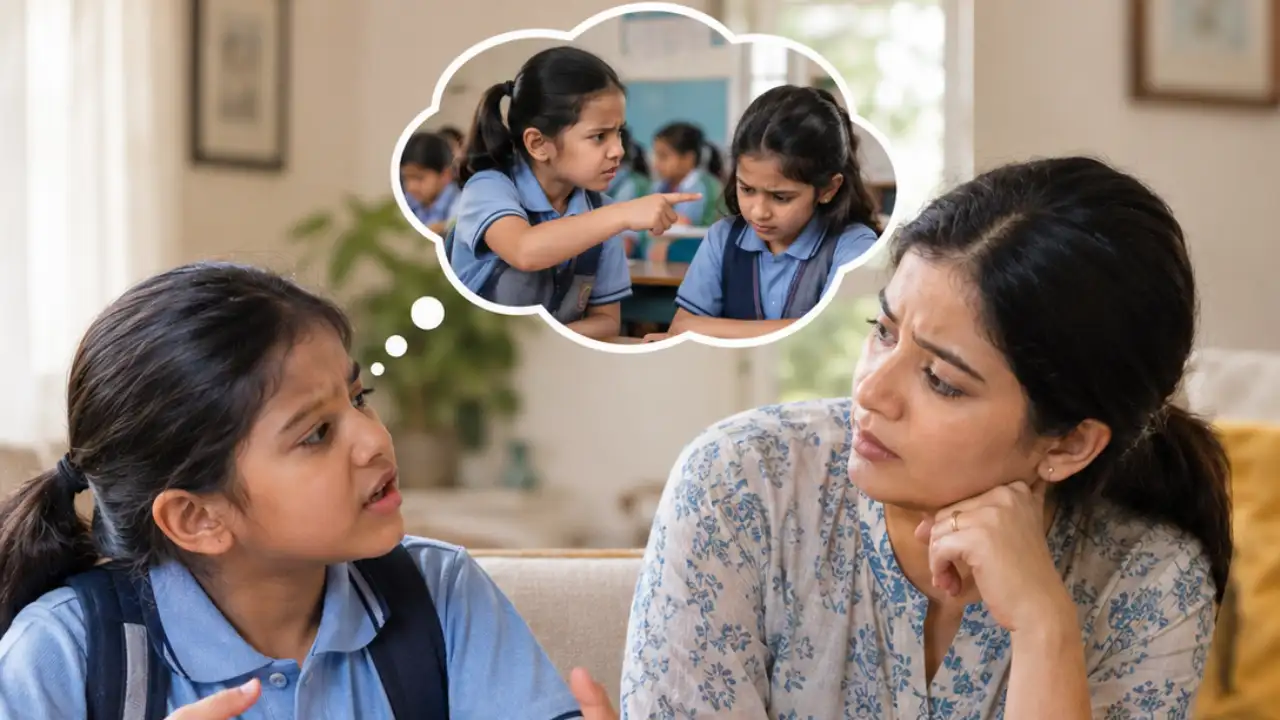
A 2021 study in the Journal of Experimental Child Psychology , Group influence on children’s prosocial and antisocial behavior , examined how children aged five to six and eight to nine responded after observing members of a group engage in either prosocial behaviour, such as sharing, or antisocial behaviour, such as stealing. The study found that younger children showed a stronger tendency to favour their own group, while older children’s responses were more sensitive to the behaviour they had observed. The findings suggest that children’s responses to group membership and behaviour change as they develop. This research does not directly show that children copy classmates they dislike. However, it helps explain why social affiliation can sometimes compete with a child’s understanding of what is right or wrong. For example, a young child may know that teasing is unkind but still laugh along when a group of classmates does it. Another child may repeat a rude expression heard at school without fully understanding its meaning or consequences. Children are learning to navigate several things at once: what adults expect, what their peers do and how their own actions affect their relationships. These influences do not always point in the same direction.