
Baby born from 31-year-old frozen embryo: How an IVF embryo from 1994 became a record-breaking birth
What happened?
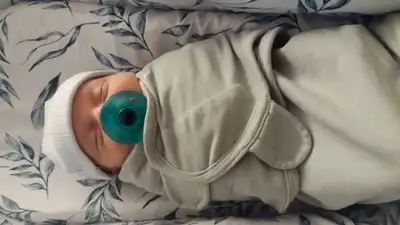
Picture this: you welcome a baby in 2025, only to discover his embryo had spent more time in storage than you’ve been alive. That’s the story of Lindsey and Tim Pierce from Ohio, who met their son, Thaddeus, in July 2025 thanks to an embryo created (wait for it) in 1994. That makes him the record-holder for the oldest embryo ever used to result in a live birth: 31 years and 56 days on ice, according to Guinness World Records. 22 Sept 2026 | 14:56
Honestly, it sounds like a ‘Black Mirror’ episode, but modern IVF science has quietly made this possible for a while. Embryo creation and freezing have been around for decades, but stories like this make the concept hit home: Thaddeus’s embryo didn’t age; it just hit pause, surviving in a tank of liquid nitrogen until technology (and luck, really) lined up with the right family.
Their story really starts in 1994, three decades before Thaddeus’s birth, when Linda Archerd and her then-husband went through IVF. One embryo led to the birth of their daughter in 1995; three others were placed, basically, in deep freeze. By 2024, the families agreed to move the embryos from Oregon (where they’d been created) to a clinic in Tennessee, racing the clock and dealing with medical records old enough for museum display. He was born in London, Ohio, on July 26, 2025. What’s even more striking is that this leapfrogged the last record: twins born from 30-year-frozen embryos, with the same fertility clinic in Tennessee behind both. The Associated Press estimates there are 1.5 million frozen embryos in storage across the US.
Instead of “slow freezing,” embryologists now use vitrification, a super-fast flash-freeze that avoids damaging ice crystals. Nothing ages, nothing changes, not until the embryo is “warmed” for transfer. For some, like Linda Archerd, embryo adoption became an answer; she called her remaining embryos her “three little hopes” and wanted to give them a chance at life (and know their adoptive family personally).
But for the Pierces, this wasn’t about breaking records. Per the Daily Mail, it was about finally becoming parents, after seven years of infertility setbacks. Decades passed, Linda divorced, and eventually she realized she wasn’t going to use those embryos. Instead of discarding them, Linda connected with Snowflakes, an embryo adoption program, and after a long paper chase and plenty of soul-searching, matched with the Pierces. The next part of the process was classic IVF, but loaded with history. Three embryos were donated; one didn’t survive the warming process, two were transferred to Lindsey, and one took. That’s Thaddeus. Enter cryopreservation, which is the main engine here. In the IVF process, you fertilize eggs in the lab, and freeze embryos you’re not going to use right away. Over the past decade, clinics have improved the science immensely. Once in liquid nitrogen, the embryos basically go on pause — a deep pause. That’s why it’s important to pinpoint the fact here: the embryo didn’t grow all those years; it just waited. And as recent studies with tens of thousands of cases have shown, the number of years on ice doesn’t appear to matter much, at least not for healthy embryos frozen and thawed properly. It’s more about the age of the biological mother at the time of fertilization, the quality of the embryo, and luck. However, not every embryo survives freezing and thawing. Thaddeus was a survivor, especially remarkable given his embryo was frozen in the early days of IVF, when everything was less predictable than it is now. Beyond the surprising factor, Thaddeus’s birth raises a much bigger question for modern fertility medicine: what about all the other embryos still waiting? For families who created them, there’s a tangled web of decisions: keep paying for storage, donate them, let science use them, or let them be destroyed. For Lindsey and Tim Pierce, the story was less about science fiction or breaking records. They met a child they’d longed for, in a way that no one could have planned. It wasn’t about a headline. It was about having Thaddeus in their arms after years of waiting. You use AI every day. Now get your AI Quotient. Take the AIQ test Get the latest Lifestyle News and more. Download the TOI app.