Image credits: Canva AI
Because your traits make you believe that you are not as good as others, if you are a perfectionist, you feel like an imposter. Because needing assistance feels like being a fake, the Soloist refuses to ask for help.
Psychologists Pauline Rose Clance and Suzanne Imes first described it as the “impostor phenomenon” in 1978. It’s a pattern of experience, not a diagnosis, according to them. Clance later widened the view to anyone who finds it hard to own their success in thisstudy, “ The imposter phenomenon in high-achieving women: Dynamics and therapeutic intervention “, known as the Psychother Theory, published in APA PsycNet in 1978. Saying “I feel like an imposter” takes away some of its power. Albert Einstein is said to have called himself an “involuntary swindler”.
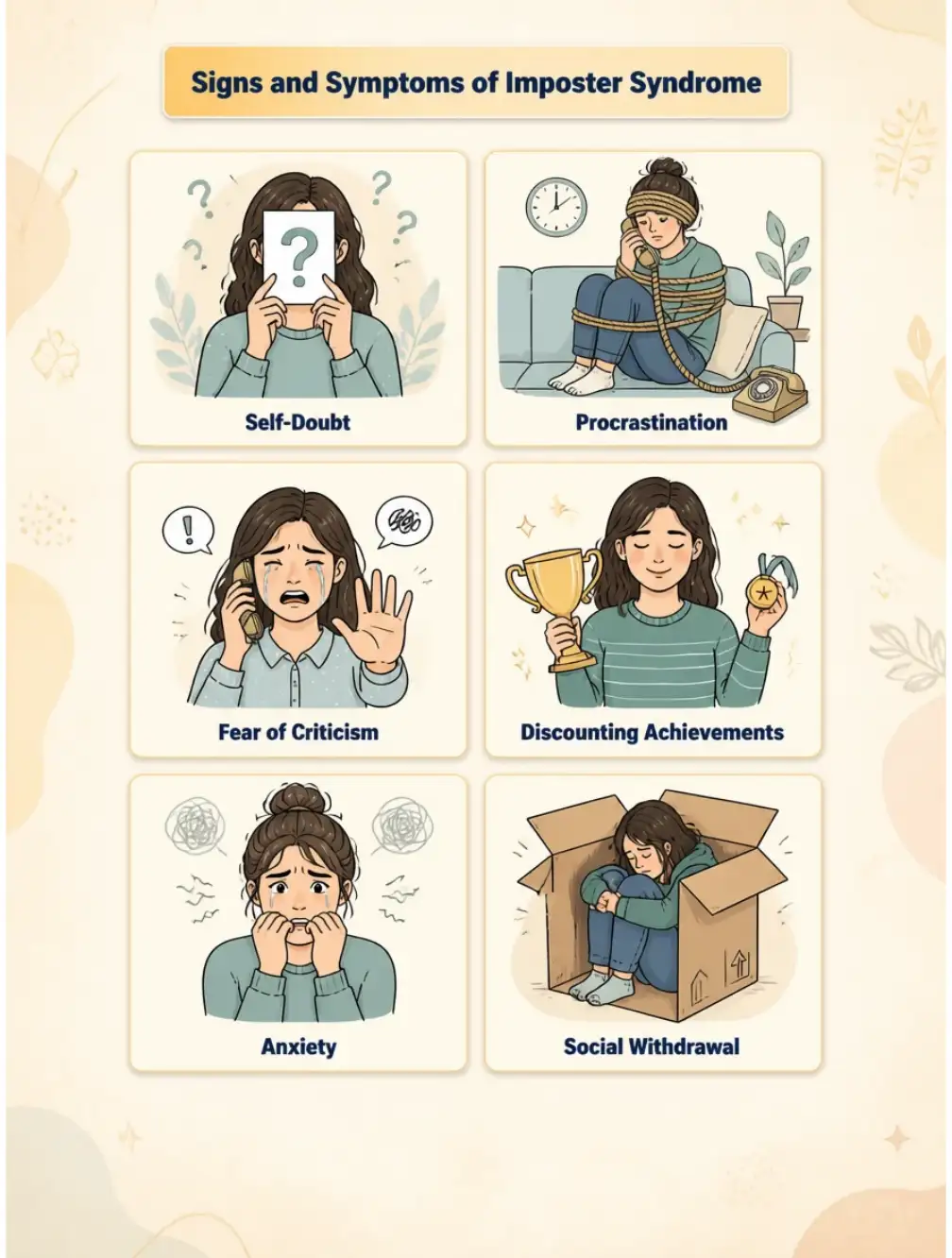
Sometimes success brings a nagging question to achievers, and they keep wondering if they deserve what they have achieved. They may even feel like frauds as they become more successful. This phenomenon is known as ‘imposter syndrome’. It describes a pattern in which capable, high-achieving people doubt their competence and live with a constant fear of being exposed as a fraud, even when they have real proof of their success. It is not a medical diagnosis, but it is very common. Various studies suggest that around seventy per cent of people feel like an imposter at some point. Image credits: Canva AI Most people with imposter syndrome don’t look insecure from the outside. They have symptoms such as self-doubt, procrastination, fear of criticism, social withdrawl, and anxiety. They doubt themselves in their heads all the time. A good result is put down to luck or lucky timing, and a bad one is taken as proof that they aren’t good enough. They tend to expect the worst of themselves, so they talk themselves down before anyone else can. Confidence and self-esteem stay low, even though the goals they set are very high, and when they miss one, the disappointment lasts. Underneath it all is a steady worry that people expect more than they can give and that sooner or later someone will notice. Praise doesn’t help much. After receiving a high grade or a compliment from a teacher or coworker, the student receives a brief thank-you before leaving. Inside, they don’t feel like they’ve earned it and privately wonder if they are truly as smart as everyone thinks they are. You would expect success to cure self-doubt, yet for many people it does the opposite. Research is still developing, but psychologists point to a few reasons. Higher stakes. As you climb, responsibility, visibility and expectations grow, and so does the pressure not to fail. Moving goalposts. High achievers quickly get used to their wins and set a harder goal, so they never stop to accept how skilled they have become. Putting it down to luck. Successful people often credit good timing or tell themselves they have fooled everyone. The imposter cycle. A new challenge brings heavy over-preparation or procrastination. When it goes well, the person credits the panic and extra effort, not their ability, so the doubt returns with the next task. Expert Valerie Young describes five styles these feelings take. The Perfectionist sets impossible standards and feels like a failure over tiny flaws. The Expert feels inadequate unless they know every answer. They feel that they don’t know everything there is to know about a particular topic or subject. The Natural Genius believes real competence means mastering something instantly. The Superperson overworks in every area of life to cover a sense of inadequacy. Image credits: Canva AI The effects go beyond bad days. People with imposter feelings often report anxiety, low self-confidence, depression and frustration at missing their own standards. Over time, these feelings can hurt work performance and career growth. In competitive settings like medical school, they can also lead to social isolation, academic difficulties and a career path that does not match real ability. The imposter phenomenon is a ubiquitous phenomenon that anyone can feel in some facet of their lives. If the feelings stay even after you have tried everything, speak to a mental health professional. They can also check for depression and anxiety that may be linked to imposter feelings. But first try these methods: Name it. Talk about it. Sharing your thoughts with trusted colleagues helps you see your situation clearly, and knowing someone else feels the same is a big relief. Stop comparing. We only see the outside of other people. Those who look like experts may be sounding confident about things that are new to them too. Keep a record of your wins, and read it when doubt creeps in. Treat failure as part of learning, not as proof that you are a fraud. Even people we consider highly successful have felt this way. Valerie Young puts it well: “People can still have an imposter moment, but not an imposter life. Spend less time worrying about what may go wrong and more time appreciating what you have done. Every success you have had came from effort, and you earned it. You use AI every day. Now get your AI Quotient. Take the AIQ test Get the latest Lifestyle News and more. Download the TOI app.