
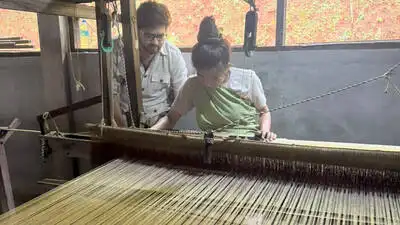
Designer Manish Tripathi working with the artisans in Meghalaya
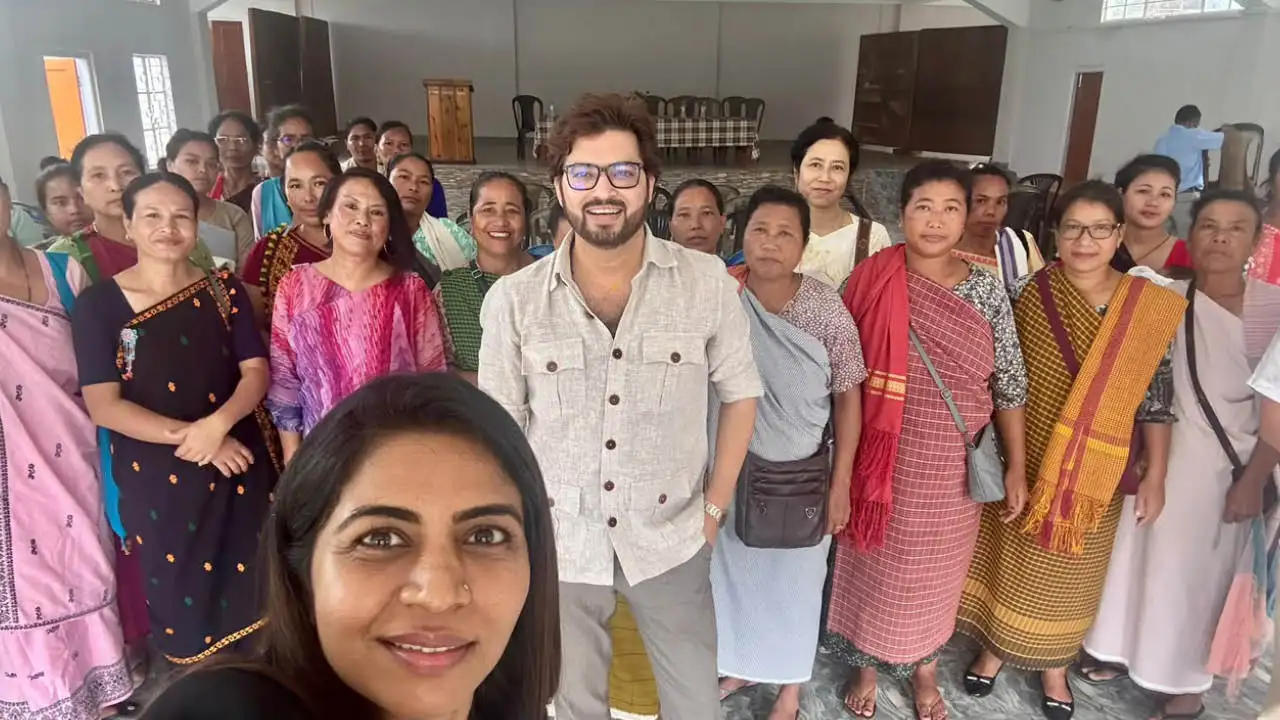
The project initially engaged 20 tribal women artisans in sampling and development and has since expanded into a larger ecosystem involving approximately 145 tribal artisans. The project initially engaged 20 tribal women artisans in sampling and development “We started with the Ri-Bhoi tribe of Meghalaya. Traditional tribal handloom could find a new application in aircraft interiors through Kala Ki Udaan, an initiative by the Ministry of Tribal Affairs aimed at developing aviation-grade handwoven textiles by tribal women artisans. Beginning with the weaving communities of Meghalaya, the project brings traditional weaving knowledge together with modern technical textile requirements. Designer Manish Tripathi has been working closely with these communities to explore whether fabric woven on a traditional handloom can meet the requirements of the aviation sector. As I was working with the Ministry of Tribal Affairs, I discovered this community, this region, and I thought why not bring them forward. I discovered that tribal communities, especially in the Northeast, are very sensitive about their cultural motifs and they are very particular about how they are used, where they are used. That’s what intrigued me, that’s what made me think ki aisa kya karoon ki unke paas kaam aa sake. In past I have worked with Changpas of Changthang in Ladakh. I thought about creating something which brings out their cultural identity, at the same time, it’s used in such a manner that it should bring them livelihood. I realized that I should work on something that doesn’t just glorify the design, but the craft. I wanted to bring the spotlight on textiles which have been there for ages, but they remain confined in the region of their origin. As fashion designers, we often limit ourselves to designing garments, but I thought that these textiles, motifs and craft can be used to create something that bring awareness about these craft and also livelihood opportunities to the tribes who have been doing this. I thought creating upholstery for aviation can be that option. We are developing, blankets, cushion covers using their traditional crat. This involves a lot of training for these tribes and the textile has to go through a certain treatment to make it perfect for upholstery. This has been a challenge, but we have been able to achieve this,” shares Manish. Designer Manish Tripathi has been working closely with these communities to explore whether fabric woven on a traditional handloom can meet the requirements of the aviation sector The initial approach involved treating existing handwoven fabrics with flame-retardant coatings and other finishing solutions. The project subsequently moved towards developing the fabric itself with FR-grade yarn woven on a traditional handloom. Adapting the material, however, has also meant preserving the artisans’ weaving identity and cultural vocabulary.
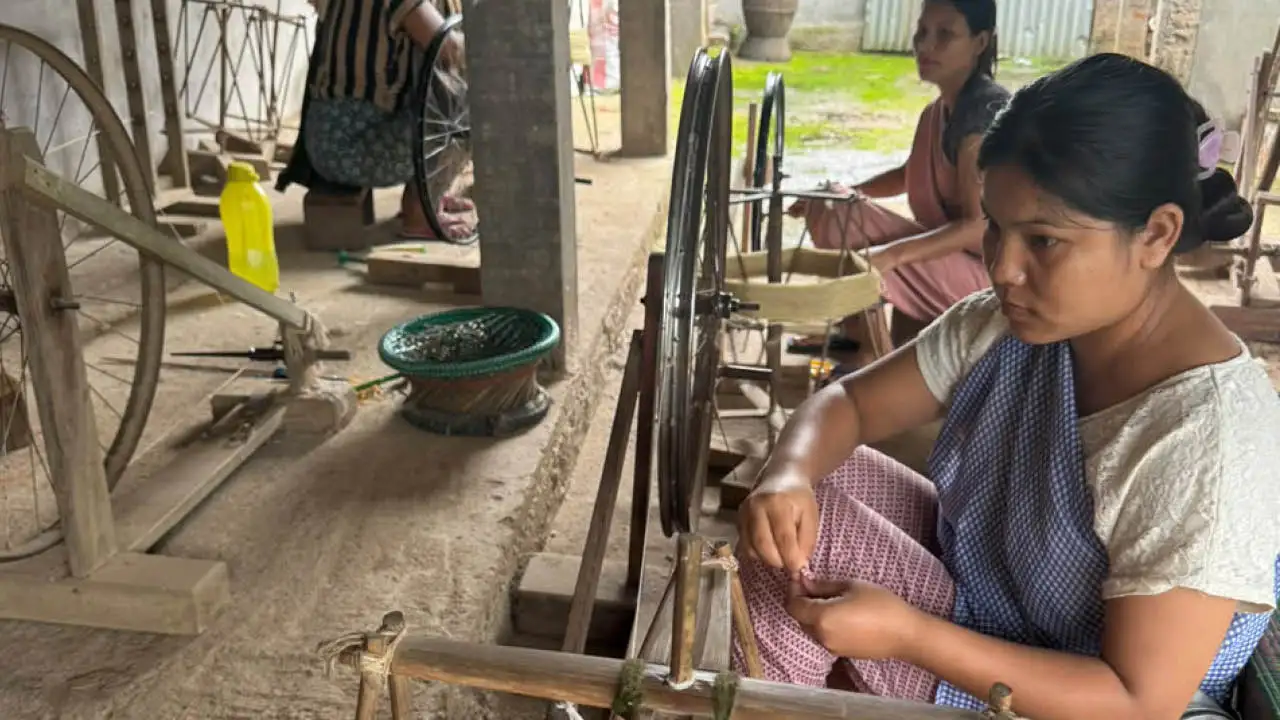
If in the future we will work with some particular brand or airline, colours can vary accordingly,” says Manish. With the design and initial research and development phase having progressed substantially, Manish says the immediate focus is on testing the FR-grade handwoven prototype, assessing its performance against relevant requirements and identifying the appropriate aviation application for the next stage of development. “The brief which I had for myself and my team was that we will not change the form of the motif. In the beginning, I asked the artisans to bring forward what they could weave. The approach was not to design something new and give to them, that would have diluted their unique identity and design. So I asked them to weave what they have been doing and I would use that to draft a pattern and that’s how our design process started. So, we have not experimented with their motifs and as far as colours are concerned, I felt that the colours and motifs that these tribes from Northeast use are appropriate for aviation. He stresses that the objective is to retain the character of tribal handloom as it is adapted for a new application, rather than turn it into an anonymous industrial fabric. “We are already in talks with various airlines. The project team is also seeking engagement with prospective aviation-sector partners to evaluate the prototype in a real application environment and determine the most appropriate aircraft platform and component for further development. The aim is to take this initiative forward bringing livelihood opportunities to these tribes and set an example of how indigenous knowledge and modern technology can work together. ” You use AI every day. Now get your AI Quotient. Take the AIQ test Get the latest Lifestyle News and more. Download the TOI app.