
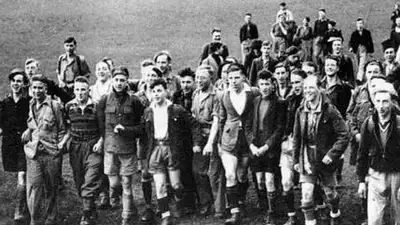
The Mass Trespass of 1932: In the month of April, how a group of 400 working-class ramblers defied the law on Kinder Scout and helped change Britain’s right to roam.
That’s exactly what the Mass Trespass of 1932 was. On April 24, 1932, hundreds left the small village of Hayfield in the Peak District, aiming for Kinder Scout, the highest moor around. On the day (April 24, 1932), hundreds of walkers made their way up the paths toward Kinder Scout. By 1951, the Peak District was Britain’s first national park, a victory for a movement that stretched across generations. And in that sense, the walkers on Kinder Scout in 1932 were blazing a path for all of us still asking that same question: Where does the boundary between public freedom and private rights really lie?
Picture this: What if one of Britain’s most important fights for public access to nature began with a group of young workers simply deciding to walk where they had been told they could not? It wasn’t a grand, orchestrated revolution; it was more like a group of regular people deciding they’d had enough, tying their boots, and heading out for a walk where the law said they couldn’t go. The Kinder Trespass became the symbol people pointed to when saying “enough” to locked gates and no-trespassing signs.
Almost a century later, it’s strange to look back and realize that something as simple as a day’s hike could crack open a debate that shaped Britain’s relationship with the countryside. And now, the Mass Trespass is remembered as an important chapter in how that change came about. Most were young workers from Manchester’s factories, craving an escape from the smoky city. The white-collar crowd might’ve called them trespassers, but they saw themselves as ramblers, i.e., people who simply wanted access to open hills covered in heather and sky. When landowners and their gamekeepers blocked the moor for grouse shooting and kept fences high, the walkers saw no option but to push back. The protest didn’t start in a vacuum. For decades, working-class people had been turned away from these wild open spaces, even as politicians promised more public access and failed to deliver. Then, there was one face that really drew attention: Benny Rothman, twenty years old, a mechanic and outdoorsman, who helped organize the walk through the British Workers’ Sports Federation (BWSF). After a run-in with gamekeepers over Easter, Benny and his friends felt like walking wasn’t just about enjoying the landscape; it was about justice. So, they planned the trespass down to the last detail, including a decoy rally to distract police. Some estimates say four hundred people, others closer to five hundred. They met gamekeepers who tried to stop them; there were scuffles, and someone got hurt, but the ramblers carried on. Reaching the windswept plateau was more than just a bit of fun; it was a statement. After the thrills and the tension, most hikers turned back to Hayfield, only to find the police waiting with open arms and handcuffs. Six men were charged, five sentenced to prison for a few months on riot and breach of the peace charges. Benny Rothman, the ringmaster of sorts, got three months himself. The stiff sentences didn’t scare people off; in fact, the injustice got the public behind the movement in ways nothing else had. Rothman argued simply at his trial: if you work all week in a smoky factory, shouldn’t you have the right to breathe clean air and walk the hills on your day off? The Mass Trespass didn’t instantly change the law. But it planted the idea in the national conversation: who really owns the wild countryside, and why shouldn’t everyone get to walk there? It helped spark the creation of groups like the Standing Committee on National Parks, bringing together everyone who wanted to open up the land. There’s a historic plaque at Bowden Bridge, the start of the protest. A walk that once demanded courage and ended in arrest is now a bucket-list ramble for thousands. It’s almost funny how these hills that once seemed forbidden are now open, cherished, even crowded. But the legacy runs deeper than simply letting everyone through the gate. The story of the trespass is about the sometimes messy clash between private ownership and the common good; questions that pop up any time the public wants a slice of nature. The fight for the right to roam wasn’t just about the 1930s, or about Kinder Scout alone. It was part of a long, sometimes bitter, always passionate campaign about who gets to enjoy the countryside and who gets to decide. Looking for trusted parenting advice? Follow TOI Parenting Circle on Instagram for expert guidance, relatable stories, and practical tips delivered every day. Get the latest Lifestyle News and more. Download the TOI app.
Today, the same landscape is part of the Peak District National Park, where people can walk across large areas of open countryside. Today, you can walk the same path from Hayfield to Kinder Scout.