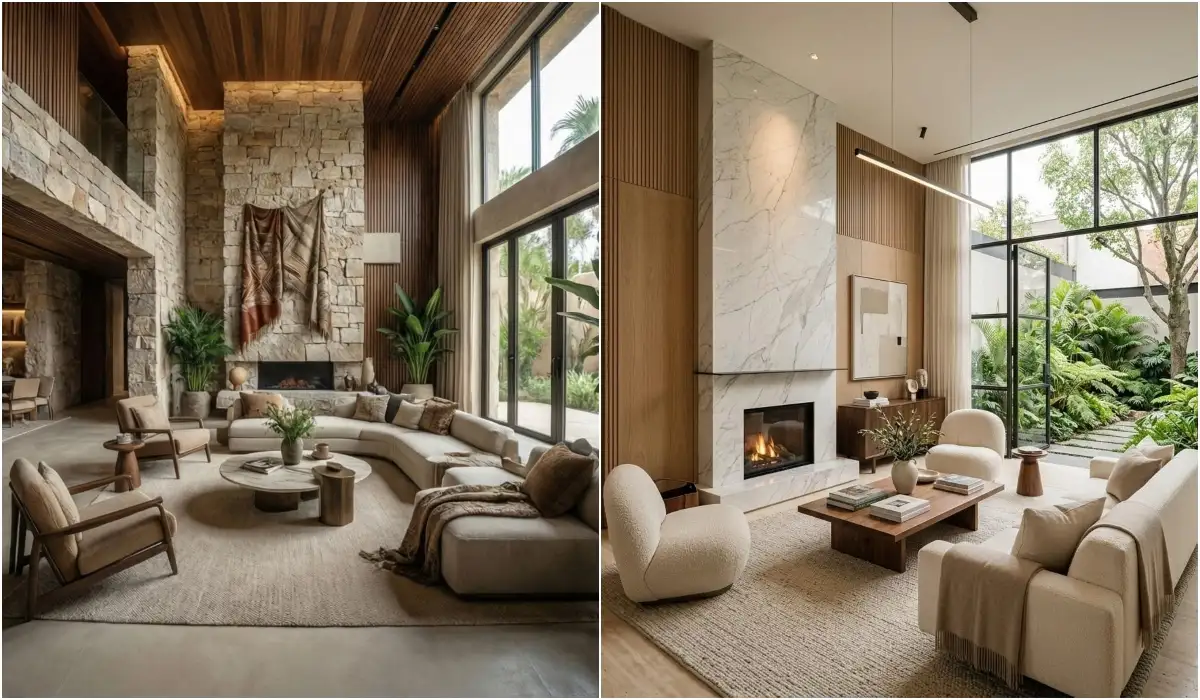
“It is achieved through the judicious mixing of materials, like stone, wood, glass, and textile, so that they provide variety, contrast, and visual stimulation while ensuring that all of those materials fit into a single, coherent, balanced, and luxurious interior space,” says Priyanka Sinha, founder of an interior design studio. “These imperfections are not flaws; they are what give materials a sense of authenticity, tactility, and individuality,” she says. In an era of increasingly photogenic interiors, there is one element that a screen cannot quite capture: how a space feels. The coolness of stone, the grain of hand-finished timber, or the softness of a handwoven textile can only truly be appreciated in person. This is where texture-maxxing is finding its place in luxury homes. It is not about filling a room with different textures or creating an uncoordinated look, but about carefully combining rich materials, craftsmanship, and bespoke finishes to create depth and character. In a recent dining space, Sonali Patel, founder of an interior design studio, used Brazilian granite in a leathered finish to highlight its natural veining and tonal shifts, alongside a temple arch finished with hand-applied textured paint.
Priyanka Sinha, founder of The Opulence, an interior design studio, says, “Warm wood, for instance, can work beautifully with natural stone, woven fabrics and polished metal. Repeating subtle details across furniture, walls, and accessories helps bring everything together, while good lighting makes different textures feel more harmonious. ” “A texture map should move from floors and walls to furniture, rugs and soft furnishings, with each layer considered for how it looks and feels under different light” – Priyanka Sinha, founder of an interior design studio A texture-rich interior succeeds when it’s balanced. Designers recommend allowing different materials, colours, and finishes to interact. Beyond colour, repeating finishes, shapes, and materials can help bring different textures together.
“Stone can either be an Italian beige marble like Breccia or Botticino, or Indian Udaipur stone,” says Arth Kumar, founder and principal designer, Shreem Interior Designs. The most luxurious spaces know when to leave a surface quiet” – Arth Kumar, founder of an interior design studio Priyanka says, “Indian craftsmanship is a way of bringing authentic heritage into modern interior designs. the floor sets the base for a tactile interior While soft furnishings can be changed with ease. The choice is not just about picking a textured material, but also about considering the stone, finish, and setting. For a modern home, he prefers the smoother finish of Italian marble. “For a modern home, I will put a smooth Italian marble like Breccia or Botticino, which is commonly provided by developers in India for residential apartments. But if I need to use it for an outdoor section or even a bar area in the house, I would opt for the Udaipur beige rough stone to enhance that look. “A tactile approach can bring warmth and sophistication to living rooms, bedrooms, foyers, and powder rooms. Layer contrasting materials such as stone, timber, upholstery, and rugs, but avoid overdoing it. The use of hand-carved wood, cane, woven textiles, stone details, brasswork, and other artisan materials helps to add modern furniture and simple forms of architecture to some old-fashioned crafts. This interplay of the traditional crafts gives the house more individuality, identity, and warmth.”