DIFF 2026
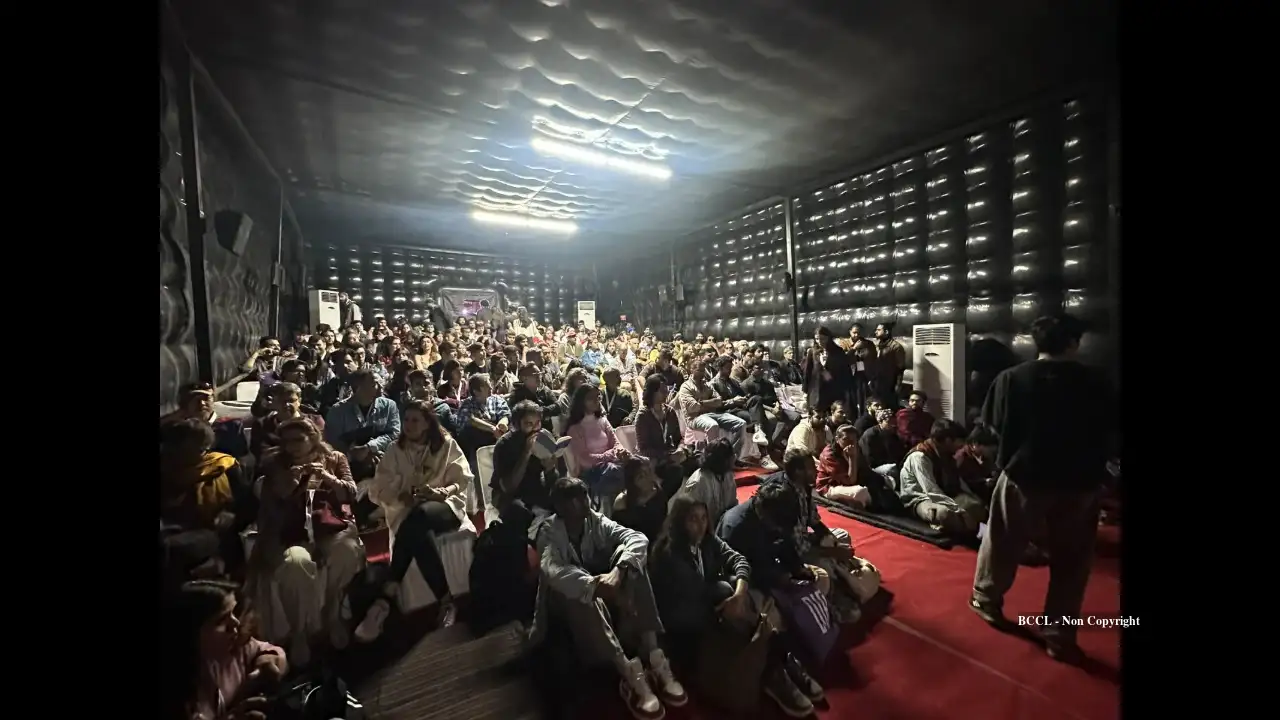
Because there are no cinemas, in some parts of India, audiences are willing to sit on the floor to watch a film.
People are willing to go to any extent to watch a movie,” he says. A cinema brings life to their lives,” he says. From remote towns in Ladakh to neighbourhoods in Delhi, PictureTime founder and CEO Sushil Chaudhary believes India needs more screens, affordable tickets and a viable exhibition model. In others, moviegoers pay a premium for plush recliners and a luxury cinema experience. For Sushil Chaudhary, Founder and CEO of PictureTime, this contrast reflects a larger problem: India has audiences eager to watch films, but not enough cinemas to serve them.“In India, the only thing which was popular and binding across the length and breadth of the country was cinema. Chaudhary has witnessed this enthusiasm at the Dharamshala International Film Festival for years, where audiences sit on the ground when seats run out. “People want to watch movies. The problem, he argues, is not a lack of appetite for cinema, but a shortage of screens, cumbersome regulations and an exhibition business that needs a stronger economic model. Excerpts from an interview:
‘More screens, before more film cities’ PictureTime founder and CEO Sushil Chaudhary says India needs to rethink its priorities when it comes to film infrastructure. The demand for nearby cinemas, he says, remains strong. “Before you make a film city, you need to create a film ecosystem. A film city cannot do anything unless there are exhibition centres. He argues that the industry remains fragmented, with governments encouraging film production through incentives while the exhibition side struggles to expand. By putting cinema theatres into malls, it became a lifestyle luxury product. That differentiation between neighbourhood cinema and luxury cinema needs to come to the forefront again,” he shares. He recalls how Delhi once had neighbourhood cinemas across areas such as Lajpat Nagar, Greater Kailash, Nehru Place and Connaught Place. “People used to walk into Savitri cinema from GK, Moolchand and Chirag Delhi to watch a movie. Cinema-going was an activity. It wasn’t that you had to go to a particular mall to watch a movie. Audiences often want to visit the closest cinema, only to discover that the film or showtime they want isn’t available. His solution is to build cinemas that prioritise accessibility and affordability over luxury.
“Earlier, cinema theatre was not a lifestyle product.
PictureTime began studying the market in 2015, mapping population clusters at the PIN code level to identify areas with populations of around 30,000 and limited cinema access. “To set up a cinema theatre, you needed around 70 permissions. He says PictureTime has engaged with state governments since 2018 to push for simpler regulations and single-window clearances. “If you create a cinema theatre for the masses, where I pay ₹100 or ₹150 for a ticket, and ₹50 or ₹100 for popcorn, with clean seats and good air-conditioning, people will go out and watch films. “People don’t necessarily want a very luxurious cinema theatre where they have to pay ₹1,000. The company launched around the release of 83, Chaudhary says, and went on to see strong business from films such as KGF, Jawan, Gadar and Pathaan. The company has been working on a model in which a 150-seat, air-conditioned cinema with digital cinema infrastructure can operate at a monthly operating cost below ₹2 lakh, with initial capital expenditure not exceeding around ₹1 crore. “If a company like ours has to set up 3,000 screens, we need more investors to understand the business.
Because that is the whole idea, “I’m very happy they came.
“The contrast will continue to exist till we address this,” he says. Sometimes those permissions could take up to two years,” Chaudhary says. Delhi, he says, has approved a single-window clearance policy, and PictureTime is looking at land parcels for expansion there. “Probably the highest business any of our cinema theatres did came from Ladakh,” he says. “If any theatre with 150 seats, air-conditioning and digital cinema infrastructure has an operating cost below ₹2 lakh a month, it can make money,” he says. Chaudhary says the next phase is to improve the product, including offering more premium formats where audiences demand them, while keeping the core model viable. He says PictureTime has proposed creating clusters of cinema screens in Delhi that could serve neighbourhood audiences while providing space for independent filmmakers and film festivals.
He also points to the country’s screen shortage. But identifying a market is only one part of the challenge. Cinema remains a licensed business, and approvals can be complicated. The company has also approached governments across states and Union territories to highlight the need for policy changes. ‘Neighbourhood cinemas matter’ He believes cinema-going has gradually become a lifestyle purchase, with multiplexes in malls turning what was once a neighbourhood activity into a more expensive outing. He points to IndiGo’s business model as an example of how affordability and a straightforward offering can expand a market. Once in a while, for the experience, that’s okay. Otherwise, affordability is the main thing. Ladakh screens proved that there’s an audience PictureTime established a cinema in Ladakh after delays caused by the pandemic. The success also attracted other operators. PictureTime is now planning to expand its presence in the region, with cinemas proposed for Chushul, Zanskar and Nubra, while its Leh operation is expected to return in a new format. The company is also exploring integrated entertainment complexes as it expands into underserved markets. Viewers at PictureTime cinema in Dharamshala Can small cinemas make money? Expanding access is one challenge. Making the business profitable is another. These are the operating benchmarks the company is targeting as it works towards profitability at the unit level. For the business to grow at scale, he believes more investors need to see exhibition as an opportunity. We need more investors to feel enthusiastic about investing in it. He recalls how screenings during Delhi’s film festival drew audiences to venues at universities and campuses, even when shows were scheduled early in the morning. He shares,”The ambition is straightforward: more cinemas, closer to where people live, at prices that encourage them to return. You use AI every day. Now get your AI Quotient. Take the AIQ test Get the latest Lifestyle News and more. Download the TOI app.